




01. Edit your form online
Type text, add images, blackout confidential details, add comments, highlights and more.

Type text, add images, blackout confidential details, add comments, highlights and more.

Draw your signature, type it, upload its image, or use your mobile device as a signature pad.

Send it via email, link, or fax. You can also download it, export it or print it out.
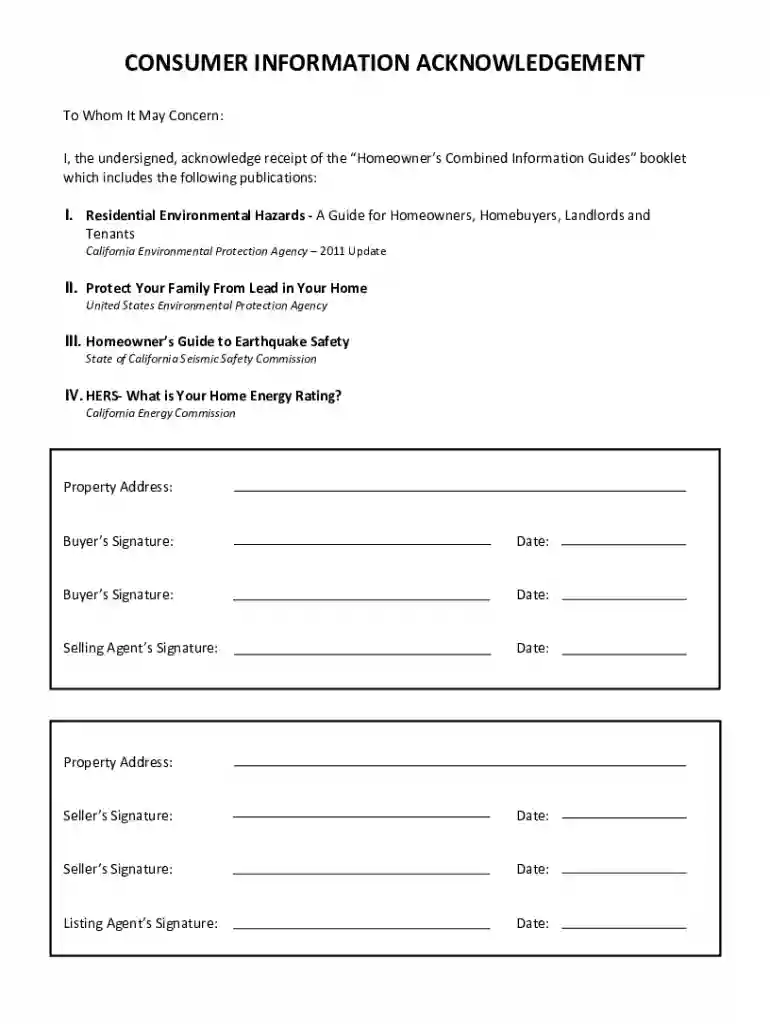
The "Residential Environmental Hazards and Homeowner's" form serves as a comprehensive guide for homeowners in the United States, detailing essential information about environmental hazards that may affect residential properties. This form is designed to inform buyers and sellers about potential risks such as lead exposure, earthquake vulnerabilities, and energy efficiency ratings. Through acknowledging receipt of this form, participants in real estate transactions confirm they have been informed of these critical factors, which can influence property value and safety.
By understanding these elements, homeowners can make informed decisions to mitigate risks and enhance property safety.
To properly complete the "Residential Environmental Hazards and Homeowner's" form, follow these steps:
Accuracy is crucial when completing this form. Incorrect or missing information may result in legal complications or a delay in the real estate transaction.
Using the "Residential Environmental Hazards and Homeowner's" form is vital for transparent real estate transactions. It ensures that all parties involved are aware of potential environmental risks associated with a property, which can have significant implications for:
Ignoring this form can lead to unforeseen liabilities and costs, making its utilization a prudent choice for homeowners and real estate professionals.
The residential environmental hazards guide encompasses multiple critical elements to ensure homeowners are well-informed:
Understanding these components equips homeowners with the knowledge required to maintain legal compliance and promote a safer living environment.
Each state in the U.S. may have specific regulations and requirements concerning residential environmental hazards. It is essential for homeowners to familiarize themselves with state-specific rules, which can include:
Since regulations can significantly differ, consulting local real estate professionals or legal experts is advisable to ensure adherence to all applicable laws.
The legal application of the "Residential Environmental Hazards and Homeowner's" form is primarily within real estate transactions. It functions as a mandatory disclosure tool:
Proper legal use of this form aids in maintaining transparency and trust between buyers and sellers.
Several examples illustrate the form's application in real-world scenarios:
By considering these examples, all involved parties can anticipate and address environmental concerns effectively.
Completing the "Residential Environmental Hazards and Homeowner's" form requires a few supporting documents:
These documents assist in verifying the information provided on the form and facilitate smoother transactions.
Ensure all documents are accurate and updated to prevent any administrative delays or inaccuracies during the transaction process.
We've got more versions of the Residential Environmental Hazards and Homeowner's form. Select the right Residential Environmental Hazards and Homeowner's version from the list and start editing it straight away!
Managing your forms with DocHub this way is very easy once you have downloaded its extension for Google Chrome. Navigate to the Chrome Web Store and install DocHub - Sign PDF from Gmail to get it. Give our tool access to your Google account, and then open an email containing Residential Environmental Hazards and Homeowner's as an attachment and point to the file with your cursor - the DocHub extension key will automatically show up there. Click on it to open your document in our editor. Make any essential edits, fill out the blanks, and click Sign to create your legally-binding electronic signature.
If you want to edit your Residential Environmental Hazards and Homeowner's on the internet quickly, it does not matter what web browser you employ. DocHub’s simple editing instruments are accessible using any internet browser. Simply open the appropriate tab within our editor, add your document, and fill it out without stress.
At DocHub, your data security is our priority. We follow HIPAA, SOC2, GDPR, and other standards, so you can work on your documents with confidence.
This booklet will provide homeowners and prospective homeowners with the information and additional resources needed to make an informed decision aboutRead more
Protect your family from lead in your home. Homeowners guide to environmental hazards and earthquake safety. Availability. Expand


