







Definition & Meaning
The 20 CFR 655.730 regulation outlines the procedural guidelines for filing a Labor Condition Application (LCA) necessary for employing H-1B nonimmigrants in the United States. It serves as a framework to ensure that the employment of foreign workers does not adversely affect the wages and working conditions of U.S. workers. This regulation falls under Title 20 of the Code of Federal Regulations and is part of the broader policies governing labor conditions for nonimmigrant work.
Steps to Complete 20 CFR 655.730
-
Determine Eligibility: Before beginning the application process, confirm that the position and the employer meet the necessary requirements for employing an H-1B nonimmigrant.
-
Prepare Required Documentation: Gather essential documents such as the employer's Federal Employer Identification Number (FEIN), job title, description, and information on the wages being offered.
-
File the LCA: Employers must complete and submit the LCA using the Department of Labor’s online system. This form includes details about the job, salary, and location.
-
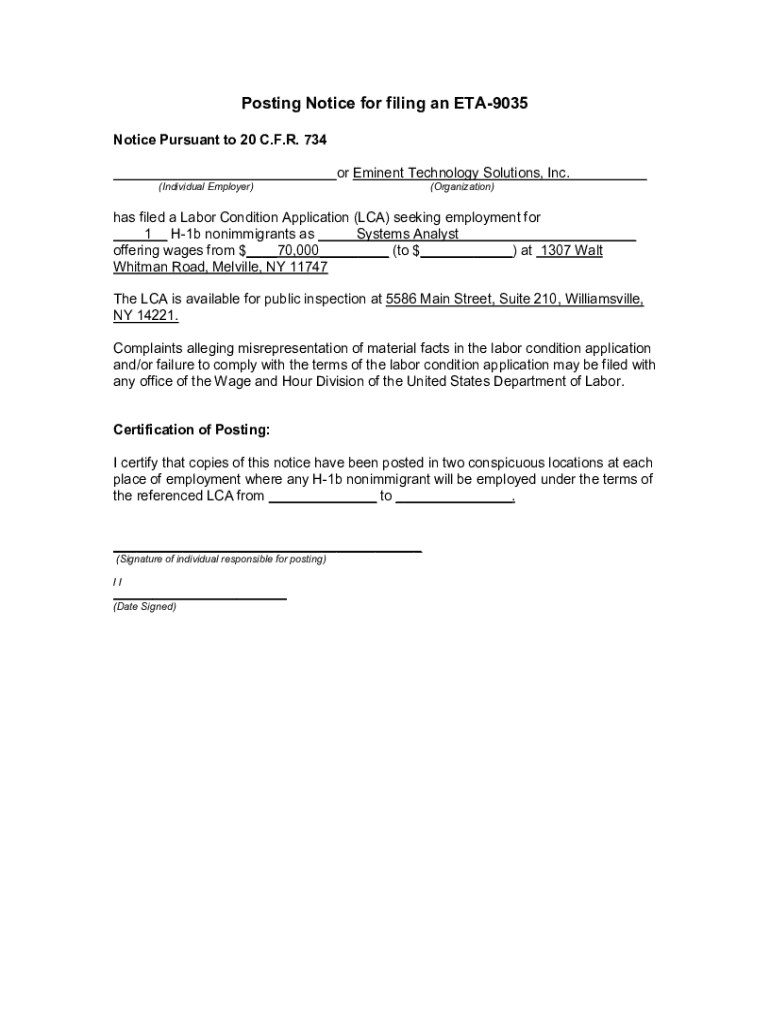
Post and Provide Notice: Employers are required to notify employees of the intent to hire an H-1B worker by posting a notice at the place of employment.
-
Wait for Certification: After submission, the Department of Labor reviews and certifies the LCA, confirming compliance with wage and labor conditions.
-
Petition with USCIS: Once certified, the LCA can be used to file a petition with the U.S. Citizenship and Immigration Services (USCIS) for the H-1B visa.
Key Elements of 20 CFR 655.730
-
Wage Requirements: The regulation requires that nonimmigrant workers be paid at least the prevailing wage for the occupation in the specific area of employment.
-
Working Conditions: Employers must attest that the employment of H-1B workers will not adversely affect the working conditions of similarly employed U.S. workers.
-
Notifications and Posting: Clear guidelines exist on how and where the LCA notice should be posted to ensure transparency in the workplace.
Important Terms Related to 20 CFR 655.730
-
H-1B Nonimmigrant: A foreign national allowed to work in the U.S. for a specified employer and period.
-
Prevailing Wage: The average wage paid to similarly employed workers in a specific occupation in the area of intended employment.
-
LCA (Labor Condition Application): A mandatory submission to the Department of Labor before a U.S. employer can hire a nonimmigrant worker under the H-1B visa classification.
Legal Use of 20 CFR 655.730
The legal use of this regulation is to safeguard U.S. labor markets by ensuring that hiring foreign workers is done transparently and does not negatively impact American workers' jobs and wages. Compliance is paramount, as non-compliance can result in penalties and disqualification from participating in the H-1B program.
Who Typically Uses 20 CFR 655.730
This regulation is chiefly used by U.S. employers seeking to hire highly skilled foreign workers through the H-1B visa program. It is also relevant for immigration lawyers and HR professionals who manage the visa application process for their organizations.
Required Documents
-
Employer Attestations: Evidence that the employer will pay at least the prevailing wage.
-
Job Description and Justification: Details of the job role, minimum qualification requirements, and explanation of salary offered.
-
Public Access File: Must be maintained by the employer containing all information related to the LCA and accessible to the public upon request.
Penalties for Non-Compliance
Failure to comply with the provisions of 20 CFR 655.730 may result in various penalties, including fines, debarment from the H-1B program, employer blacklisting, and even revocation of previously granted LCA certifications. Penalties are strictly enforced by the Department of Labor as part of maintaining the integrity of the U.S. labor market.


