




01. Edit your form online
Type text, add images, blackout confidential details, add comments, highlights and more.

Type text, add images, blackout confidential details, add comments, highlights and more.

Draw your signature, type it, upload its image, or use your mobile device as a signature pad.

Send it via email, link, or fax. You can also download it, export it or print it out.
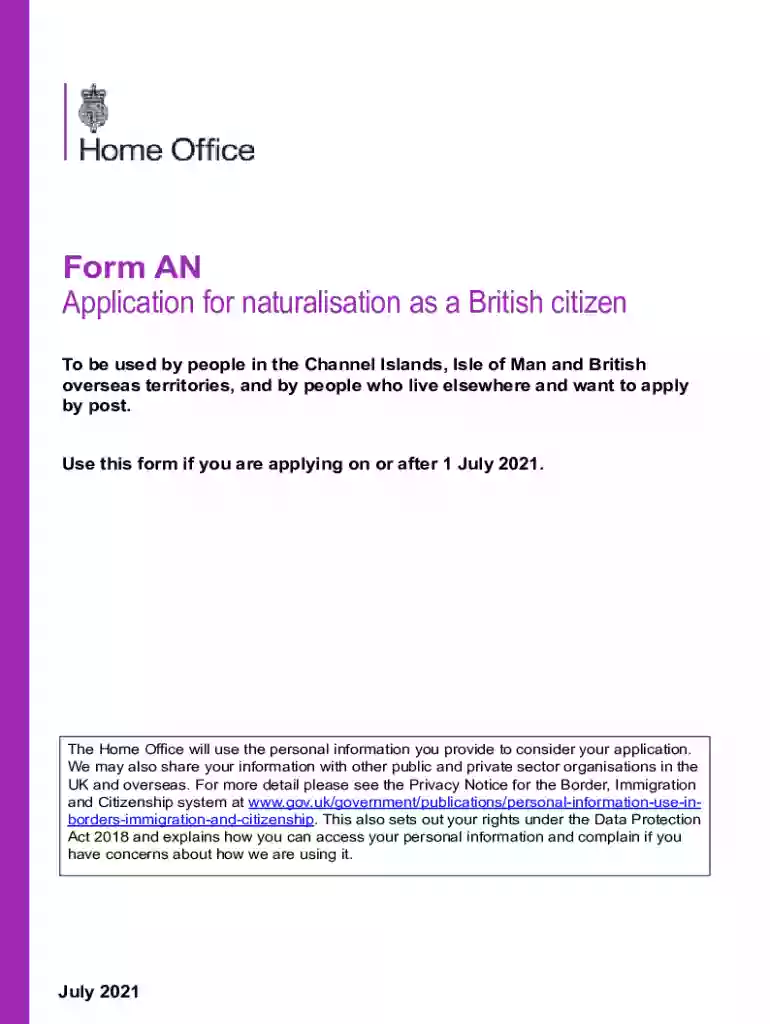
The "application naturalisation" refers to the process through which a non-citizen can become a citizen of a country, specifically through formal application procedures. In the context of the U.S., this involves filing specific forms and meeting various legal and residency requirements, allowing immigrants to obtain citizenship status.
Naturalisation is a significant legal transition that grants individuals the full rights and responsibilities of a citizen, such as the right to vote, work in government positions, and travel with a passport from their new country. For those seeking U.S. citizenship, the primary form is the N-400, known as the Application for Naturalization. This process not only integrates the individual legally but also culturally, underscoring the commitment to the new nation.
Filing the application for naturalisation is a structured process that requires careful attention to detail. Here are the essential steps:
Determine Eligibility: Confirm that you meet the necessary requirements, such as age, residency, and language proficiency.
Prepare Form N-400: Gather personal information, including employment history, travel records, and details of residency.
Provide Supporting Documents: These typically include a copy of your green card, photographs, and any documents proving residency and identity.
Fee Payment: Submit the application fee, with waivers available for specific eligibility cases.
Submit Form N-400: This can be done online or through mail, depending on preference and accessibility.
Complete Biometric Services Appointment: Attend an appointment for fingerprinting to process background checks.
Interview and Tests: This involves a formal interview and tests on English language and civics, assessing your readiness and knowledge about the U.S.
Receive Decision: After the interview, you'll receive a decision. If approved, the final step is the oath ceremony.
Each step plays a critical role in ensuring that applicants are fully equipped and prepared for citizenship responsibilities.
The application for naturalisation demands specific documentation, which substantiates the applicant's claims and eligibility:
Collecting these documents ahead of time can facilitate a smoother application process and ensure no critical information is missing.
Eligibility for naturalisation involves meeting several stringent criteria:


Completing the form N-400 for naturalisation is a legal document submission process governed by U.S. immigration law. It necessitates truthful and accurate disclosure of information, as providing false data can result in application denial and potential legal consequences, including deportation or barred entry into the U.S. It is crucial to be transparent and thorough when filling out the application to uphold legal standards and ensure processing without issues.
The application process involves a timeline that applicants must consider:
Applicants have several options for submitting their application, enhancing accessibility:
Each submission method has its own set of guidance protocols to ensure secure and accurate delivery of the application.
While federal guidelines primarily govern naturalisation, some procedural details can vary slightly by state given local offices and population demands. Each state may have different local USCIS office locations and varying availability of resources for preparing for the naturalisation test and interview. Understanding these nuances in your state can have an impact on the application timing and logistics.
By observing these detailed insights into the "application naturalisation" process, individuals can adequately prepare to embark on their journey towards citizenship, equipped with comprehensive knowledge and structured pathways to facilitate the process.
We've got more versions of the application naturalisation form. Select the right application naturalisation version from the list and start editing it straight away!
At DocHub, your data security is our priority. We follow HIPAA, SOC2, GDPR, and other standards, so you can work on your documents with confidence.
Jun 16, 2026 Naturalization is the process of becoming a US citizen if you were born outside of the United States. Use this form to apply for naturalization.Read more
Prepare Form N-400,. Application for Naturalization. When you meet all requirements to become a. U.S. citizen, complete Form N-400 to apply for naturalization.Read more


