




01. Edit your form online
Type text, add images, blackout confidential details, add comments, highlights and more.

Type text, add images, blackout confidential details, add comments, highlights and more.

Draw your signature, type it, upload its image, or use your mobile device as a signature pad.

Send it via email, link, or fax. You can also download it, export it or print it out.
The STATE OF CONNECTICUT Department of Aging and Disability Services plays a crucial role in facilitating resources and support for older adults and individuals with disabilities within Connecticut. The department's focus is on enhancing the quality of life and independence of its constituents through various programs and services, streamlining access to essential resources. Understanding the functions and responsibilities embodied within this department is vital for those directly impacted or working alongside such populations.
When utilizing the services provided by the STATE OF CONNECTICUT Department of Aging and Disability Services, individuals should start by identifying their specific needs. The department offers a range of services, including but not limited to, assistance with daily living activities, healthcare access, and community integration support. Users can contact the department directly via phone, email, or visit their website for guidance on selecting the appropriate service pathway. Local service providers associated with the department can provide personalized consultations to help tailor services to individual needs.
The primary users of the STATE OF CONNECTICUT Department of Aging and Disability Services are older adults, individuals with disabilities, their caregivers, and family members. Healthcare providers and social workers also frequently engage with the department to coordinate services for their clients. Additionally, policymakers and community organizations may collaborate with the department to develop programs that align with the needs of these populations.


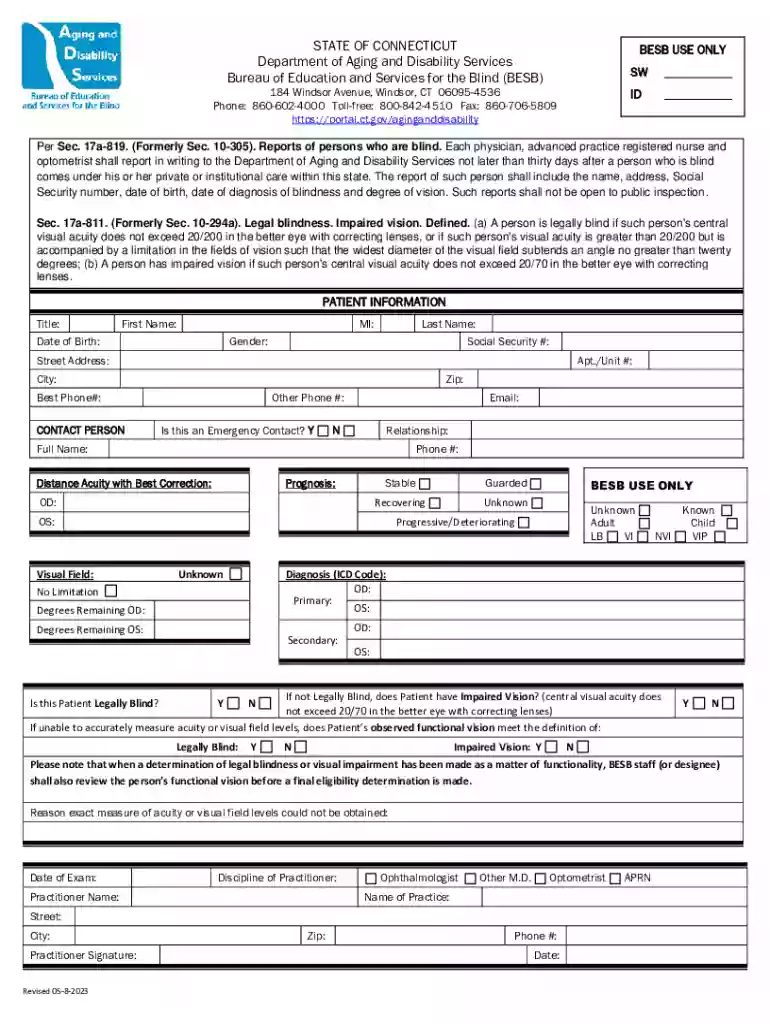
Every form associated with the STATE OF CONNECTICUT Department of Aging and Disability Services typically includes sections for personal information, medical history, and detailed explanations of the services requested. There are often fields for authorized representatives or caregivers to provide their information. Some forms may have specialized fields based on specific programs or aid being applied for, such as financial assistance or housing modifications.
Connecticut has particular state-specific rules that influence how services are provided and accessed. For example, eligibility criteria for certain programs might be influenced by state income thresholds or specific health conditions recognized under state law. Understanding these local regulations can be crucial for ensuring compliance and successful access to services.
The forms must be used in compliance with Connecticut state laws and regulations. Information provided must be truthful and accurate, and forms should be submitted within designated deadlines to avoid penalties. Misuse of these forms or providing false information can result in legal consequences, including loss of services or financial penalties. Legal assistance can be sought for understanding guidelines or for appealing decisions made through the department’s processes.
We've got more versions of the STATE OF CONNECTICUT Department of Aging and form. Select the right STATE OF CONNECTICUT Department of Aging and version from the list and start editing it straight away!
At DocHub, your data security is our priority. We follow HIPAA, SOC2, GDPR, and other standards, so you can work on your documents with confidence.
This section presents the role of the Connecticut Department on Aging and the responsibility of area agencies on aging in the fiscal assessment of area agencies
The State of Connecticut offers a variety of services to help eligible individuals who need support to live at home or to return to community living.Read more


