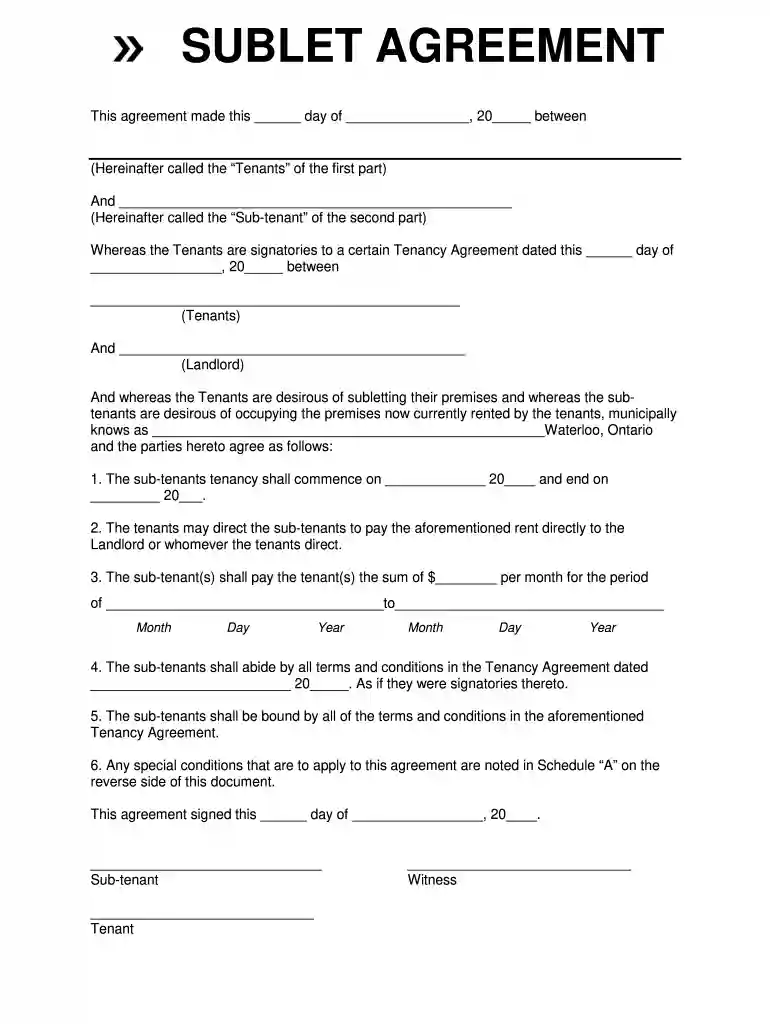
Definition and Meaning of a Sublease Agreement
A sublease agreement is a legal document that allows a tenant (the original tenant) to rent out part or all of their rented property to another party (the subtenant) for a specified duration. This agreement outlines the terms under which the subtenant will occupy the premises, including rental payments, duration of the sublease, and responsibilities for maintenance and utilities. Significantly, it must also align with the original lease agreement between the tenant and the landlord, ensuring that the original terms are upheld.
The sublease agreement typically includes several essential elements:
- Duration of the Sublease: Indicates the start and end dates of the subtenancy.
- Payment Terms: Specifies the rent amount, payment schedule, and methods of payment.
- Responsibilities: Outlines who is responsible for repairs, maintenance, and utilities.
- Rules and Regulations: Ensures that subtenants adhere to any stipulations outlined in the original lease agreement, including restrictions on pet ownership or noise regulations.
- Termination Conditions: Explains how the agreement can be terminated early under certain conditions.
Understanding these key elements ensures clarity for both the original tenant and subtenant regarding their rights and obligations.
Important Terms Related to Sublease Agreements
Various terms are associated with sublease agreements that help clarify their use and legal standing. Recognizing these terms is crucial for both parties involved.
- Lessee: The original tenant who holds the lease with the landlord and is responsible for the property.
- Lessor: The landlord or property owner who leases the property to the original tenant.
- Subtenant: The individual or party renting from the original tenant, entering into an agreement to occupy the property or a portion thereof.
- Original Lease Agreement: The initial contract between the landlord and lessee, which subleases must comply with.
- Right of First Refusal: A provision that may grant the original tenant the ability to return to the property before it is leased to someone else.
- Security Deposit: A sum collected from the subtenant to cover potential damages or unpaid rent, which should be returned at the end of the sublease term if the property is in good condition.
A clear understanding of these terms helps to avoid disputes and ensures compliance with legal standards.
Key Elements of the Sublease Agreement
A well-drafted sublease agreement includes several elements that ensure all parties are protected and informed. Each element serves a specific purpose, contributing to the overall understanding of the arrangement.
- Contact Information: The names and addresses of the original tenant and subtenant should be clearly provided.
- Property Description: A detailed description of the rented premises, including any amenities or specific areas being sublet.
- Rent Amount and Payment Schedule: Clearly states the rent amount, due dates, and acceptable payment methods.
- Maintenance Responsibilities: Details on who is responsible for maintaining the property, including lawn care, repairs, and utility payments.
- Termination Clause: Specifies the conditions under which the agreement can be terminated, including notice periods and penalties for early termination.
- Subtenant Acknowledgment: A clause where the subtenant acknowledges they have read and understood the original lease agreement and agrees to comply with its terms.
Inclusion of these elements creates a transparent contract that protects the interests of both the tenant and the subtenant.
Steps to Complete the Sublease Agreement
Completing a sublease agreement can be straightforward if both parties follow a systematic approach. Here is a step-by-step process to guide you through creating and finalizing the document.
- Review Original Lease Agreement: Ensure that subletting is permitted and familiarize yourself with any specific conditions.
- Draft the Sublease Agreement: Outline all terms, including duration, payment, responsibilities, and any specific rules from the original lease.
- Negotiate Terms: Discuss any specific terms or modifications that may be needed to make the agreement work for both parties.
- Finalize the Document: Both parties should review the agreement, make final adjustments, and agree upon all terms.
- Sign the Agreement: Obtain signatures from both the original tenant and the subtenant, affirming their agreement to the terms outlined.
- Notify the Landlord: If required, inform the landlord of the sublease and provide them with a copy of the signed agreement.
- Keep Records: Both parties should retain copies of the signed sublease agreement for their records.
Following these steps ensures a legally binding and clear agreement, minimizing potential conflicts in the future.
Who Typically Uses a Sublease Agreement?
Sublease agreements are commonly utilized in various situations. Understanding who typically engages in subleasing can provide insight into its utility and application.
- Students: Many college students use sublease agreements while studying abroad or during internships. They may want to keep their apartments rented without incurring extra costs.
- Professionals on Temporary Assignments: Employees relocating temporarily for work may sublease their homes to cover expenses while they are away.
- Landlords and Property Managers: Some landlords permit existing tenants to sublease as a strategy to maintain occupancy rates in rental properties.
- Individuals Experiencing Financial Hardships: When tenants face financial difficulty, they may choose to sublet part of their apartment to share costs, making rent more manageable.
Through these examples, it is clear that sublease agreements serve a variety of needs, ensuring flexibility for tenants and landlords alike.