Definition and Meaning of the Errata Form
An errata form serves to record and communicate corrections to published documents, such as transcripts or legal materials. It enables the identification of errors, omissions, or modifications, ensuring accurate documentation. In legal settings, the errata form is essential for maintaining the integrity of official records, particularly in depositions or court transcripts.
The term "errata" itself comes from the Latin word for "errors." In practice, an errata form functions as a corrective sheet accompanying the original document, detailing specified changes that do not alter the overall intent but rectify inaccuracies.
- Purpose: The main purpose is to officially document changes without altering the original text of the document itself.
- Usage: It can be included in various contexts, from academic publications to legal filings, providing transparency and clarity regarding the contents.
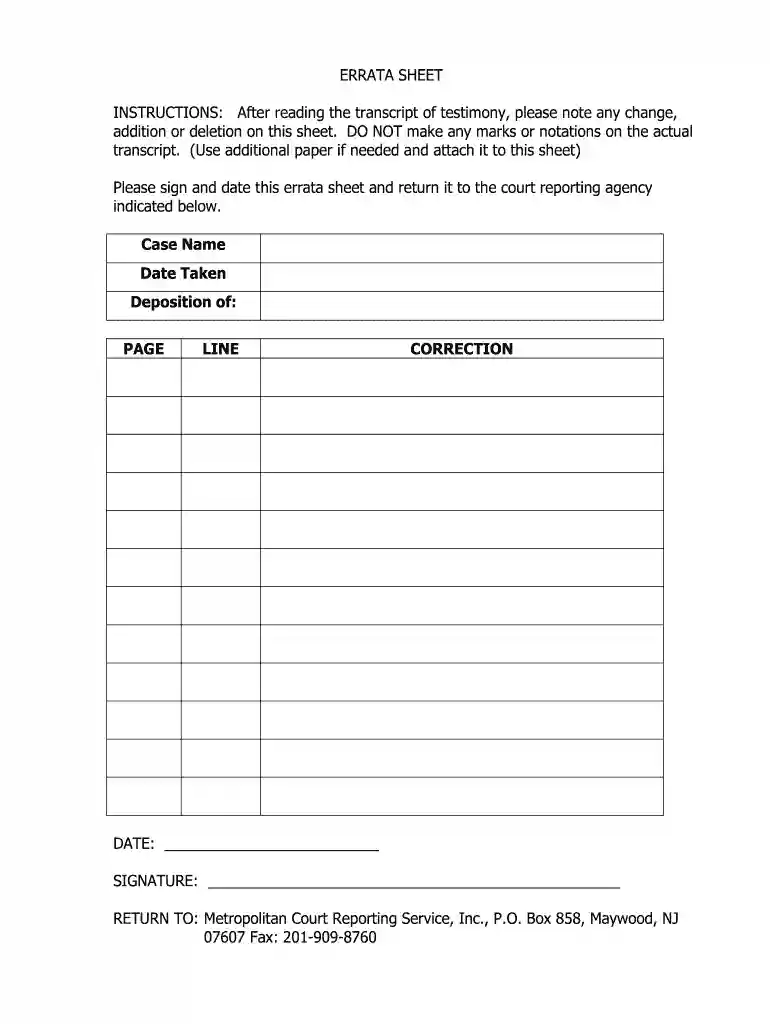
Key Elements of the Errata Form
Understanding the essential components of an errata form is crucial for correct usage. The typical elements include:
- Title: Clearly labeled as an "Errata Form" at the top, ensuring it is easily identifiable.
- Document Details: The title and date of the original document needing correction should be referenced.
- Error Description: Clearly state the nature of the error, including specific pages, lines, or paragraphs.
- Corrected Information: Provide the accurate information to replace the erroneous content.
- Signature and Date: Typically, a space for the author or responsible party to sign and date the form may be included, confirming the validity of the corrections.
These elements ensure that all necessary details are included for effective communication of the corrections.
How to Use the Errata Form
Utilizing an errata form correctly is vital for maintaining clear records. Here’s a step-by-step guide on how to use the form:
- Identify the Errors: Review the original document thoroughly to locate errors that need correction.
- Complete the Errata Form: Fill out each section accurately. Include all relevant information such as titles, page numbers, and precise corrections.
- Attach the Form: When submitting the original document, attach the errata form as a supplementary sheet to ensure all parties reviewing the document are aware of the corrections.
- Distribute: Send copies of the errata form to all relevant stakeholders, such as courts, clients, or colleagues involved, so everyone holds the same corrected information.
- File a Copy: Maintain a record of the errata form and its distribution for future reference and to ensure accountability.
This systematic approach helps prevent misunderstandings and reinforces the credibility of the document.
Examples of Using the Errata Form
Errata forms can be used in various scenarios. Here are common examples:
- Legal Context: In a deposition transcript, if a witness misstated a fact or if there was a misprint, a deposition errata sheet can be submitted to correct these errors without revising the entire transcript.
- Academic Publications: For scholarly articles, authors may discover minor errors post-publication, requiring the use of an errata sheet to ensure that their findings are accurately presented, which is crucial for their credibility.
- Business Reports: In corporate filings or internal reports, any errors found post-distribution can be rectified using an errata form, maintaining transparency with stakeholders and regulatory entities.
These examples illustrate the versatility and necessity of the errata form across different fields.
Legal Use of the Errata Form
The legal enforceability of an errata form is crucial, particularly in judicial contexts. Following the Federal Rules of Civil Procedure, errata sheets documenting corrections must be submitted within a specific timeframe. The approved procedures ensure that corrected information is recognized and binding:
- Authorship: Typically, an errata form must be authored by the individual or entity who created the original document.
- Admissibility: The changes must not alter the substantive content in terms of legal implications; instead, they serve to clarify or correct factual inaccuracies.
- Submission Rules: Courts often have guidelines on how errata sheets are to be submitted alongside other legal documents, and these must be meticulously followed to avoid rejection.
Understanding these legal parameters accentuates the significance of employing an errata form appropriately.
Important Terms Related to the Errata Form
Being familiar with terminology associated with errata forms will enhance their effective use. Key terms include:
- Erratum: Singular form often used interchangeably with "errata," typically referring to a specific error noted for correction.
- Transcription Errors: Mistakes that occur during the transcription process, often necessitating correction via an errata form.
- Appendix: In some contexts, an errata list may serve as an appendix to the original document.
- Amendment: While similar, amendments often refer to formal changes to legal documents, making errata forms more applicable to corrections rather than substantial modifications.
Acquaintance with these terms reinforces comprehension and enhances communication regarding legal documentation and corrections.
Steps to Complete the Errata Form
Completing an errata form requires attention to detail to ensure accuracy and clarity. Follow these steps:
- Gather Original Documentation: Gather the original document to identify corrections accurately.
- Fill in the Header: Clearly write "Errata Form" at the top, including necessary publication details.
- List Each Error: For each error identified:
- Note the page number and line in the original document.
- Describe the error and correction succinctly but clearly.
- Review for Accuracy: Double-check spelling and information accuracy to prevent additional errors during submission.
- Signature and Date: Include your signature and the date of completion, ensuring validation of the errors and corrections noted.
Completing these steps thoroughly is vital for maintaining the accuracy and reliability of the original document.