
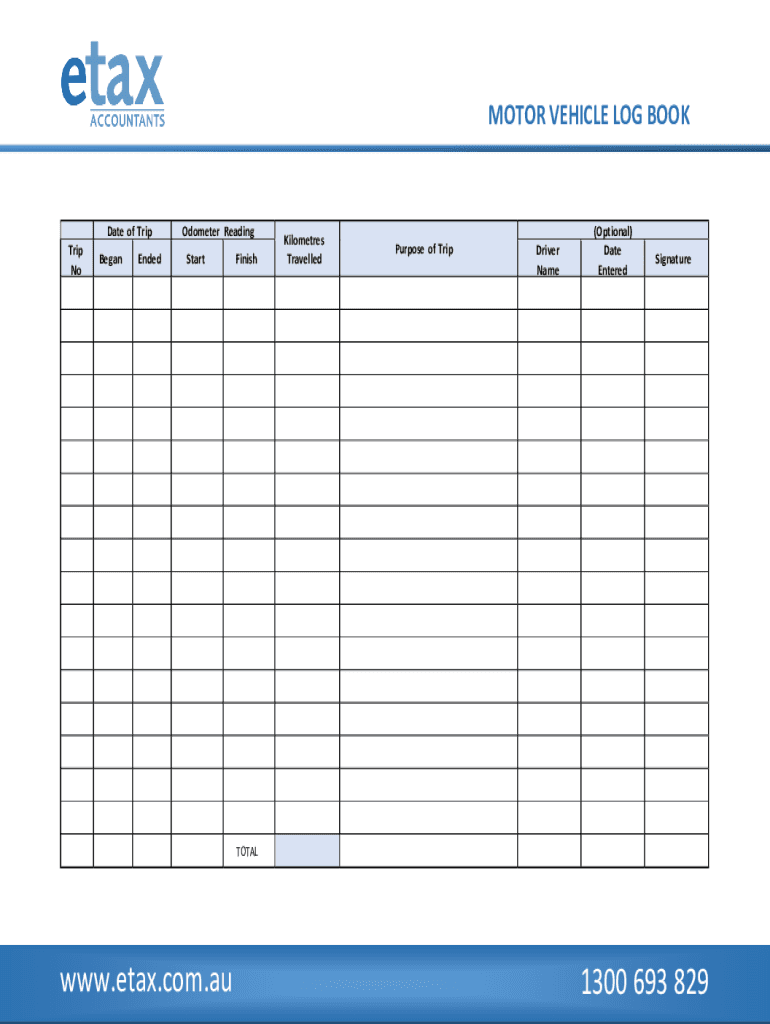







Definition & Purpose of the Motor Vehicle Log Book 2011
The "Motor Vehicle Log Book 2011" is a detailed log designed to record crucial information related to vehicle trips, including dates, odometer readings, kilometers traveled, the purpose of each trip, and driver details. It is primarily used for tracking vehicle usage to substantiate business expenses for tax purposes. The information recorded in this log book is vital for maintaining accurate records for both personal and business-related travel, ensuring compliance with financial record-keeping standards.
Examples of Information Recorded
- Dates of travel: Log the start and end dates of each trip to keep an accurate timeline.
- Odometer readings: Record before and after readings for each journey to calculate the distance traveled.
- Purpose of trip: Detail whether trips were for business meetings, educational purposes, or client visits.
- Driver information: Include the driver's name and any pertinent credentials or identification numbers.
How to Use the Motor Vehicle Log Book 2011
Implementing the log book effectively involves consistently recording all required information for each trip taken. This log book functions as a systematic document to help organize and validate travel data.
Step-by-Step Instructions
- Initialize the Log Book: Fill in any preliminary information required, such as vehicle details and personal information.
- Start Trip Entry: For each trip, enter the date, starting odometer reading, and initial location.
- During the Trip: Note down any significant stops and mileage readings as needed.
- End Trip Entry: Record the ending odometer reading, final location, and trip purpose succinctly.
- Review Entries: Regularly review entries for completeness and accuracy to ensure they meet any audit standards.
Key Elements of the Motor Vehicle Log Book 2011
The main components of the log book ensure comprehensive record-keeping and ease of use. Each section is essential for maintaining an accurate and audit-proof document.
Main Sections
- Trip Entry Details: Includes start and end information for each journey.
- Mileage Tracking: Captures the distance traveled using odometer readings.
- Purpose and Notes: Allows for a quick description of why the trip was necessary.
- Driver Information Section: Ensures that the responsible person is accountable for each entry.
Steps to Complete the Motor Vehicle Log Book 2011
Completing the log book requires diligence and attention to detail. Careful entry ensures the accuracy and reliability of the data for potential audits or internal reviews.
Detailed Completion Process
- Prepare Data Ahead of Time: Gather all pre-trip and post-trip information.
- Immediate Recording: Enter data as soon as a trip is completed to avoid forgetting details.
- Accuracy Checks: Regularly verify the accuracy of entries against vehicle records.
- Consistent Format: Maintain uniformity in recording data to facilitate easy retrieval and understanding.
Who Typically Utilizes the Motor Vehicle Log Book 2011?
This document is principally employed by individuals and businesses tracking vehicular use for tax-deductible purposes.
Typical Users
- Self-Employed Professionals: Individuals who utilize their personal vehicles for business purposes.
- Small Business Owners: Entities that require accurate travel records for tax deductions.
- Corporate Employees: Employees who need to submit travel expenses for reimbursement.
- Frequent Business Travelers: Individuals with significant travel requirements, potentially spanning various state lines.
Legal Use of the Motor Vehicle Log Book 2011
The log book serves as a legally recognized document for substantiating vehicle-related expenses, particularly in reference to tax deductions.
Legal Considerations
- IRS Compliance: Must meet standards set by the Internal Revenue Service for valid tax deductible records.
- Audit Preparedness: Provides documentation that can withstand scrutiny during an audit process.
- Privacy and Security: Users should ensure that personal data recorded in the log book aligns with privacy standards and safeguards sensitive information.
State-Specific Rules for the Motor Vehicle Log Book 2011
Although the basic concept of the log book is consistent, certain states may have specific regulations or additional requirements.
State Variations
- Mileage Rate Differences: Some states may offer different mileage rates affecting deductions.
- Documentation Requirements: Varying levels of stringency in record-keeping and documentation may apply.
- Tax Implications: Distinct state tax laws may require additional documentation for deductions.
Important Terms Related to the Motor Vehicle Log Book 2011
Understanding terminology associated with the log book ensures clarity and effective usage.
Key Terms
- Odometer Reading: The reading on a vehicle’s odometer indicating total distance traveled.
- Tax Deduction: A reduction of income subject to tax for expenses incurred.
- Travel Purpose: The reason for travel that may justify a tax deduction or business expense.
- Audit Trail: A systematic account of records that verify the accuracy of information provided in the log.




