
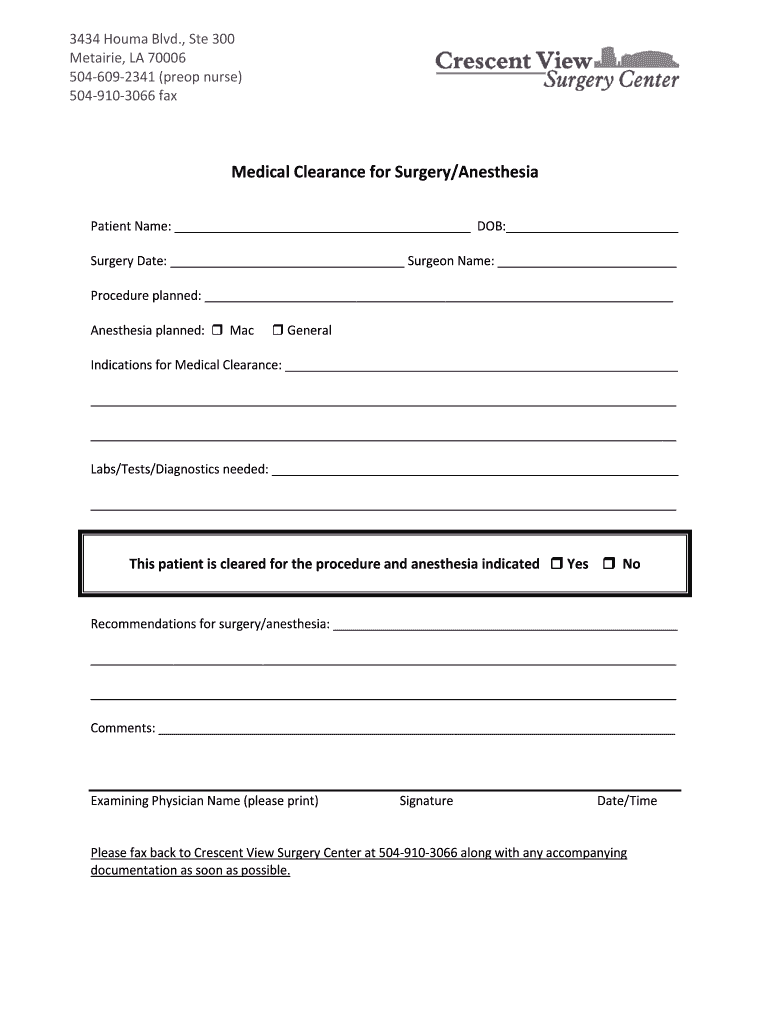







Understanding Medical Clearance for Surgery
Medical clearance for surgery is a critical evaluation conducted by healthcare professionals to determine if a patient is fit to undergo surgical procedures. This assessment ensures that any underlying medical conditions are appropriately managed prior to the operation, minimizing risks associated with anesthesia and surgical interventions.
Components of a Medical Clearance Form
A medical clearance form for surgery typically includes several essential components:
-
Patient Information: This section collects personal details about the patient, including name, date of birth, medical history, and contact information. Accurate personal data ensures proper identification and follow-up.
-
Procedure Details: Information regarding the surgery to be performed is documented, including the type of operation, surgical dates, and the facility where the procedure will occur. Providing specific details helps surgeons understand the context for medical clearance.
-
Anesthesia Considerations: The form must identify the type of anesthesia expected to be used, whether general, regional, or local. This helps assess potential risks based on the patient's health background.
-
Indications for Clearance: This section describes the reasons a medical clearance is sought, such as pre-existing conditions like hypertension, diabetes, or cardiovascular concerns. It guides the physician in evaluating the patient’s readiness for surgery.
-
Required Labs/Tests: A checklist of necessary preoperative tests, such as blood tests, EKGs, or imaging studies, is included to ensure comprehensive evaluation of the patient's health status.
-
Recommendations: Physicians provide their professional recommendations after reviewing the patient's information and test results. Recommendations may include lifestyle modifications, medication adjustments, or specialized preoperative evaluations.
Importance of Medical Clearance
Medical clearance forms play a crucial role in ensuring patient safety during surgical procedures. The evaluations performed can detect potential complications and allow healthcare providers to intervene proactively. For instance, a cardiac clearance form may be necessary for patients with a history of heart issues, ensuring they are stable enough to endure surgery.
-
Identification of Health Risks: Thorough evaluations allow medical professionals to identify risks that could complicate surgery or recovery. Conditions such as obesity, respiratory issues, or medications that affect blood clotting must be managed before any surgical procedure.
-
Coordination of Care: The clearance process fosters communication between various healthcare providers involved in the patient’s care, ensuring a comprehensive approach to managing health issues.
-
Mitigation of Delays: Completing this assessment well in advance can help mitigate potential delays in surgery, ensuring that all preoperative requirements are satisfied beforehand.
Steps to Complete a Medical Clearance for Surgery
-
Initial Consultation: Patients should schedule appointments with their primary care physician or specialist to discuss their surgery and the medical clearance process.
-
Document Medical History: A complete and accurate medical history is essential. Patients should prepare to discuss any health conditions, current medications, allergies, and previous surgeries.
-
Undergo Necessary Tests: Patients may need to complete blood tests, imaging, or other screenings as directed by their healthcare provider. It’s vital to follow through with these requirements promptly.
-
Obtain Clearance Form: After the examination, the physician will fill out the medical clearance form, noting findings, recommendations, and any necessary special precautions for the surgery.
-
Submit the Form: Once completed, the patient or physician should send the medical clearance form to the surgical center or the surgeon's office to ensure all preoperative information is available before the procedure.
Legal and Administrative Guidelines
In the United States, there are specific legal guidelines governing medical clearance for surgery. It is important to ensure that:
-
The form is filled out by a qualified healthcare provider who has evaluated the patient’s health status.
-
Proper documentation practices are followed, maintaining accurate records for patient safety and compliance with healthcare regulations.
-
Clear guidelines pertaining to specific types of surgery (e.g., orthopedic, cardiac) may be established to standardize the clearance process based on risk assessments.
Common Scenarios and Variations
Patients with varying health backgrounds may have different requirements for medical clearance. For instance:
-
Elderly Patients: Older adults may require more comprehensive evaluations, including cardiac and pulmonary assessments, due to the increased risk of complications.
-
Patients with Chronic Conditions: Individuals with diabetes or hypertension may need to demonstrate controlled levels of these conditions before receiving surgical clearance.
Conclusion
Medical clearance for surgery is an essential process that contributes to patient safety and optimal surgical outcomes. Understanding the documentation process, the importance of comprehensive evaluations, and the steps involved can enhance the efficiency and effectiveness of surgical care.




