




01. Edit your appointment of new trustee form online
Type text, add images, blackout confidential details, add comments, highlights and more.

Type text, add images, blackout confidential details, add comments, highlights and more.

Draw your signature, type it, upload its image, or use your mobile device as a signature pad.

Send trustee acceptance form via email, link, or fax. You can also download it, export it or print it out.
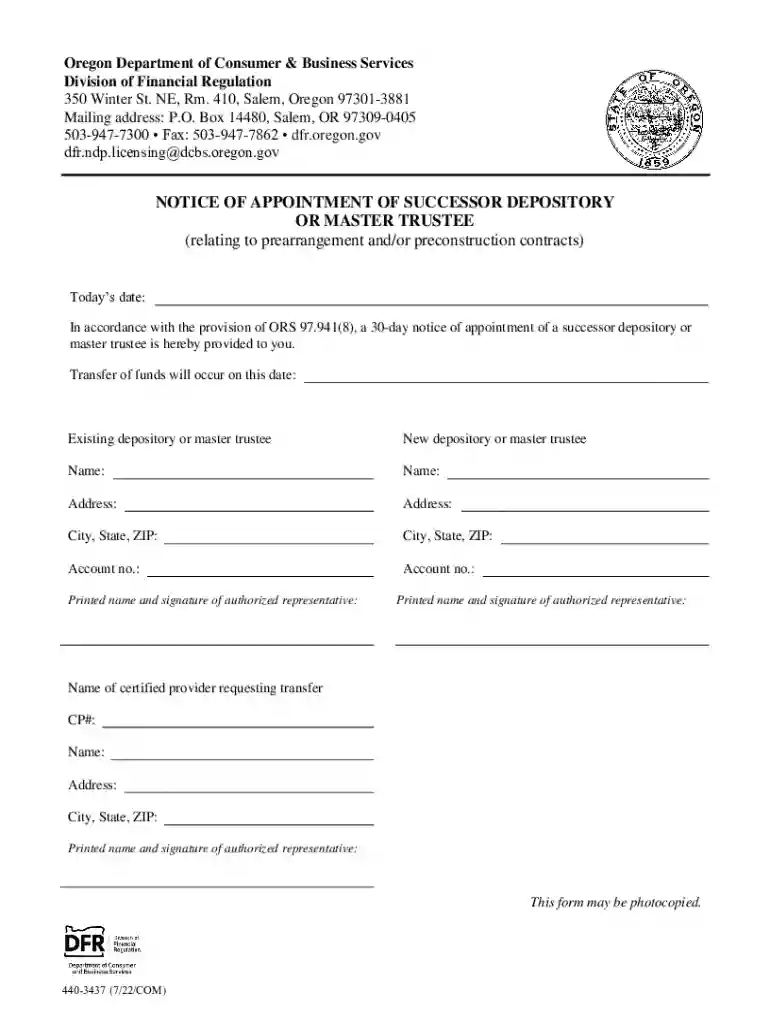
The "Notice of Appointment of Successor Depository or" is a formal document used primarily within the financial and legal sectors to indicate a change in the depository or master trustee overseeing prearrangement and preconstruction contracts. This notice plays a critical role in ensuring the seamless transfer of responsibilities and funds from one depository to another, maintaining legal and financial continuity. In essence, this document serves to formally notify involved parties of the change and detail the new depository arrangements. This is particularly relevant in situations requiring regulatory compliance or where large sums of money are managed.
Typically, financial institutions, legal entities, and departments of consumer and business services, such as those in Oregon, utilize this notice. These organizations might be engaged in activities related to managing trusts, large financial undertakings, or contractual obligations where a depository is required. The notice is essential for businesses overseeing prearranged agreements, depositary organizations, and legal firms representing clients with such engagements. Professionals like compliance officers, legal consultants, and financial managers frequently interact with this form due to its significance in maintaining regulatory and contractual integrity.


The form includes several key elements critical for its function:
These elements ensure clarity, accountability, and legal standing for all parties involved.
Completing the form involves several critical steps:
Following these steps ensures a compliant and effective changeover process.
Different states might have specific rules and regulations governing this notice. For instance, in the state of Oregon, the Department of Consumer & Business Services oversees compliance, ensuring that depository and trustee appointments adhere to state laws regarding financial and contractual arrangements. State-specific rules could dictate particular submission methods, formatting details, or added documentation and might require state-specific forms accompanying the notice. It’s essential for entities to research and comply with their state’s unique requirements to avoid penalties or rejection of the notice.
The notice serves important legal functions in various financial transactions, ensuring a seamless transition in fiduciary responsibilities. This is particularly important in scenarios involving prearrangement and preconstruction contracts where there are legal obligations to inform all stakeholders about the change in depository. Failing to issue this notice could result in legal ramifications or nullification of the successor's authority. Compliance with this legal requirement supports transparency and maintains trust among contractual parties, protecting all involved from potential disputes or discrepancies.
There are several methods by which this notice can be submitted:
Choosing the correct submission method is contingent upon state regulations or the specific requirements of the entities involved.
Failure to submit the notice correctly or in a timely manner could result in serious penalties. Depending on the jurisdiction, these penalties might include:
Adhering to legal requirements and timelines ensures that all parties avoid unnecessary complications and maintain operational integrity.
We've got more versions of the appointment of new trustee form form. Select the right appointment of new trustee form version from the list and start editing it straight away!
At DocHub, your data security is our priority. We follow HIPAA, SOC2, GDPR, and other standards, so you can work on your documents with confidence.


