



01. Edit your hockey practice plan template online
Type text, add images, blackout confidential details, add comments, highlights and more.

Type text, add images, blackout confidential details, add comments, highlights and more.
Draw your signature, type it, upload its image, or use your mobile device as a signature pad.
Send hockey canada practice plan template via email, link, or fax. You can also download it, export it or print it out.
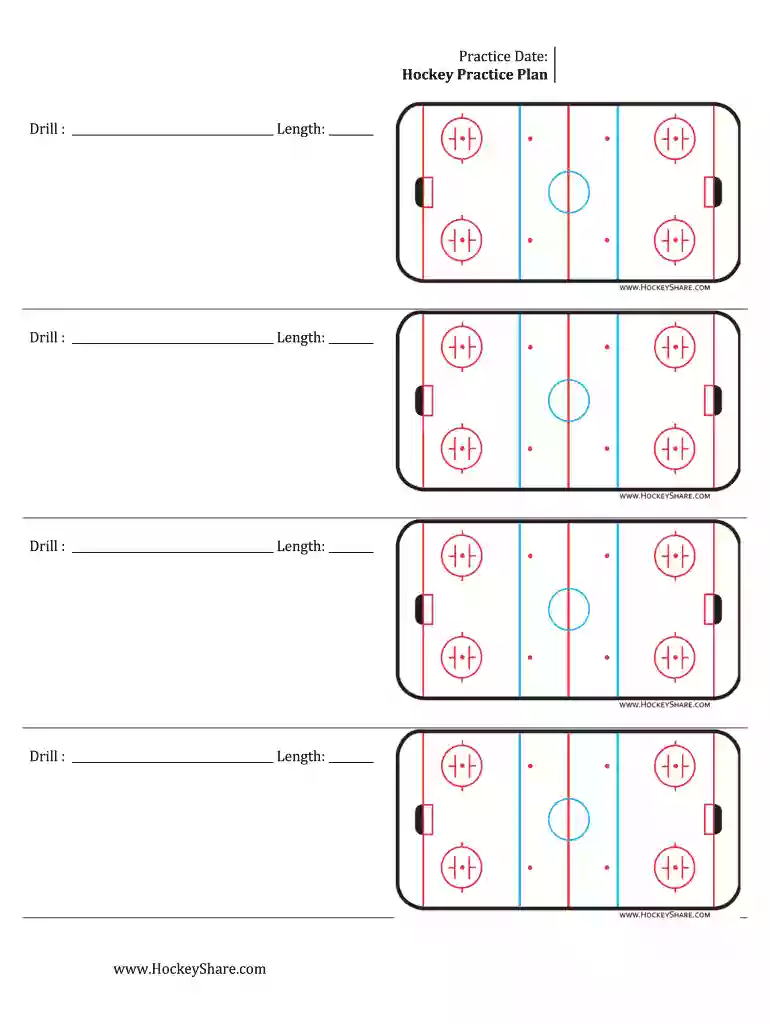
A hockey practice plan template is a structured guide that assists coaches in organizing practice sessions effectively. It is a tool that can be adapted based on age groups, skill levels, and specific game strategies. Here are the key components to consider when developing an effective hockey practice plan template.
The layout of the practice plan should be organized into clearly defined sections, which may include:
Practice Objectives: This section outlines the goals for the practice session, such as improving skating skills, developing teamwork, or enhancing shooting accuracy. Clearly stated objectives ensure that all participants understand what the practice aims to achieve.
Drill Breakdown: Each practice plan should detail specific drills to be conducted, including their purpose, expected outcomes, and instructions for execution. Common drills might focus on passing, shooting, or defensive strategies.
Timing: Allocate specific timeframes for each drill to ensure the session remains on schedule. For example, a one-hour practice could include a fifteen-minute warm-up, followed by four drills of ten minutes each, and concluding with a five-minute cool-down.
When creating a practice plan, consider including variations for each drill to cater to different skill levels. This approach enhances engagement and allows individualized coaching. For example:
Beginner Level: Simplify drills by reducing complexity or slowing down the pace. Focus on fundamental skills such as basic passing techniques.
Intermediate/Advanced Levels: Introduce competitive elements or complex scenarios that require quick decision-making, such as small-area games.
Regularly evaluate the effectiveness of each practice through feedback from players and assistant coaches. This can help in refining drills and enhancing the overall training experience.
Player Feedback: After each practice, have a brief discussion with the team to gather their thoughts on what they enjoyed or found challenging. This input can guide future practices.
Coaching Assessment: Document observations during practices, noting player progress, areas for improvement, and engagement levels. This will be useful for evaluating players over time.
Incorporate game-like situations into drills to prepare players for real competition scenarios. By practicing under simulated game conditions, players can better apply learned skills during actual games.
Scrimmages: Design practice sessions to include scrimmage time, allowing players to apply skills in a less structured environment.
Situational Drills: Develop drills that mimic specific game scenarios, such as power plays or penalty kills, to build strategic understanding and readiness.
Ensure that the practice plan template is easy to read and use, potentially in a format that can be printed or accessed digitally. The layout should be clear, with enough space for coaches to add personalized notes.
Printable Design: Consider offering a PDF version that coaches can print for use during practice sessions, ensuring all necessary materials are readily available.
Digital Accessibility: Allow for a digital option that can be filled out and saved on devices, making it convenient for coaches to update plans as needed and easily share them with team members or parents.
Using a hockey practice plan template has multiple advantages, which include:
Efficiency: It streamlines planning and execution, maximizing practice time and focusing on specific skills.
Organization: A structured format allows coaches to present practice goals clearly, ensuring a smooth flow during sessions.
Consistency: Regular use of a practice plan template helps maintain a cohesive training approach over the season, critical for player development.
Player Engagement: A well-thought-out practice plan keeps players involved and motivated, addressing their developmental needs while providing a fun learning environment.
By leveraging a hockey practice plan template, coaches can enhance training sessions, ensuring they are productive, enjoyable, and focused on player development. A template serves as a fundamental tool to build structured, effective, and engaging practice sessions that prepare players for success both on and off the ice.
Log in to your DocHub account and import your hockey practice plan template pdf to our editor using one of its upload methods - from your device, cloud storage, secure URL, or your DocHub folders if you have already managed your form before. Open our editor, click the Sign key in the upper toolbar, and decide on your signing method. You can upload a picture of your handwritten signature, draw it, enter your name, or use a QR code as an alternative.
You can find the latest and most relevant version of the hockey drill sheets in our DocHub forms collection. Search it by categories or use the search field to find the exact template that suits your case. You may open this form for editing once you find it.
At DocHub, your data security is our priority. We follow HIPAA, SOC2, GDPR, and other standards, so you can work on your documents with confidence.



Hockey coaches have a range of practice plan templates at their disposal, each designed to cater to specific needs and skill levels.Read more
A plan to improve performance including drills, cues or activities to help the performer achieve advanced-level performance of the skill. A task sheet, likeRead more
Oct 19, 2025 Its free plan adds a subtle Made Use program partnerships to acquire users in cohorts, then keep them with habit-forming practice.Read more


