







Definition and Meaning
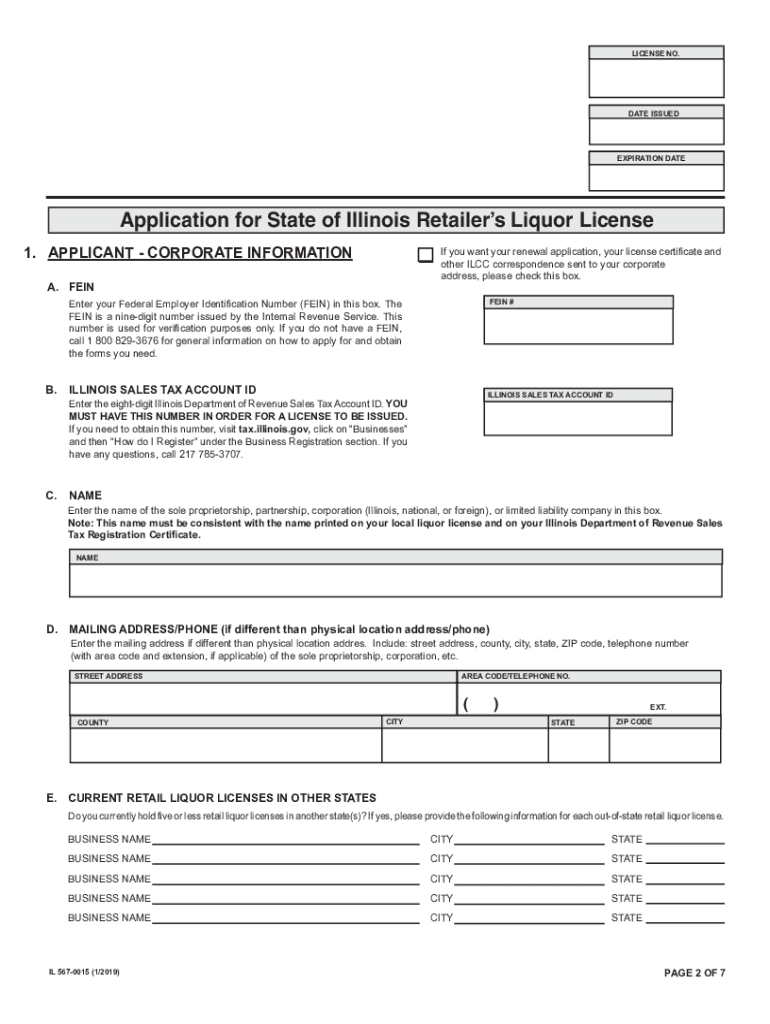
The "Illinois Liquor Control and Alcoholic Beverage Information" form is a key document for businesses involved in the retail sale of alcoholic beverages in Illinois. It serves as an application for acquiring a Retailer’s Liquor License, which authorizes the legal sale of alcohol at retail outlets. This form is critical as it codifies the applicant's agreement to comply with state regulations governing the sale and distribution of alcoholic beverages. Understanding the core function of this form is essential for its proper completion and submission.
How to Obtain the Illinois Liquor Control and Alcoholic Beverage Information
To acquire the necessary form for applying for a Retailer’s Liquor License in Illinois, businesses can access it through the Illinois Liquor Control Commission's official website. This digital availability ensures that potential licensees have quick access to the most current version of the form. It is crucial to carefully review all the requirements and prepare the necessary documentation prior to filling out the application to streamline the process.
Required Documents
- Proof of property ownership or lease agreement for the retail location.
- A copy of local liquor licenses, including any city or county-specific permissions.
- Identity verification documents for all individuals involved in the business entity.
- Prior sales history or business plan, if applicable.
Steps to Complete the Illinois Liquor Control and Alcoholic Beverage Information
Completing this form involves a series of detailed steps to ensure thoroughness and compliance:
-
Gather Required Documents: Assemble all necessary paperwork, such as identification, property documents, and local liquor licenses.
-
Complete the Application: Fill out the form with accurate details about the business, including the name, address, ownership structure, and intended alcohol sales.
-
Review and Verify Details: Double-check all information to prevent errors that could delay the approval process.
-
Submit the Application: Send the completed form and all supporting documents to the Illinois Liquor Control Commission via your chosen method (online, mail, or in-person submission).
Form Submission Methods
- Online: Fastest method; submit via the state’s official portal.
- Mail: Suitable for those who prefer physical documentation.
- In-Person: Allows for direct submission and immediate feedback on application completeness.
Application Process & Approval Time
After submission, the Illinois Liquor Control Commission will review the application to ensure compliance with state laws. The processing time generally ranges from three to ten business days. During this period, the commission may request additional information or clarification on submitted documents. Timely response to such requests will help avoid delays.
Important Terms Related to Illinois Liquor Control and Alcoholic Beverage Information
Common Legal Terms
- Retailer’s Liquor License: A permit allowing the sale of alcoholic beverages to consumers for off-premises consumption.
- Liquor Control Commission: The governing body responsible for overseeing alcohol-related activities within the state.
Legal Use of the Form
Businesses must use the form only for legitimate applications and adhere to all licensing terms once the license is granted. Misuse of the form can lead to penalties, including fines or license revocation.
Penalties for Non-Compliance
Failure to complete the form accurately or maintain compliance with state liquor laws can result in significant penalties:
- Fines and Sanctions: Monetary penalties may be levied for each infraction.
- License Revocation: Repeat offenses could lead to the permanent loss of the liquor license.
State-Specific Rules for Illinois Liquor Control
Illinois imposes specific regulations that vary on county or city levels regarding the sale and distribution of alcohol. It is crucial for businesses to familiarize themselves with both state and local laws to ensure compliance. Local ordinances may influence not only licensing procedures but also operational terms such as permitted sale hours and location restrictions.
Examples of State-Specific Regulations
- Operating Hours: Some local jurisdictions may have restrictions on when alcohol sales are permitted.
- Advertising Limitations: Guidelines on how alcoholic products can be marketed within the state.
Digital vs. Paper Version
While a traditional paper version of the form is available, the digital format offers several advantages:
- Accessibility: Easily downloadable and fillable online, ensuring up-to-date requirements are met.
- Environmentally Friendly: Reduces paper use and expedites submission processes.
Software Compatibility
The online form is compatible with various document processing software, including popular platforms like Adobe Acrobat for PDFs, ensuring convenient editing and submission.
By understanding the nuances of the "Illinois Liquor Control and Alcoholic Beverage Information" form, applicants can streamline their application process and maintain compliance, avoiding potential legal and financial pitfalls associated with improper handling of alcohol sales licensing.




