MOTION FOR A 2026

Get Form
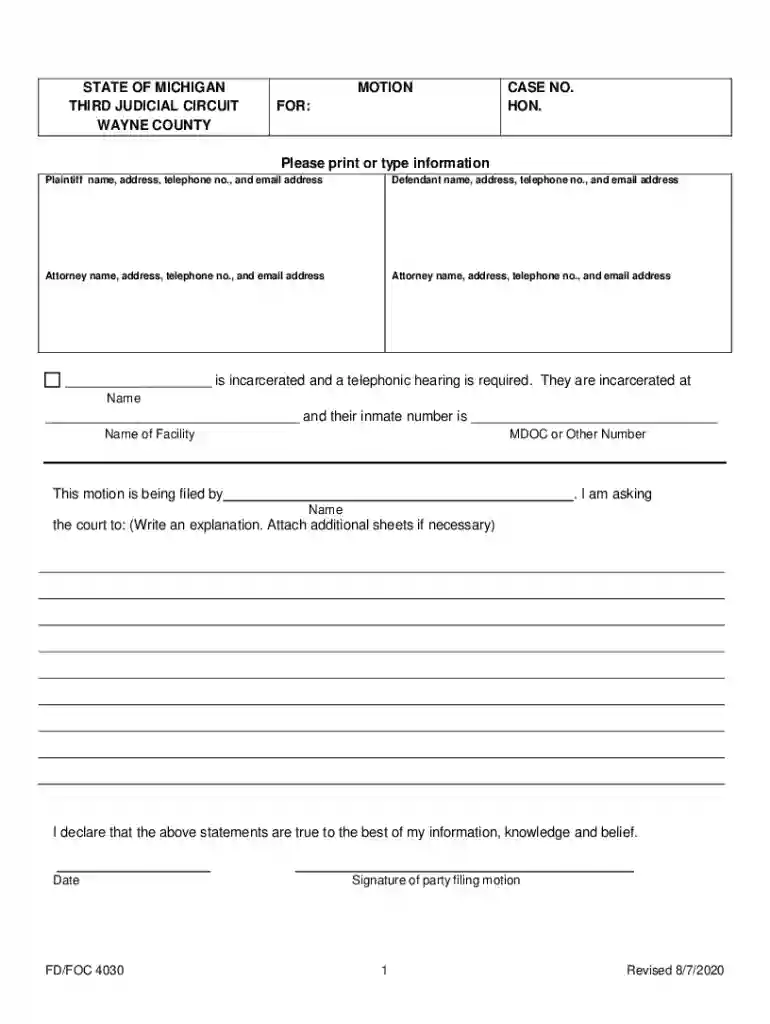
MOTION FOR A Preview on Page 1

Here's how it works

01. Edit your form online
Type text, add images, blackout confidential details, add comments, highlights and more.

02. Sign it in a few clicks
Draw your signature, type it, upload its image, or use your mobile device as a signature pad.

03. Share your form with others
Send it via email, link, or fax. You can also download it, export it or print it out.

Definition and Meaning of a Motion for a

A "Motion for a" typically refers to a formal request filed in a court of law, asking the court to make a specific ruling or order. This type of motion can be used in various legal situations, such as family law, criminal cases, or civil litigation. It allows parties involved in a legal proceeding to request specific court actions, such as a change in a trial date or an order to compel the opposing party to provide evidence. The flexibility in the type of requests possible under a motion for a makes it a crucial tool in the courtroom.

Steps to Complete the Motion for a

Completing a motion for a is a structured process that helps ensure the request is clearly communicated to the court. Below are the steps typically involved:

  1. Identify the Specific Need: Determine what specific action or ruling you are requesting the court to make.
  2. Draft the Motion: Use a standardized form or create a document that clearly outlines your request, supporting details, and legal grounds.
  3. Gather Supporting Documents: Collect any evidence or affidavits that support your motion.
  4. File the Motion: Submit the motion to the appropriate court clerk's office, adhering to the court's rules on format and submission.
  5. Notify Other Parties: Serve copies of the motion to all other parties involved in the case.
  6. Attend the Hearing: Be present at the court hearing where your motion will be reviewed and decided upon by a judge.

How to Use the Motion for a

A motion for a is used in legal contexts to seek intervention from the court on a particular issue. Here’s how it functions within the judicial process:

  • Initiating Action: When there is a disagreement or a need for judicial clarification, a motion for a can set the process in motion for the court to make a determination.
  • Presenting Arguments: Both parties in the dispute have the opportunity to present their arguments and submit evidence related to the motion before a decision is made.
  • Judicial Review: The court will consider the merits of the motion, including legal arguments and evidence, before making a ruling.
  • Resolution: Once a decision is issued, it can directly impact the progress and management of the case moving forward.

Who Typically Uses the Motion for a

This kind of motion is used broadly by:

  • Attorneys: Legal professionals representing clients in civil, criminal, or family law cases frequently file motions for a to advance their case or seek specific judicial orders.
  • Pro Se Litigants: Individuals representing themselves in court might file a motion for a to handle procedural issues or address specific grievances within their legal process.
  • Defendants and Plaintiffs: Both parties, whether defending or initiating a claim, can utilize motions to influence court proceedings in their favor.
decoration image ratings of Dochub

Required Documents for a Motion for a

To effectively support a motion for a, various documents are essential:

  • Completed Motion Form: Include all relevant details that clearly describe the request and the justification for it.
  • Affidavits: Statements under oath that support the facts mentioned in the motion.
  • Evidence Documentation: Any additional documents, such as contracts, photographs, or official records, that strengthen your case.
  • Proof of Service: Documentation evidencing that all parties have received copies of the motion.

Legal Use of the Motion for a

The legal use of a motion for a is bound by specific rules and guidelines that dictate its application within court proceedings:

  • Adherence to Court Rules: Each jurisdiction may have unique procedures for filing and arguing motions, including deadlines and documentation requirements.
  • Grounds for Motion: The legal grounds for filing a motion must be consistent with state laws and legal precedents applicable to the case type.
  • Court’s Discretion: Ultimately, the court has the discretion to grant or deny any motion based on its merits and adherence to legal standards.

State-Specific Rules and Regulations

Motions for a can be subject to state-specific variations that influence their use and effectiveness:

  • Local Jurisdiction Rules: Different states, and sometimes counties, have specific rules regarding filing procedures, required documentation, and timing.
  • Case Type Influence: Rules may vary based on whether the motion is related to criminal law, family law, or other civil cases.
  • Consultation with Legal Experts: Understanding these variations often requires consulting with attorneys familiar with local court systems.

Examples of Using the Motion for a

Practical applications of a motion for a can be found in diverse legal scenarios, including:

  • Family Law: Filing a motion to request custody modifications or visitation arrangements.
  • Civil Cases: A motion to compel discovery, where a party seeks an order requiring the other side to provide specific information or documents.
  • Criminal Proceedings: Submitting a motion to suppress evidence that is argued to have been obtained unlawfully.

Understanding how to effectively utilize a motion for a can significantly influence legal strategies and outcomes. Each of these sections provides a detailed exploration of aspects crucial to executing a motion in legal contexts, helping ensure that users can navigate the process with full knowledge and preparation.

See more MOTION FOR A versions

We've got more versions of the MOTION FOR A form. Select the right MOTION FOR A version from the list and start editing it straight away!
Versions Form popularity Fillable & printable
2022 4.8 Satisfied (133 Votes)
2020 4.8 Satisfied (205 Votes)
2013 4 Satisfied (55 Votes)
be ready to get more

Complete this form in 5 minutes or less

Get form

Got questions?

We have answers to the most popular questions from our customers. If you can't find an answer to your question, please contact us.
Contact us
3:00 4:10 In summary yes you can file a motion without a lawyer by understanding court rules preparing yourMoreIn summary yes you can file a motion without a lawyer by understanding court rules preparing your motion properly. And following the necessary steps you can navigate the process of self-representation
If the court grants the motion for new trial, the judgment or final order previously rendered is set aside or vacated.
A partys post-trial request that the court vacates the judgment and orders a new trial to re-examine some or all of the matters from the concluded trial. The motion can be made by any party and following both jury trials and bench trials.
Motion for a New Trial The court can vacate the judgment and allow for a new trial. This is rarely granted, but may be done if the interest of justice so requires.
General format - each motion generally consists of a case caption, a title that briefly identifies the relief sought, a series of numbered paragraphs that explains -- in a logical way -- why you are entitled to that relief, a prayer for relief, a signature block, a certification that a copy of the motion was sent to

Security and compliance

At DocHub, your data security is our priority. We follow HIPAA, SOC2, GDPR, and other standards, so you can work on your documents with confidence.

Learn more
ccpa2
pci-dss
gdpr-compliance
hipaa
soc-compliance