
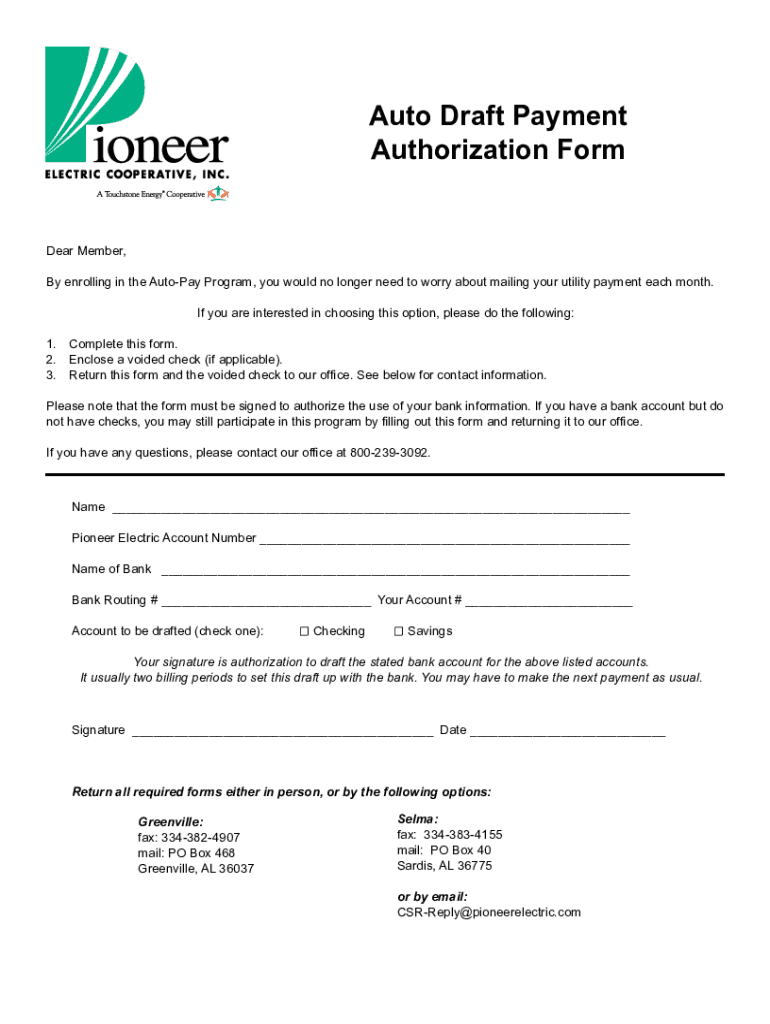







Definition and Meaning of Auto Draft Authorization Form
An Auto Draft Authorization Form is a document that allows individuals or businesses to authorize automatic payments from their bank accounts for recurring expenses. This form is commonly used for utility bills, subscriptions, or loan payments. By completing this form, participants enable financial institutions to deduct specific amounts automatically on preset dates, ensuring consistent and timely payments without the need for manual intervention every billing cycle.
How to Use the Auto Draft Authorization Form
Using the Auto Draft Authorization Form involves a few straightforward steps:
- Accessing the Form: Obtain the form from your service provider or financial institution, either online or via physical mail.
- Filling Out Information: Enter your personal details, including name, account number, and address.
- Banking Details: Provide necessary banking details like account and routing numbers to facilitate drafts.
- Specify Payment Terms: Indicate the amount, frequency, and start date for the auto draft payments.
- Authorization: Sign the form to authorize the financial institution to process automatic payments.
Consider checking any additional requirements specified by your provider to ensure seamless enrollment in the auto-pay program.
Steps to Complete the Auto Draft Authorization Form
Completing the Auto Draft Authorization Form involves several clear steps:
-
Gather Required Information:
- Personal identification like driver’s license or Social Security number.
- Bank account details, including a voided check for accuracy.
- The account number of the service for which payment is being authorized.
-
Form Entry:
- Carefully input all requested information ensuring there are no errors in key details such as account numbers.
- Double-check payment amounts and start dates for accuracy.
-
Review and Submit:
- Review the completed form for any mistakes or omissions.
- Submit the form via the channel designated by your service provider, whether online or by sending it to a specified address.
Why Use the Auto Draft Authorization Form
Utilizing the Auto Draft Authorization Form provides several benefits:
- Consistency: Ensures payments are made on time, avoiding late fees.
- Convenience: Eliminates the need for manual payments, saving time and effort.
- Budget Management: Provides clear insight into monthly expenditures through regular statements.
- Security: Reduces the risk of errors associated with manual transactions.
These aspects contribute to better financial management and peace of mind for users.
Important Terms Related to Auto Draft Authorization Form
Understanding key terms associated with the Auto Draft Authorization Form is critical:
- Authorization: Permission granted by a bank account holder to debit specified amounts.
- Payee: The entity receiving the payment.
- Draft: The transfer of funds from one account to another.
These terms serve as the foundation for understanding the form's function and requirements.
Legal Use of the Auto Draft Authorization Form
This form must comply with legal standards to ensure valid and protected transactions:
- Consumer Protection: Regulations such as the Electronic Fund Transfer Act govern these transactions.
- Authored Consent: The form needs explicit consent which often includes a handwritten or electronic signature.
Adhering to these legal requirements safeguards both the payer and payee's interests.
Key Elements of the Auto Draft Authorization Form
The Auto Draft Authorization Form typically includes the following elements:
- Participant Information: Name and contact details of the account holder.
- Banking Information: Bank name, account, and routing numbers.
- Payment Details: The amount, frequency, and commencement date for payments.
- Authorization Statement: Language in which the account holder allows the drafts.
Each element contributes to creating a complete and actionable authorization for automatic payments.
Penalties for Non-Compliance
Failing to comply with the rules associated with auto drafts can lead to consequences:
- Fees: Banks may charge fees for insufficient funds if account balances are inadequate.
- Termination of Service: Persistent payment failures can lead to service termination.
- Credit Impact: Late payment records may adversely impact credit scores.
Understanding and adhering to the terms outlined in the authorization form is crucial to avoiding these penalties.




