







Definition & Meaning
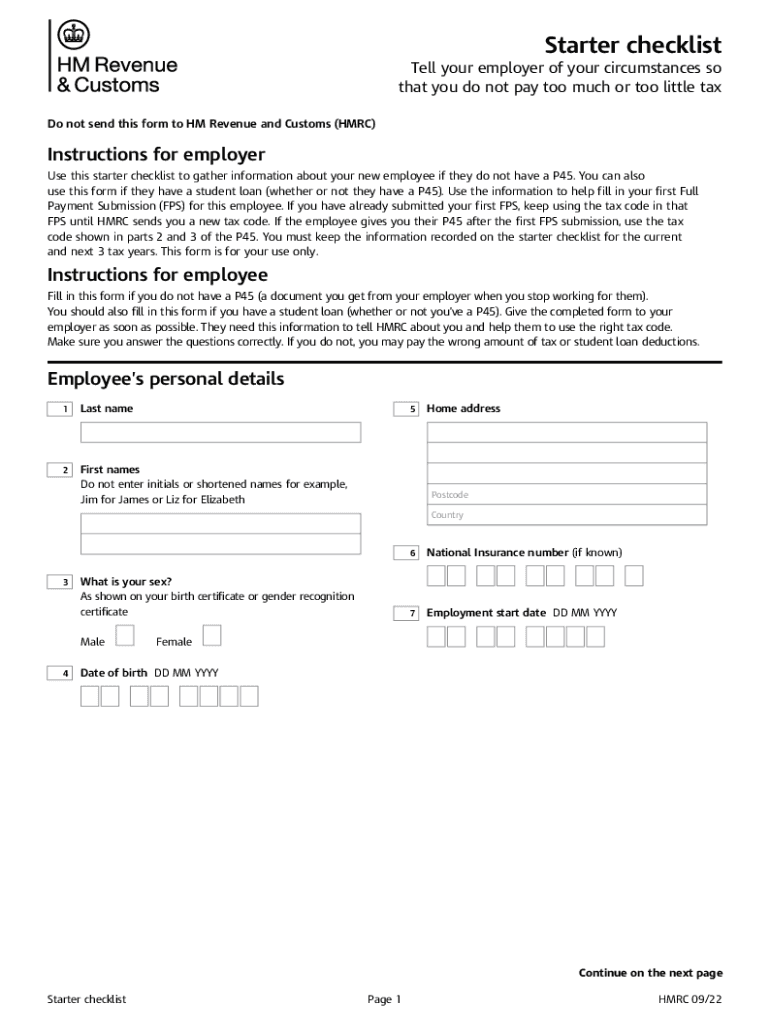
The "Starter checklist for New Employee Information for Employers" is a crucial document designed to streamline the onboarding process for new employees. It provides a structured format for collecting essential employee data required for tax and compliance purposes. This checklist helps ensure that both employers and employees have clear guidelines on the necessary information that needs to be gathered and documented. The checklist is particularly vital for individuals who do not have a P45 form or have existing student loans, as it assists in determining the correct tax code for accurate payroll processing.
How to Use the Starter Checklist
Employers use the starter checklist as part of their onboarding procedures for new employees. Here are the key steps to effectively utilizing the checklist:
- Distribution: Provide the checklist to new employees as part of their initial onboarding documentation packet.
- Completion: Instruct employees to fill out their personal details and answer the statements regarding their employment status and any student loans.
- Review: Verify the information provided by the employee to ensure all necessary fields are completed accurately.
- Submission: Use the collected information to update payroll systems and ensure appropriate tax code assignments.
Each step in this process contributes to seamless integration of employee information into company records, aiding in compliance and streamlined payroll operations.
Steps to Complete the Checklist
Filling out the starter checklist involves several important steps. Below is a detailed breakdown to guide you through the process:
- Personal Information:
- Employees must enter their full name, address, date of birth, and National Insurance number.
- Employment Status:
- Choose the statements that best describe the employee's current employment situation, including any recent employment or receipt of statutory pay.
- Student Loan Declaration:
- Indicate whether the employee has a student loan and provide additional details if applicable, such as the loan plan type.
- Verification:
- Double-check all entries for completeness and accuracy before submission to the employer.
- Submission:
- Submit the completed form to the employer’s HR or payroll department for processing.
Following these steps ensures that all necessary data is gathered efficiently, minimizing errors and delays in processing.
Key Elements of the Starter Checklist
The starter checklist encompasses several significant elements designed to capture comprehensive employee information:
- Personal Details: Name, address, and identification number necessary for employment records.
- Tax Status Statements: These determine the applicable tax code, impacting payroll deductions.
- Student Loan Information: Provides data to manage and deduct student loan repayments correctly.
- Employment History: Prior work details that influence tax assessments and statutory pay considerations.
Each element serves an essential role in ensuring accurate processing and compliance with tax regulations.
Legal Use of the Starter Checklist
Employers are legally obligated to collect specific information from new employees to ensure tax compliance and correct payroll operations. The starter checklist fulfills this requirement by:
- Ensuring Compliance: Provides a standardized method for collecting tax-related employee data, reducing legal risks.
- Facilitating Documentation: Acts as an official record of the employee's tax and employment status.
- Guiding Payroll Adjustments: Enables appropriate adjustments for tax withholding and student loan deductions.
Understanding legal use is critical for employers to avoid penalties and ensure alignment with regulations.
Important Terms Related to the Checklist
Familiarity with terms used in the checklist can facilitate easier use and understanding:
- P45: A form detailing employee pay and tax deducted, typically provided by previous employers.
- Starter Checklist: The document used when a P45 is unavailable, capturing necessary new employee information.
- Tax Code: Determines the amount of tax to be deducted from employee wages.
- Student Loan Plan: Differentiates between loan types for proper repayment deduction.
These terms form the foundation for effectively using and interpreting the checklist.
IRS Guidelines
While the starter checklist is primarily a UK HMRC document, understanding IRS guidelines is beneficial for parallel processes in the U.S.:
- Similar IRS Forms: W-4 or W-9 forms are used in the U.S. for tax withholding and taxpayer identification.
- Compliance Requirements: Accurate employee information is essential to meet IRS filing standards.
- Equivalent Processes: Comparing with U.S. forms aids in understanding international tax forms' universality.
Knowing these guidelines enhances cross-border employment processes and compliance.
Digital vs. Paper Version
Many organizations now utilize digital platforms for handling the starter checklist, offering several advantages:
- Efficiency: Digital forms automate data entry, reducing manual error.
- Accessibility: Employees can complete and submit forms remotely, accommodating flexible work arrangements.
- Integration: Easily incorporated into digital payroll systems for seamless operations.
Despite these benefits, some may still use paper versions for traditional preferences or digital access limitations.




