




01. Edit your hmrc starter checklist word document online
Type text, add images, blackout confidential details, add comments, highlights and more.

Type text, add images, blackout confidential details, add comments, highlights and more.

Draw your signature, type it, upload its image, or use your mobile device as a signature pad.

Send hmrc starter checklist editable via email, link, or fax. You can also download it, export it or print it out.
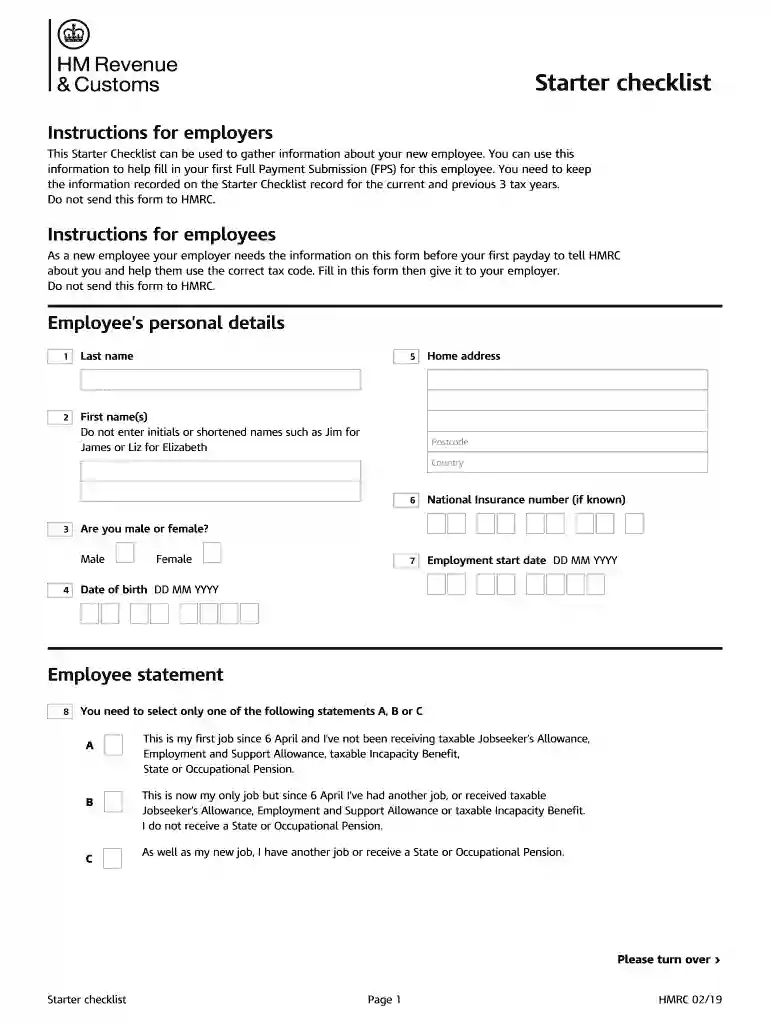
The HMRC Starter Checklist serves as a tool specifically designed for new employees and their employers in the United Kingdom to gather necessary information for tax purposes. This checklist aids in the compilation of essential personal details required for tax compliance, ensuring accurate submission of tax information to Her Majesty's Revenue and Customs (HMRC). Key information collected includes:
It is important to note that while the information gathered through this checklist is necessary for the employer, the completed checklist itself should not be submitted directly to HMRC.
Completing the HMRC Starter Checklist involves several important steps. Employers should ensure that new employees understand the purpose of the form and the information required. The process includes:
Gathering information: The employee must collect all relevant personal details before filling out the checklist. This includes their National Insurance number and any information regarding prior employment or student loans.
Filling out the form: The starter checklist includes sections for personal details, start dates, and student loan status. Employees should take care to record accurate information.
Reviewing provided details: After completion, both the employee and employer should review the checklist together to confirm all required fields are filled accurately.
Retaining the checklist: The employer should keep the completed checklist on file for reference as it may be needed for future tax calculations or audits.
Moving to payroll: Once the checklist is completed and verified, the employer can begin processing the employee's payroll based on the collected information.
Taking care during each step ensures compliance and reduces the risk of errors in tax filings.
The HM Revenue Starter Checklist is primarily used by specific groups involved in the employment ecosystem, including:
Understanding the stakeholders involved helps in the effective use and importance of the starter checklist in the hiring and onboarding process.


Understanding the key components of the HMRC Starter Checklist is vital for both new employees and employers. The essential elements include:
Employers must be diligent in ensuring all these elements are accurately captured and documented, as they form the basis for payroll processing.
The legal use of the HMRC Starter Checklist is critical for compliance with UK tax laws. The HMRC mandates that employers need to collect specific information from their new employees to fulfill their legal obligations in reporting taxes accurately. Important legal aspects include:
Adhering to these legal requirements mitigates risks for both employers and employees.
We've got more versions of the hmrc starter checklist word document form. Select the right hmrc starter checklist word document version from the list and start editing it straight away!
At DocHub, your data security is our priority. We follow HIPAA, SOC2, GDPR, and other standards, so you can work on your documents with confidence.







Oct 23, 2025 Step 1: Put a plan together by discussing the questions below with your family, friends or household to start your emergency plan.Read more
Dec 28, 2025 The SECs Division of Examinations has released its 2025 priorities, and cybersecurity compliance has never been more critical.Read more


