




01. Edit your form online
Type text, add images, blackout confidential details, add comments, highlights and more.

Type text, add images, blackout confidential details, add comments, highlights and more.

Draw your signature, type it, upload its image, or use your mobile device as a signature pad.

Send it via email, link, or fax. You can also download it, export it or print it out.
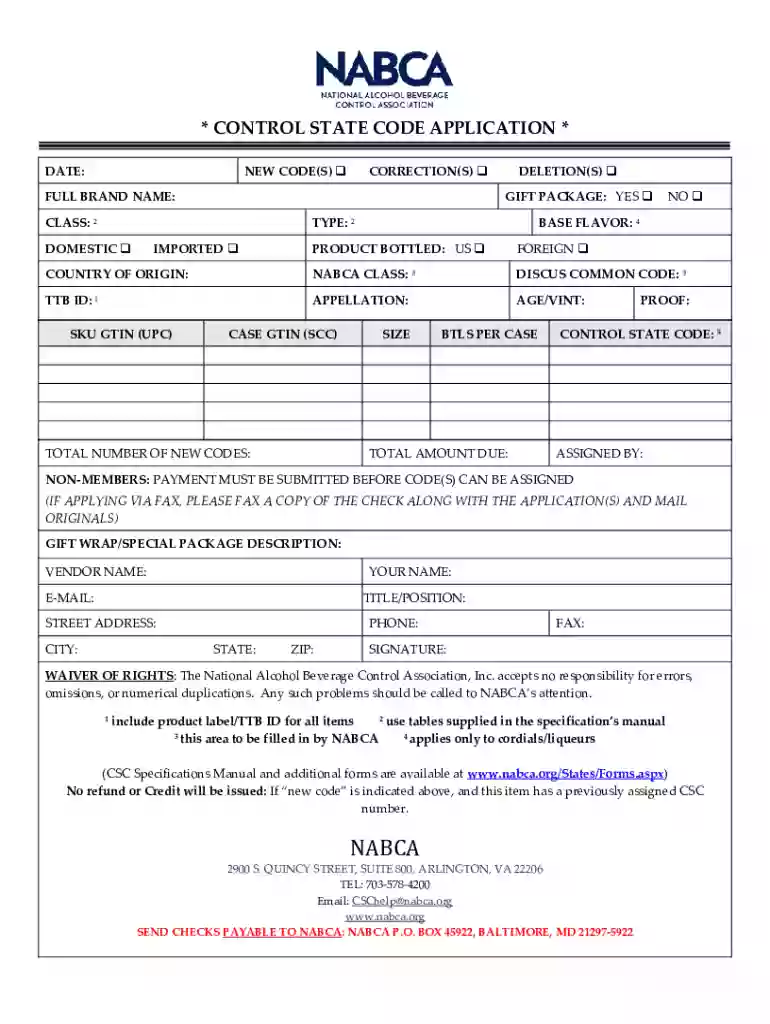
The NABCA Control State Code Application is a specialized form used by the National Alcohol Beverage Control Association to manage and request control state codes for alcoholic beverages. These codes help streamline the identification and regulation of alcohol products sold within control states, which are jurisdictions where the government directly controls the distribution and sale of alcoholic beverages. The form includes specific sections for requests related to new codes, corrections, and deletions. It also gathers detailed information about the product, such as brand name, class, type, country of origin, and vendor details, ensuring comprehensive data collection for regulatory purposes.
Understanding how to effectively use the NABCA Control State Code Application is crucial for compliance with state regulations. To begin, identify the specific purpose of your request—whether it's for a new code, a correction, or a deletion. Ensure all sections of the form are completed accurately, as incomplete applications may delay processing. Leveraging digital tools like DocHub can streamline the filling process, allowing for easy uploading, editing, and sharing of the application. Utilize the platform's functions to add required annotations and signatures, ensuring all parties have reviewed and signed as necessary.
The NABCA Control State Code Application is legally binding and ensures adherence to federal and state laws regarding alcohol distribution. The application supports industry compliance by confirming that products meet established criteria before entering the control state market. Using platforms like DocHub for signature capture and secure document handling helps maintain legal integrity throughout the submission process. It's important to understand that any inaccuracies or omissions can lead to legal repercussions, emphasizing the need for precise and thorough completion of the form.
Typically, manufacturers, distributors, and importers of alcoholic beverages use the NABCA Control State Code Application. These entities rely on the form to legally introduce, update, or remove products in state-controlled markets. Additionally, vendors and legal representatives may also be involved in the application process, ensuring all aspects of the product and its distribution adhere to control state regulations. Understanding the application’s relevance is crucial for businesses operating in or entering control states.


Submitting the NABCA Control State Code Application can typically be done through multiple channels:
Completing the NABCA Control State Code Application requires a thorough understanding of the necessary documentation. This typically includes detailed product descriptions, vendor agreements, and any related certification or compliance documents demonstrating adherence to state and federal guidelines. Ensuring all documents are present and properly formatted prevents delays in the application process, as missing documentation often leads to complications or rejections. Use tools like DocHub to organize, attach, and verify all supplemental materials are included before submission for effective document management.
We've got more versions of the NABCA Control State Code Application form. Select the right NABCA Control State Code Application version from the list and start editing it straight away!
At DocHub, your data security is our priority. We follow HIPAA, SOC2, GDPR, and other standards, so you can work on your documents with confidence.
NABCA means the National Alcohol Beverage Control Association. 11. On-premise retailer permittee means any person issued a permit authorizing the saleRead more
Sep 19, 2025 Seventeen states, plus Montgomery, Worcester, Wicomico and Somerset County, Maryland are known as control jurisdictions.Read more


