







Definition and Meaning of the Walk to Help Children with Dyslexia - Valley of Waterbury
The "Walk to Help Children with Dyslexia - Valley of Waterbury" is a fundraising event designed to support the Children's Dyslexia Center-CT. Organized by the Scottish Rite/CT Freemasons, this 5K road race and walk aims to raise awareness and funds to provide essential educational resources and support for children affected by dyslexia. The event brings together community members, sponsors, and participants in a collective effort to contribute to a cause that significantly impacts children's education and development.
How to Participate in the Walk
Individuals interested in participating in the "Walk to Help Children with Dyslexia" can register through the event’s official channels. Participants typically have options to register for the walk or race category that suits them best. Registration usually requires personal information, emergency contact details, and a participation fee, which goes directly to funding the services provided by the Children's Dyslexia Center-CT. Participants often receive event materials such as a race bib and a commemorative T-shirt.
- Registration process: Fill out the registration form available on the event’s website.
- Participation fee: Varies by category; check the event page for details.
- Event materials: Typically include a T-shirt and bib.
Steps to Complete the Sponsorship Form
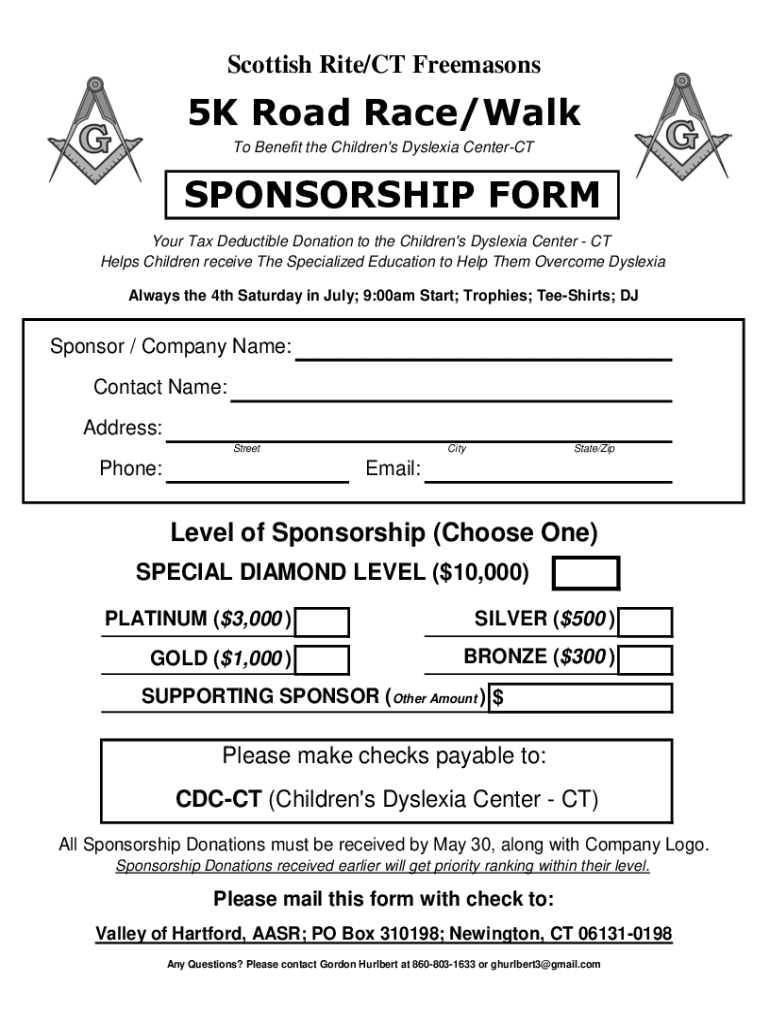
Completing the sponsorship form for the "Walk to Help Children with Dyslexia - Valley of Waterbury" involves several key steps to ensure all sponsorship details are accurately captured:
- Enter Sponsor Information: Provide the sponsor's name, contact information, and organization if applicable.
- Select Sponsorship Level: Choose from various levels, typically Bronze, Silver, Gold, and Platinum, each with specific benefits and donation requirements.
- Specify Donation Amount: Indicate the amount corresponding to the chosen sponsorship level.
- Include Payment Details: Provide payment information or specify if a check will be mailed separately.
- Submit the Form: Ensure all fields are completed accurately before submitting.
Importance of Walking to Help Children with Dyslexia
Participating in the "Walk to Help Children with Dyslexia" is crucial not only for raising funds but also for fostering community support and raising awareness about dyslexia. This initiative provides an opportunity for individuals and organizations to contribute to meaningful change by supporting specialized educational programs that address the unique learning needs of children with dyslexia. These programs are vital in helping children overcome learning barriers and achieve academic success.
- Community engagement: Encourages local support and awareness.
- Educational impact: Funds specialized teaching resources.
- Long-term benefits: Supports children in overcoming dyslexia challenges.
Key Elements of the Sponsorship Form
The sponsorship form for the event includes several key components designed to capture essential sponsorship details and ensure clarity:
- Sponsorship Levels: Detailed descriptions of each level and associated benefits.
- Sponsor Information Section: Accurate input of sponsor identity and credentials.
- Donation Commitments: Clear indication of financial pledge as per sponsorship level.
- Payment Instructions: Details on payment methods, deadlines, and any post-submission follow-up.
Legal Considerations and Use
It is important to understand the legal implications and use of the sponsorship form. Sponsors must ensure that all details provided are accurate and that the financial commitments are met in accordance with the terms set out by the organizing entity. This legal binding ensures the funds are used correctly towards supporting the cause and fulfilling any promised sponsorship benefits to sponsors.
Examples and Scenarios of Use
Sponsorship in the "Walk to Help Children with Dyslexia" can vary widely, providing opportunities for different types of contributors. Examples include:
- Corporate Sponsors: Companies sponsoring at a higher level, receiving branding opportunities in return.
- Individual Contributors: Local community members contributing smaller amounts to support the cause.
- In-kind Donations: Local businesses providing services or goods, such as refreshments for participants.
Required Documents for Sponsorship
To complete the sponsorship process, certain documents are required for validation and record-keeping, including:
- Completed Sponsorship Form: Accurately filled with all required details.
- Payment Proof: Receipt or confirmation of donation payment.
- Tax Identification: For corporate sponsors, as required for reporting purposes.
These documents are necessary to complete the sponsorship process and ensure the sponsor's contribution is processed correctly.




