




01. Edit your form online
Type text, add images, blackout confidential details, add comments, highlights and more.

Type text, add images, blackout confidential details, add comments, highlights and more.

Draw your signature, type it, upload its image, or use your mobile device as a signature pad.

Send it via email, link, or fax. You can also download it, export it or print it out.
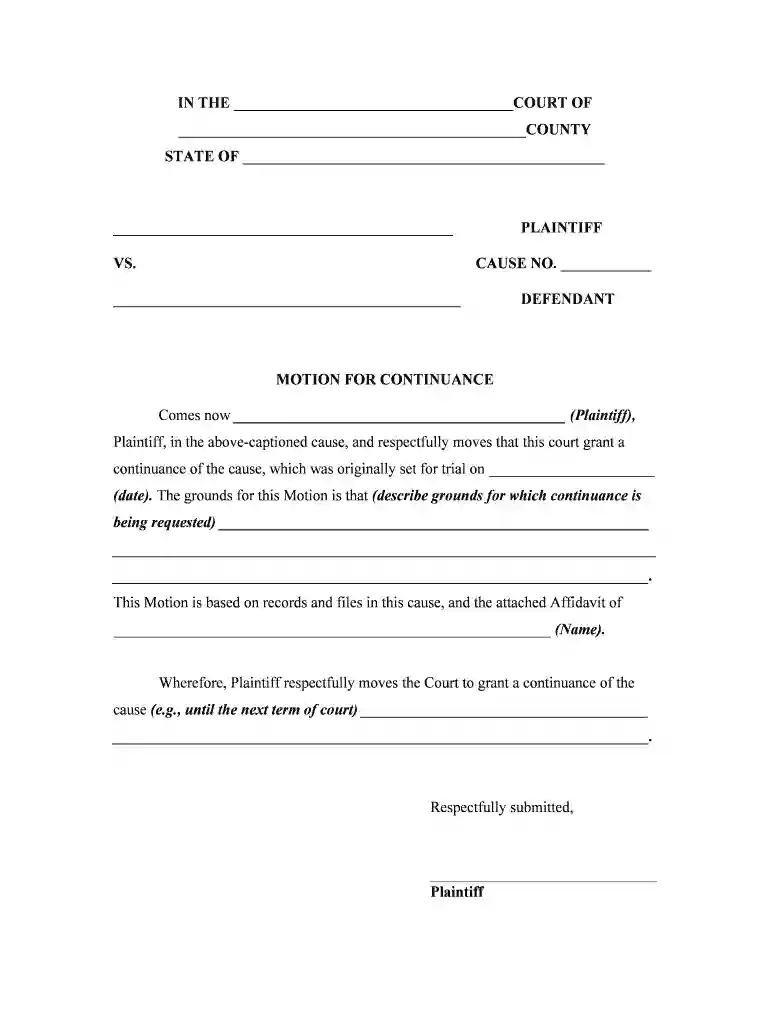
A Motion for Continuance in Missouri is a formal request made to a court to postpone a scheduled trial or hearing. This legal motion is typically filed when one party, often the plaintiff or defendant, needs additional time to prepare their case or due to unforeseen circumstances. It includes specific reasons for the request, such as the unavailability of a key witness, the need for more time to gather evidence, or an attorney's scheduling conflict. Understanding this motion's purpose helps participants in a legal case manage timeframes effectively and ensures due process is maintained.
To effectively use a Motion for Continuance in Missouri, one must first identify the valid reason for requesting the postponement, ensuring it aligns with legal standards. This may include gathering supporting documentation that justifies the delay, such as medical certificates or witness unavailability notices. Once the reason is clear, the party should draft a formal motion, detailing the circumstances and evidence supporting the request. Submitting the motion follows, including presenting it with the appropriate legal forum handling the case. It's crucial to respect any procedural rules, such as filing deadlines and proper notice to the opposing party, to increase the likelihood of approval.
There are multiple strategic reasons for filing a Motion for Continuance in Missouri, including ensuring sufficient preparation time, accommodating unforeseen emergencies, or managing scheduling conflicts. This motion allows parties to build a stronger case by utilizing additional time to gather necessary documents, secure witnesses, or prepare legal arguments. Furthermore, it can prevent potential injustices due to technical failure or inadequate preparation time.
The core components of a Motion for Continuance include a detailed account of the reasons for the request, corroborative documentation such as affidavits or medical certificates, and a timeline indicating why the continuance is necessary. The motion must also contain contact information for each party involved, the case number, and any prior requests for postponement. Ensuring these key elements are present and properly detailed increases the motion's chances of approval.
Missouri courts have specific rules and standards for granting a Motion for Continuance. Understanding these state-specific regulations is crucial for formulating an effective request. Examples include deadlines for filing before the scheduled court date, requirements for serving information to opposing parties, and standards for evidence submission. Familiarity with local court policies and adherence to these nuances can be a decisive factor in the success of the motion.
The legal use of a Motion for Continuance in Missouri centers on ensuring a fair trial and protecting the rights of involved parties. By providing additional preparation time, it helps maintain procedural fairness and due process. It is crucial to understand the ethical and professional responsibilities associated with filing such a motion, as frivolous or misleading requests can result in penalties or adverse rulings by the court.
Numerous case studies illustrate effective use of Motions for Continuance in Missouri. In one example, a plaintiff successfully obtained a continuance by demonstrating how an unexpected illness prevented their primary witness from attending the originally scheduled trial. Another scenario involved a defense attorney who obtained a postponement due to unforeseeable scheduling conflicts with other legal commitments. Analyzing these examples can provide valuable insights into strategic usage and successful outcomes.
Understanding key legal terms associated with a Motion for Continuance is essential for accurately navigating the process. Common terminology includes "Certificate of Service," which confirms delivery of the motion to all parties, and "Hearing Date," the scheduled date for court proceedings. Knowing these terms clarifies the procedural aspects and expectations when filing or responding to a motion.
We've got more versions of the motion for continuancee missouri form. Select the right motion for continuancee missouri version from the list and start editing it straight away!
| Versions | Form popularity | Fillable & printable |
|---|---|---|
| 2020 | 4.3 Satisfied (30 Votes) |
At DocHub, your data security is our priority. We follow HIPAA, SOC2, GDPR, and other standards, so you can work on your documents with confidence.
PURPOSE: This rule describes the process of requesting continuances of public hearings. (1) The presiding officer may continue a public hearing or prehearingRead more
ENTER PETITIONER OR RESPONDENT moves this Commission to continue the hearing scheduled for Click or tap to enter a date. In support of this motion, ENTERRead more
continuance in office. Section 7. All bills for raising revenue shall originate in the House of Representatives; but the Senate may propose or concur withRead more


