






Definition & Meaning
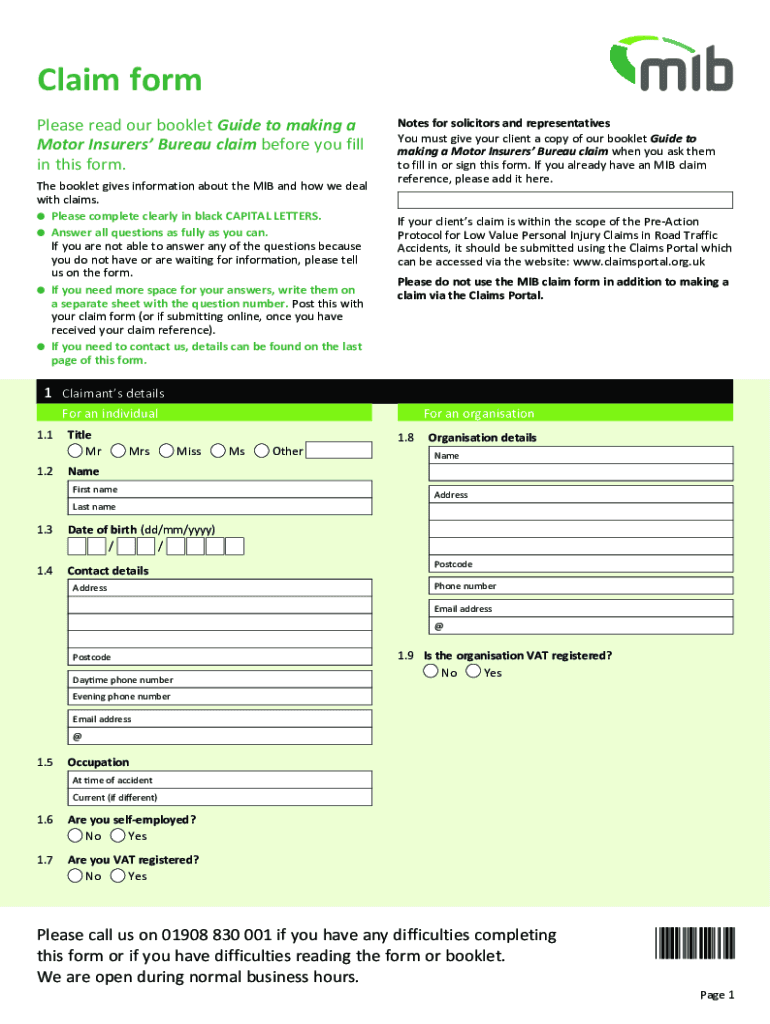
The "Claim form - the Motor Insurers' Bureau - Yumpu" is a document designed for individuals who need to file a claim with the Motor Insurers' Bureau (MIB). The MIB assists claimants in cases where they need to recover compensation due to incidents involving uninsured or untraceable drivers. The form collects essential information regarding the incident, the parties involved, and any damages or injuries sustained. It is crucial to provide detailed and accurate data to facilitate the processing of your claim efficiently.
How to Obtain the Claim Form
The Claim form from the Motor Insurers' Bureau can be accessed through the MIB's official website or via affiliated platforms hosting the document, such as Yumpu. It is essential to ensure you are obtaining the most current version of the form to avoid processing delays. Some key methods to acquire the form include:
- Downloadable PDFs: Visit the MIB website or authorized distributor sites to download the form.
- Email Requests: Contact the MIB directly to receive a digital copy via email.
- In-person Requests: Visit the MIB's physical office for a paper version.
Steps to Complete the Claim Form
Filling out the claim form involves several detailed steps to ensure all required information is accurately provided:
- Personal Information: Fill in your name, contact details, and any identifiers such as a driver's license number.
- Incident Details: Specify the date, time, and location of the accident. Provide a narrative of the events, emphasizing clarity and completeness.
- Vehicle Information: List details about the vehicles involved, including make, model, and registration numbers.
- Damages and Injuries: Report visible damages to property and disclose any injuries sustained by the involved parties.
- Witness Information: Include contact details for any witnesses to the incident who can provide additional testimony.
- Police Involvement: State whether the incident was reported to the police and provide any reference numbers.
Key Elements of the Claim Form
Critical sections within the form capture various data points necessary for processing a claim:
- Claimant Identification: Ensures the claimant is clearly identified for record and contact purposes.
- Event Chronology: A detailed timeline of the incident, fostering an understanding of the sequence of events.
- Third-party Details: Information about other parties involved in the claim, aiding in full context coverage.
- Consent and Declaration: A mandatory section where the claimant consents to data usage for claim processing.
Who Typically Uses the Claim Form
The form is primarily utilized by individuals and professionals who require compensation due to accidents involving uninsured or untraceable drivers. Typical users include:
- Accident Victims: Individuals involved in vehicular accidents seeking compensation.
- Legal Representatives: Lawyers or claims handlers working on behalf of the victims or claimants.
- Insurance Experts: Professionals assessing client liability or potential recovery through the MIB.


Legal Use of the Claim Form
The use of the Claim form is governed by legal frameworks ensuring proper handling of personal data and adherence to filing protocols:
- Data Protection Compliance: The form mandates explicit consent for data usage in compliance with U.S. data protection laws.
- Detailed Record-Keeping: Full documentation is required to support legal verification and audit processes.
- Formal Declarations: Mandatory declarations provide legal sanctity to the form's content and claimant's statement.
Submission Methods
There are several ways to submit the completed Claim form to the MIB:
- Online Submission: Forms can be uploaded directly to the MIB's digital portal if available, ensuring a faster processing time.
- Postal Service: Mail the printed form to the MIB’s postal address for traditional processing.
- In-Person: Hand-deliver the form to the MIB's office for immediate review and initial feedback.
Required Documents
Supporting documents are crucial for the claim form to validate the claimant's assertions:
- Proof of Identity: Such as a government-issued ID or passport.
- Accident Reports: Including any police reports or third-party statements.
- Medical Records: Documents evidencing any injuries sustained and medical consultations.
- Repair Estimates: Cost estimates for vehicle or property damage repairs.
Penalties for Non-Compliance
Failure to comply with the guidelines for submitting the Claim form can result in various penalties:
- Delayed Processing: An incomplete or improperly filled form can lead to extended claim processing times.
- Claim Denial: Lack of requisite documentation or false information can cause outright denial of the claim.
- Legal Repercussions: Falsifying information or failing to comply with required legal declarations can lead to legal actions against the claimant.
Digital vs. Paper Version
Claimants have the option of completing the form digitally or via traditional paper methods:
- Digital Advantages: Faster submission, easier editing, and better environmental impact due to reduced paper usage.
- Paper Version: Preferred by individuals who are less comfortable with digital platforms or require hard copies for record-keeping.
Eligibility Criteria
To successfully submit a claim form to the MIB, claimants must meet certain eligibility requirements:
- Involvement in an Incident: Claimants must have been involved in an incident with an uninsured or untraceable motorist.
- Timeliness: Claims must be lodged within specific time frames following the incident, as stipulated by MIB regulations.
- Residency or Citizenship Status: Must typically pertain to residents or citizens as defined by MIB operational terms.