




01. Edit your form online
Type text, add images, blackout confidential details, add comments, highlights and more.

Type text, add images, blackout confidential details, add comments, highlights and more.

Draw your signature, type it, upload its image, or use your mobile device as a signature pad.

Send it via email, link, or fax. You can also download it, export it or print it out.
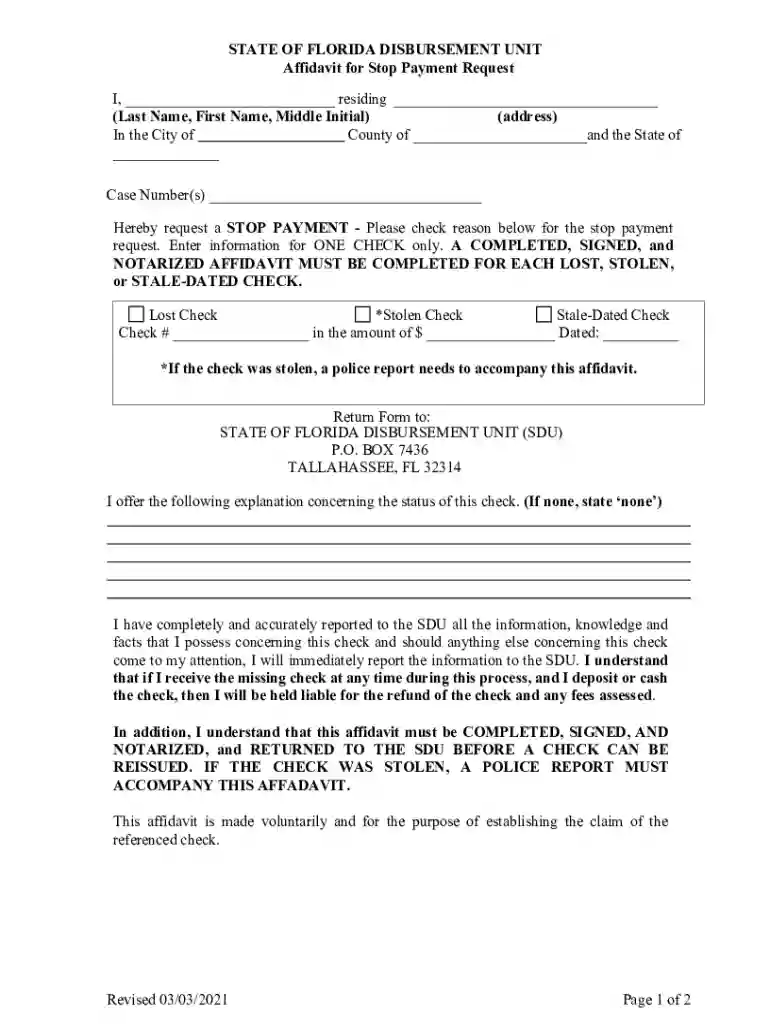
An "Affidavit for Stop Payment Request" is a legal document used to halt the processing of a payment made via check. This particular affidavit is often filed when a check becomes lost, stolen, or stale-dated. It serves as a formal request to the financial institution or issuing body to stop the payment to prevent any unwanted transactions. The form requires detailed information about the check, the payee, and the circumstances leading to the stop payment request. By signing this affidavit, the requesting party acknowledges their understanding of the legal implications and their agreement to the terms outlined within the document.
To effectively use this affidavit, individuals need to follow a structured process. Here’s a typical approach:
Completing the affidavit involves a few important steps:
This affidavit is commonly used by:


Critical elements include:
Different states may have varying rules regarding the submission and validity of this affidavit. For example:
Real-world scenarios where this affidavit proves essential:
The affidavit carries significant legal weight, serving as the applicant’s sworn statement that the details provided are true and accurate. It is essential to ensure that all information is complete and correct, as false statements can lead to legal consequences, such as fraud charges or financial liabilities.
We've got more versions of the Affidavit for Stop Payment Request Affidavit for Stop Payment Request form. Select the right Affidavit for Stop Payment Request Affidavit for Stop Payment Request version from the list and start editing it straight away!
At DocHub, your data security is our priority. We follow HIPAA, SOC2, GDPR, and other standards, so you can work on your documents with confidence.
May 14, 1992 When the department requests payment of response costs, it will provide an itemized statement documenting the costs incurred. The departmentRead more
This form is to request a stop payment on a check and to request the issuance of a replacement check. Submit completed signed form sfs@csudh.edu


