
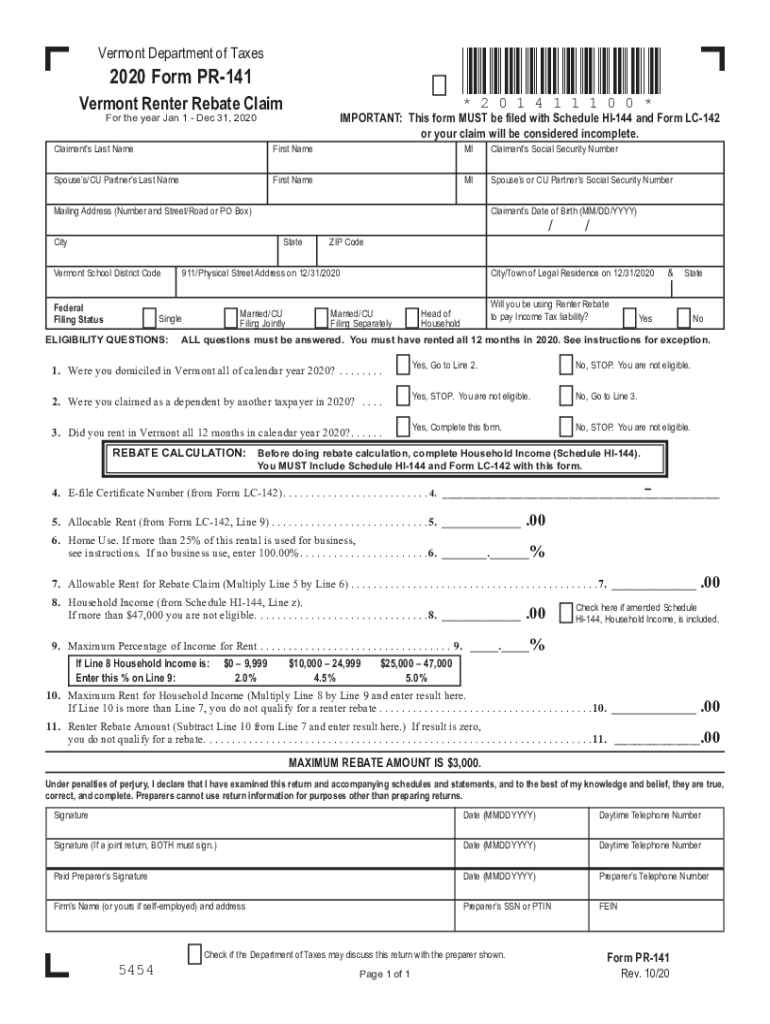







Definition and Purpose of Tax Year 2020 Personal Income Tax Forms
The "Tax Year 2020 Personal Income Tax FormsDepartment of Taxes" refers to the documentation required for individuals to file their personal income taxes for the year 2020. These forms are essential for reporting income, deductions, and credits to the relevant tax authorities, ensuring compliance with tax regulations. They serve multiple purposes, such as determining tax liability or eligibility for refunds, and collecting data on income from various sources.
Key Components of the Forms
- Income Reporting: This section captures the taxpayer's total earnings, including wages, salaries, interest, dividends, and other income streams.
- Deductions and Credits: Individuals can claim various deductions and credits to reduce taxable income, such as for education expenses, mortgage interest, and eligible dependents.
- Signature and Verification: Taxpayers must sign the forms to declare the information accurate and complete.
How to Obtain Tax Year 2020 Personal Income Tax Forms
Acquiring the necessary forms is a crucial step in the tax filing process. Taxpayers can obtain these forms from several sources:
- Online: Forms can be downloaded from official government tax websites, ensuring that taxpayers have the most current and correct versions.
- Mail: Forms may be requested via mail from the relevant tax authority, which is beneficial for those without internet access.
- Local Tax Offices: Individuals may visit their local tax offices to get physical copies of necessary forms.
Practical Tips on Retrieval
- Check Government Websites: Federal and state tax agencies often offer downloadable PDF versions of tax forms.
- Contact Local Libraries: Many libraries provide access to tax forms and may offer free copy services during tax season.
Steps to Complete the Tax Year 2020 Personal Income Tax Forms
Filling out tax forms involves several detailed steps. Ensuring accuracy at each stage is important to avoid errors or delays in processing:
- Gather Required Information: Collect all necessary documents, including W-2s, 1099s, and last year's tax return.
- Calculate Income and Adjustments: Report all income accurately and consider any adjustments for deductions or credits.
- Complete the Form Sections: Carefully fill out each part of the forms, following provided instructions or guidelines.
Detailed Instructions for Accuracy
- Use Official Instructions: Reference the instruction booklet that accompanies the forms for detailed guidance on each field.
- Double-Check Entries: Verify that all figures and personal information are entered correctly to reduce the chance of errors.
Legal Implications and Use of the Forms
The legal framework surrounding these forms ensures that taxpayers comply with tax laws. Understanding the roles and responsibilities these forms impose is critical for lawful tax filing:
- Legal Requirement: Filing these forms is a legal obligation for every taxpayer with taxable income. Non-compliance can lead to penalties.
- Audit Defense: Accurate and complete filing mitigates the risk of audits and legal scrutiny.
Common Legal Considerations
- Deadlines: Be aware of filing deadlines to avoid late fees or penalties.
- Record Keeping: Maintain copies of all filed forms and corresponding documentation for at least three years in case of future audits.
State-Specific Rules for Tax Year 2020 Personal Income Tax Forms
Tax rules can vary significantly across states, affecting how residents file their taxes and what forms they use:
- Different Deduction Amounts: States might have varying standard deduction amounts or specific credits not applicable at the federal level.
- Variations in Tax Rates: State income tax rates may differ, altering the overall tax calculation.
Examples of State-Specific Regulations
- New York: Offers additional deductions for college savings account contributions.
- California: Implements different thresholds for tax credits compared to federal levels.
Important Terms Related to the Forms
A clear understanding of key terminology is essential for correctly interpreting and completing tax forms:
- Adjusted Gross Income (AGI): Total income minus specific deductions, impacting eligibility for additional deductions.
- Taxable Income: Portion of income subject to taxes after all deductions and credits are applied.
Glossary of Common Tax-Related Terms
- Filing Status: Defines the category (e.g., single, married) used to determine tax rates and standard deductions.
- Dependent: Refers to someone the taxpayer supports financially and who qualifies for certain tax benefits.
Filing Deadlines and Important Dates for the 2020 Tax Year
Understanding filing deadlines is crucial for avoiding penalties and ensuring timely submission:
- Federal Tax Deadline: Typically, April 15, unless extensions or changes are announced.
- Extension Dates: Taxpayers can file for an extension, generally moving the deadline to October 15.
Steps for Meeting Deadlines
- Mark Calendars: Keep key tax dates highlighted to avoid missing deadlines.
- Use Electronic Filing Options: Expedites the process, ensuring timely submission and confirmations.
Eligibility Criteria for Using the 2020 Personal Income Tax Forms
Determining eligibility for various deductions, credits, and filing requirements helps taxpayers optimize their tax outcomes:
- Income Level: Specific forms or schedules may be mandatory based on your income bracket.
- Filing Status: Determines eligibility for certain deductions and impacts tax liability.


Examples of Eligibility Requirements
- Earned Income Tax Credit: Available to low- to moderate-income workers and families.
- Senior Taxpayer Benefits: Additional considerations might apply for individuals above a certain age.




