




01. Edit your form online
Type text, add images, blackout confidential details, add comments, highlights and more.

Type text, add images, blackout confidential details, add comments, highlights and more.

Draw your signature, type it, upload its image, or use your mobile device as a signature pad.

Send it via email, link, or fax. You can also download it, export it or print it out.
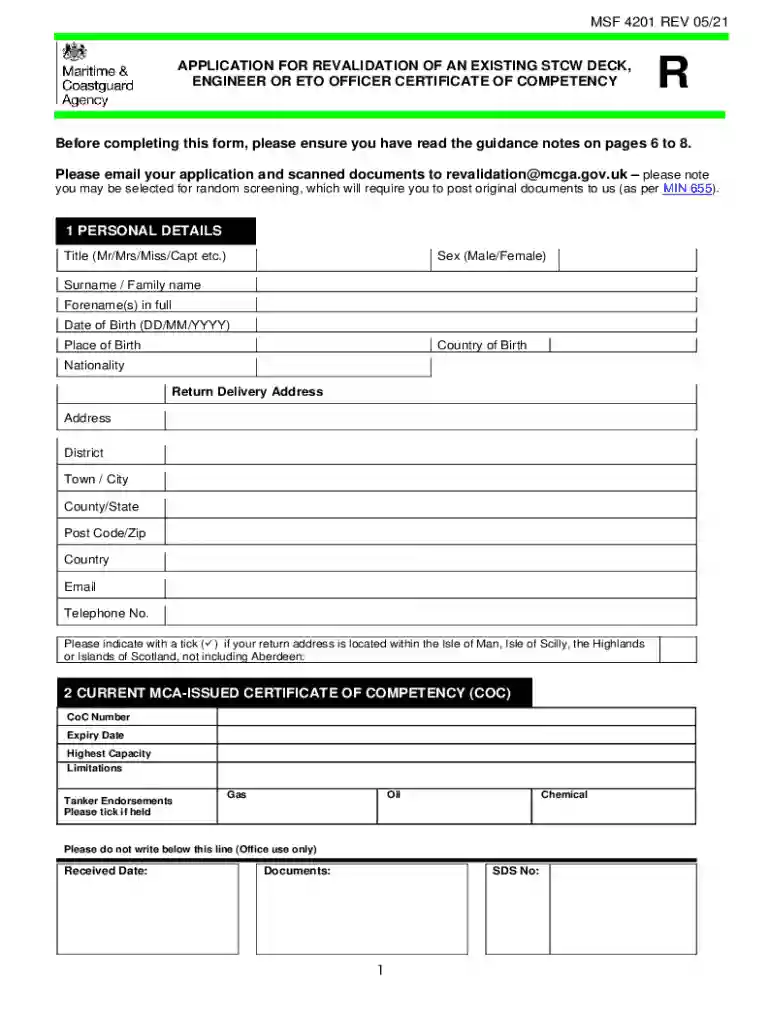
The "revalidation of a Certificate of Competency" refers to the process maritime professionals undertake to ensure their certificates remain valid and compliant with current standards. This certification is essential for Deck, Engineer, or ETO Officers working under the International Convention on Standards of Training, Certification and Watchkeeping for Seafarers (STCW). It verifies a mariner's continued proficiency and adherence to safety and operational procedures, crucial for maintaining maritime safety and regulatory compliance in U.S. waters.
Maritime officers, including Deck, Engineer, and Electro-Technical Officers (ETOs), are required to periodically revalidate their Certificates of Competency. This process is crucial for those who wish to continue working on ships governed by the STCW convention. Typically, professionals employed on ships engaged in international voyages or domestic routes requiring STCW certification must revalidate to demonstrate their ongoing capabilities and legal eligibility to perform their duties.
To qualify for the revalidation of a Certificate of Competency, candidates must meet specific criteria, including:


Applicants must gather and submit various documents during the revalidation process. Essential documentation includes:
Understanding key terms aids in correctly completing the revalidation process:
The processing time for a revalidation application can vary but generally ranges from several weeks to a few months. Applicants should apply well before their current certificate expires to ensure continued certification. Monitoring application status and responding promptly to any documentation requests can help avoid unnecessary delays.
Failing to revalidate a Certificate of Competency on time can have significant repercussions, including:
When choosing a submission method, confirm the preferred formats and address any specific instructions provided by the maritime authority to ensure the application is correctly processed.
We've got more versions of the How to apply for a revalidation of a Certificate of Competency form. Select the right How to apply for a revalidation of a Certificate of Competency version from the list and start editing it straight away!
At DocHub, your data security is our priority. We follow HIPAA, SOC2, GDPR, and other standards, so you can work on your documents with confidence.
Dec 2, 2019 Renewal requires the holder to provide evidence of competency (minimum time experience qualifications, or from appropriately recognisedRead more
Washington nurses must meet continuing education and practice requirements to renew their license. These requirements must be done in the renewal period andRead more
Meet the medical fitness requirements for the certificate Have completed the required mandatory training courses in the recognized maritime institution and theRead more


