




01. Edit your form online
Type text, add images, blackout confidential details, add comments, highlights and more.

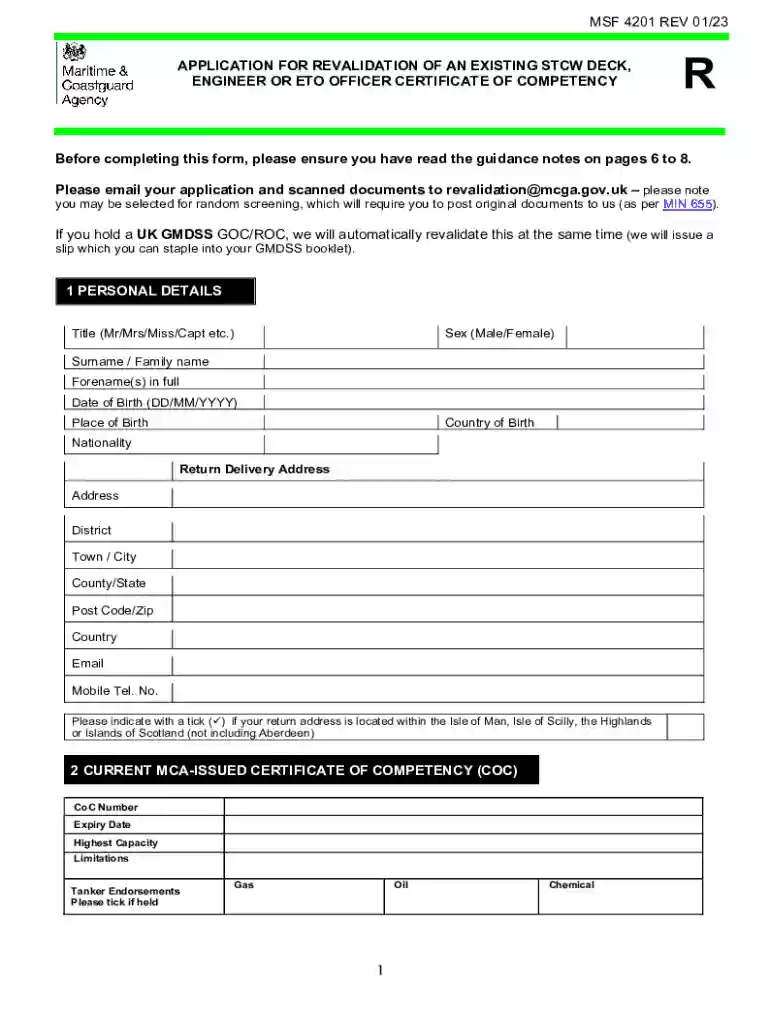
Type text, add images, blackout confidential details, add comments, highlights and more.

Draw your signature, type it, upload its image, or use your mobile device as a signature pad.

Send it via email, link, or fax. You can also download it, export it or print it out.
Revalidating a Certificate of Competency is crucial for maritime professionals to uphold standards and comply with the STCW Convention. This process ensures that officers maintain their qualifications and keep their skills up-to-date. The form you must complete, typically referred to as MSF 4201, involves personal details, current certificate information, and proof of ongoing sea service.
Gather Required Information:
Compile Supporting Documents:
Complete the MSF 4201 Form:
Submit the Application:
Maritime professionals must meet specific criteria to qualify for revalidation. This includes having completed adequate sea service within a defined period before reapplication. Furthermore, maintaining compliance with medical and training updates is obligatory to align with international maritime laws. Failure to update your certification timely can result in penalties or suspension of maritime operations.


The form MSF 4201 has undergone revisions to reflect changes in maritime laws and regulations, with the latest version being REV 01/23. Staying informed on revisions ensures that you comply with the current protocol. Alternatives or previous versions may apply for specific cases, particularly if you apply in different jurisdictions or under special maritime conditions.
Form submission can vary:
Non-compliance can result in significant career disruptions. Without a valid Certificate of Competency, maritime professionals risk operational bans, impacting their livelihood and professional reputation. It is essential to monitor expiration dates and commence the revalidation process well in advance.
By understanding and executing these steps correctly, maritime professionals can ensure their credentials remain valid, promoting operational readiness and adherence to safety standards.
We've got more versions of the How to apply for a revalidation of a Certificate of Competency form. Select the right How to apply for a revalidation of a Certificate of Competency version from the list and start editing it straight away!
At DocHub, your data security is our priority. We follow HIPAA, SOC2, GDPR, and other standards, so you can work on your documents with confidence.
Washington nurses must meet continuing education and practice requirements to renew their license. These requirements must be done in the renewal period andRead more
Dec 2, 2019 Renewal requires the holder to provide evidence of competency (minimum time experience qualifications, or from appropriately recognisedRead more
Meet the medical fitness requirements for the certificate Have completed the required mandatory training courses in the recognized maritime institution and theRead more


