




01. Edit your form online
Type text, add images, blackout confidential details, add comments, highlights and more.

Type text, add images, blackout confidential details, add comments, highlights and more.

Draw your signature, type it, upload its image, or use your mobile device as a signature pad.

Send it via email, link, or fax. You can also download it, export it or print it out.
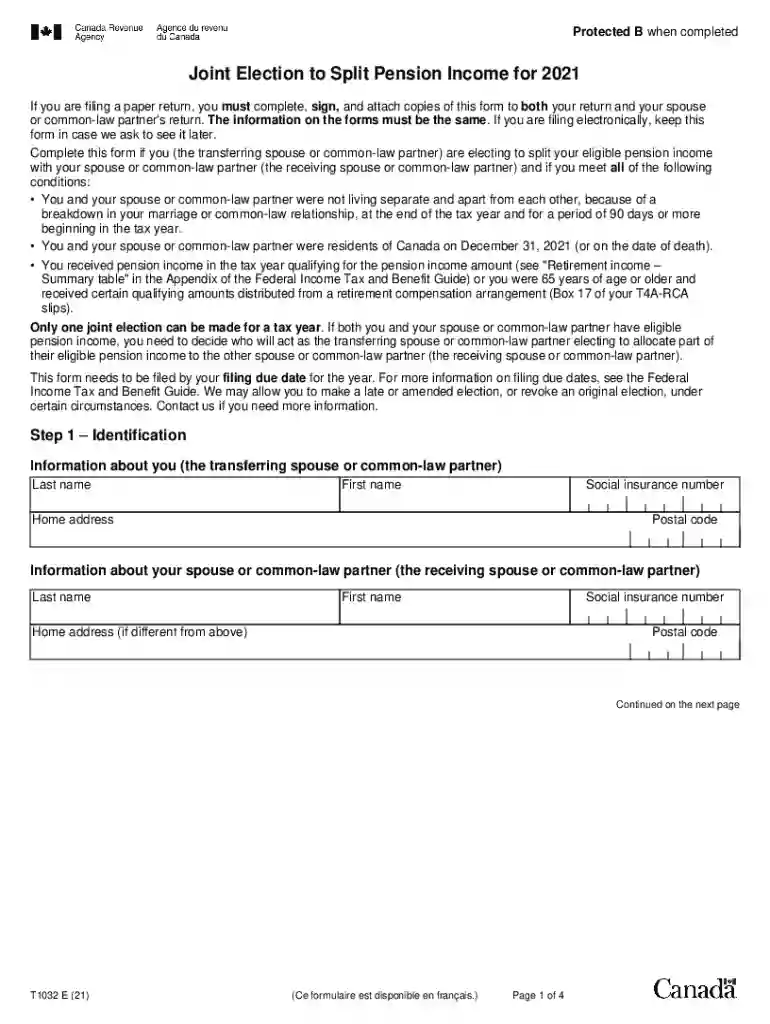
Pension income splitting in Canada allows eligible spouses or common-law partners to jointly elect to allocate up to 50% of eligible pension income to the other partner for tax purposes. This strategy can help reduce the overall tax burden for a couple by taking advantage of the lower tax bracket of one spouse.


The use of pension income splitting must adhere to the guidelines set out by the Canada Revenue Agency (CRA). Failure to comply can result in penalties and interest charges. It's crucial to maintain accurate records supporting the election and to submit completed schedules with tax returns.
By understanding and efficiently navigating the pension income splitting process, eligible Canadians can optimize their tax situation and enhance their retirement income strategy.
We've got more versions of the Pension income splitting - Canada ca form. Select the right Pension income splitting - Canada ca version from the list and start editing it straight away!
At DocHub, your data security is our priority. We follow HIPAA, SOC2, GDPR, and other standards, so you can work on your documents with confidence.
The agreement with Canada helps many people who, without the agreement, would not be eligible for monthly retirement, disability or survivors benefits under the
The maturities of notes and accounts payable-trade, accounts payable-other and accrued income taxes are within one year. Most borrowings and lease obligations
One change was to accelerate the increase in the contribution rates from a combined 7.8 percent evenly split between employers and employees in 2000 to 9.8


