





Definition & Meaning of Odometer Mileage Statement
An Odometer Mileage Statement is a critical document used in the United States for certifying the mileage of a vehicle at the time of its sale or transfer. This form is pivotal in protecting both buyers and sellers from potential fraud related to odometer tampering. Accurately reporting the vehicle's mileage helps in verifying the vehicle's actual usage, which impacts its market value and conditions. Typically issued by state departments such as the Michigan Department of State, this statement ensures compliance with federal and state regulations aimed at consumer protection.
Purpose of the Odometer Mileage Statement
The primary function of the Odometer Mileage Statement is to document the accurate odometer reading when ownership of a vehicle changes. This form serves multiple purposes:
- Consumer Protection: Prevents odometer fraud by ensuring the vehicle's mileage is genuinely reported.
- Legal Compliance: Meets federal and state laws that mandate odometer declarations during vehicle transactions.
- Market Transparency: Aids in providing a clear history of the vehicle's usage, which is vital for assessing its value accurately.
How to Use the Odometer Mileage Statement
The Odometer Mileage Statement is used primarily during the transfer of vehicle ownership. Here's how it is typically utilized:
- During Sale: Sellers must complete the form, certifying the vehicle's mileage at the time of the sale.
- Before Purchase: Buyers review the statement to ensure the authenticity of the odometer reading provided by the seller.
- Legal Records: Both parties keep a copy of the completed statement for their records to protect against future disputes.
Steps to Complete the Odometer Mileage Statement
Completing the Odometer Mileage Statement involves a series of steps:
- Obtain the Form: Acquire the form from the relevant state department or authorized agency.
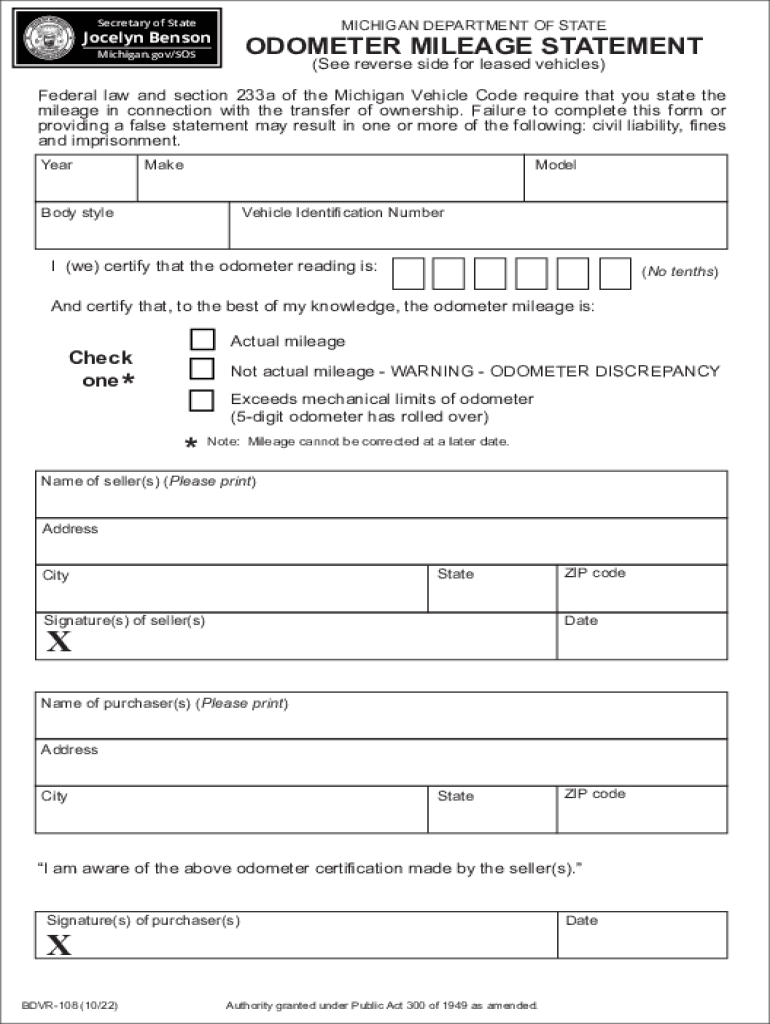
- Fill in Vehicle Details: Enter information such as vehicle identification number (VIN), make, model, and year.
- Record Odometer Reading: Accurately write the current reading on the odometer.
- Declaration: Select whether the mileage is the actual, exceeds the mechanical limits, or is not the actual mileage.
- Sign and Date: Both seller and buyer need to sign and date the document to validate the transfer.
Legal Use of the Odometer Mileage Statement
Legal compliance is a primary function of the Odometer Mileage Statement. Key legal aspects include:
- Federal Law: Compliance with the Truth in Mileage Act, which mandates disclosure for vehicles less than ten years old.
- State Laws: Each state may have additional requirements and variations of the form that must be adhered to.
Important Terms Related to Odometer Mileage Statement
Understanding specific terms related to the Odometer Mileage Statement is crucial:
- Actual Mileage: The true and accurate odometer reading without discrepancies.
- Not Actual Mileage: Indicates potential disparity due to tampering or odometer replacement.
- Mileage Exceeds Mechanical Limits: Applies to older vehicles where the odometer has returned to zero.
State-Specific Rules for Odometer Mileage Statement
The requirements for an Odometer Mileage Statement can vary by state. Notable differences may include:
- Form Versions: States may issue custom versions of the form aligning with local regulations.
- Odometer Exemptions: Some states might exempt vehicles over a certain age or class.
Penalties for Non-Compliance
Failure to accurately complete and submit the Odometer Mileage Statement can result in several penalties:
- Fines: Monetary penalties may be levied against parties involved in fraudulent disclosures.
- Legal Consequences: Violators could face legal action or prosecution under consumer protection laws.
- Civil Liability: Parties could also bear civil responsibility for misleading reports, impacting legal standing in disputes.
Examples of Using the Odometer Mileage Statement
To demonstrate the application of the Odometer Mileage Statement, consider these scenarios:
- Private Car Sale: A private seller fills out the statement to confirm the mileage when transferring ownership to a buyer, ensuring transparency and trust.
- Dealership Transfer: Car dealerships provide odometer statements during the sale of a used vehicle to comply with legal standards and maintain business credibility.
Form Submission Methods
Submission methods for the Odometer Mileage Statement are varied to accommodate different needs:
- In-Person: Completing and submitting the form at a local Department of Motor Vehicles (DMV) office.
- Mail: Mailing the completed form to the appropriate state agency if in-person visits are inconvenient.
- Online: Some states offer electronic submission through authorized platforms, streamlining the process.
Key Elements of the Odometer Mileage Statement
Essential elements that must be included in this document:
- Vehicle Information: VIN, make, model, and year.
- Mileage Certification: Accurate and current odometer reading.
- Signatures: Required signatures from both the buyer and seller for validation.
Digital vs. Paper Version
The Odometer Mileage Statement can be completed in both digital and paper formats:
- Digital: Electronic completion and submission, often available in states with modernized DMV systems.
- Paper: Traditional method involving physical form submission, still commonly practiced across many states.


