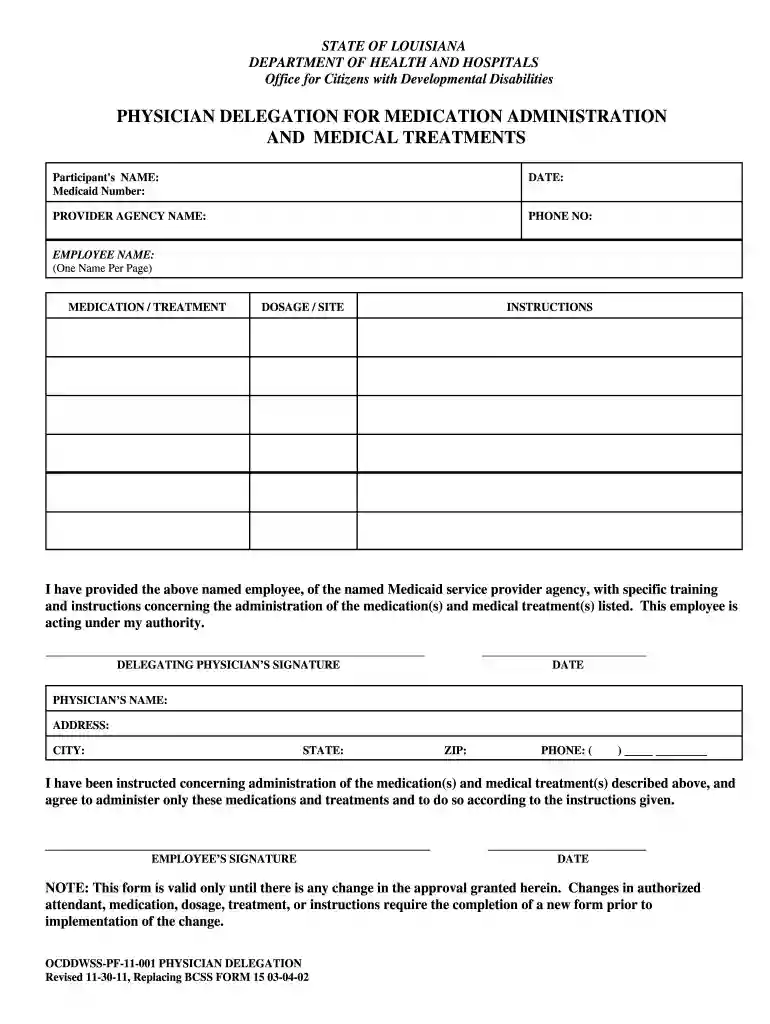
Definition and Meaning of Nurse Delegation Forms
Nurse delegation forms are official documents that allow registered nurses to delegate specific medical tasks and responsibilities to unlicensed personnel or nursing assistants under certain conditions. The delegation ensures that patients receive proper care while adhering to legal standards and nursing regulations. This is particularly important in settings where nurses cannot be present to perform every task due to staffing limitations or other constraints. Such forms establish the framework for communication and authorization between the delegating nurse and the individual receiving the delegated tasks.
Key Characteristics of Nurse Delegation Forms
- Legal Authority: These forms provide the legal basis for nurses to delegate tasks, ensuring compliance with state nursing laws and regulations.
- Clarity on Responsibilities: They clearly outline the responsibilities of the nurse and the delegate, preventing misunderstandings.
- Documentation: Acting as a formal record, these forms document the delegation process and the specific actions that have been authorized.
Steps to Obtain Nurse Delegation Forms
Acquiring nurse delegation forms typically involves following specific procedures that may vary by state or healthcare institution. Here’s a step-by-step guide:
- Identify the Appropriate Agency: Determine which agency regulates nurse delegation in your state, such as the state's Department of Health or Nurse Licensing Board.
- Access Online Resources: Visit the official state agency website where the forms are often provided for download in PDF format.
- Contact Local Healthcare Institutions: Some healthcare facilities may offer their version of nurse delegation forms tailored for their organizational standards and practices.
- Training Requirement: Ensure that individuals or aides receiving delegated tasks have completed any mandated training or certification programs.
Obtaining the correct forms is crucial for compliance and effective patient care.
How to Use Nurse Delegation Forms
Using nurse delegation forms effectively requires understanding the legal and practical implications of delegation. Here are the main steps to follow:
- Complete the Form: Fill in all necessary details such as patient information, tasks to be delegated, and individuals involved. Make sure to indicate any specific instructions or precautions related to the delegated tasks.
- Signatures: Ensure that both the delegating nurse and the aide or unlicensed personnel sign the form. This confirms that both parties understand the delegation's scope and responsibilities.
- Record Keeping: Maintain a copy of the completed form for your records, as it serves as essential documentation should any questions arise about the delegation at a later date.
- Review and Update: Regularly review and update the form as needed, especially if there are changes in patient condition, treatment plans, or staff assignments.
Effective utilization promotes patient safety and adherence to regulations.
Important Elements of Nurse Delegation Forms
Several key elements must be included in nurse delegation forms to ensure clarity and compliance:
- Patient Information: Full name, date of birth, and any relevant medical history or current medications to ensure proper care.
- Tasks to be Delegated: A specific list of tasks that the nurse empowers the delegate to perform, ensuring these tasks are within the scope of practice for the unlicensed personnel.
- Provider Information: Names and credentials of the delegating nurse and the individual receiving the delegation.
- Signatures and Dates: Both parties must sign and date the form to acknowledge their agreement and understanding of the delegation terms.
These elements are crucial for proper documentation and legal protection.
Who Typically Uses Nurse Delegation Forms
Nurse delegation forms are primarily used in various healthcare settings, including but not limited to:
- Assisted Living Facilities: In environments where staff are often present to assist patients but do not have the training or license to perform certain medical tasks.
- Home Healthcare Providers: Nurses who visit patients at home may delegate specific tasks to family members or aides to facilitate care continuity.
- Schools: School nurses may use these forms to delegate medication administration to trained staff members within the school.
- Hospitals: In busy hospital settings, delegation forms help ensure that tasks are adequately managed and that nursing duties are efficiently allocated among staff.
These forms support effective and safe patient care in various contexts.
Legal Use of Nurse Delegation Forms
Understanding the legal implications of nurse delegation forms is critical for compliance and patient safety. Here are the essential aspects:
- State Regulations: Each state has its own rules governing nurse delegation, including which tasks can be delegated and the qualifications required for aides or unlicensed personnel.
- Scope of Practice: The delegation must remain within the parameters of the nurse's scope of practice and the delegate's abilities as defined by state law.
- Liability Considerations: If a task is delegated that falls outside legal parameters, the delegating nurse may face liability for any resulting harm to the patient.
- Training Requirements: Some states require aides to complete delegation-specific training, ensuring they are prepared to carry out the tasks being delegated.
Familiarity with these legalities protects both the patient and the nurse from potential liabilities.
Examples of Using Nurse Delegation Forms
In real-world scenarios, nurse delegation forms can be essential tools in diverse situations:
- Medication Administration: A nurse may delegate the administration of daily medications to a trained assistant in a nursing home, ensuring residents receive necessary treatments.
- Wound Care: In home health settings, a nurse may complete a delegation form to allow a family member to perform wound care after appropriate instruction.
- Basic Patient Monitoring: A school nurse might delegate the task of monitoring a child with diabetes' blood sugar levels to a trained staff member during school hours.
Such examples highlight how flexibility in delegation can enhance patient care while maintaining legal and safe practices.
State-Specific Rules for Nurse Delegation Forms
Each state has unique rules and regulations surrounding nurse delegation. It's essential to consider these state-specific guidelines:
- Ohio: Ohio mandates that delegated tasks must be within the nurse’s scope of practice and that both the nurse and delegate must receive the necessary training.
- California: In California, the nurse must provide clear instructions and demonstrate the procedures to be delegated to ensure safe practice.
- Texas: Texas requires clear documentation on the delegation form regarding the ongoing oversight the nurse must provide after delegation, emphasizing accountability.
Awareness of these specific rules is vital for nurses working across different states or from various healthcare settings.