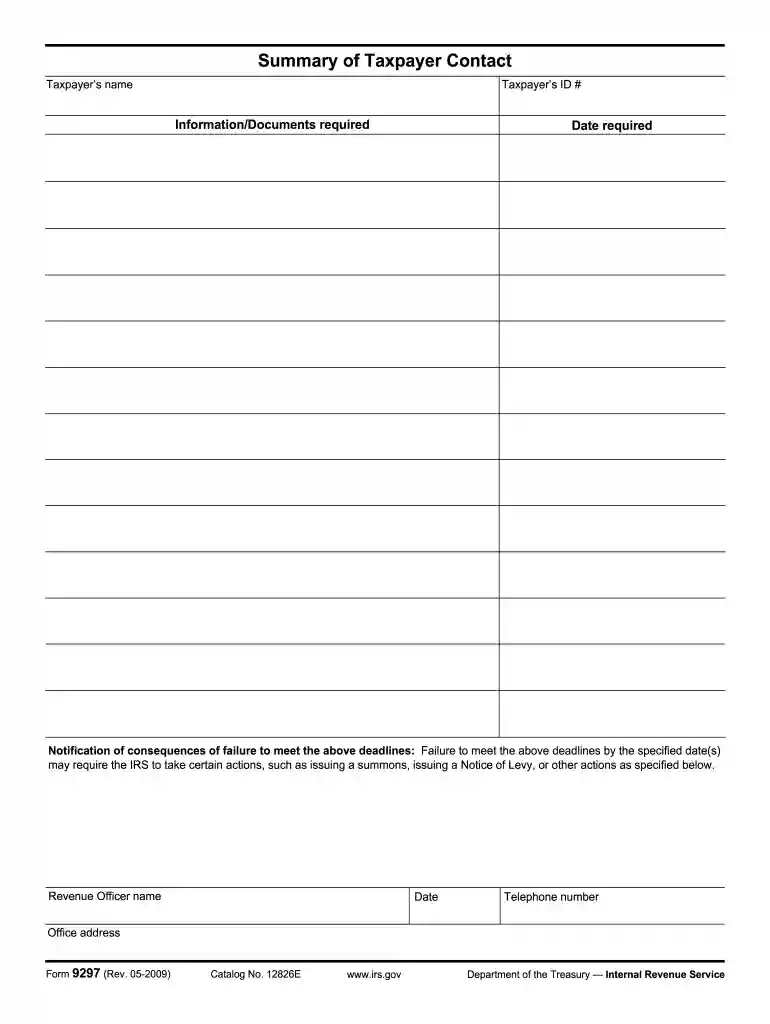
Understanding the Department of the Treasury Internal Revenue Service
The Department of the Treasury Internal Revenue Service (IRS) is a vital governmental entity responsible for collecting taxes and enforcing tax law in the United States. It ensures compliance with the Federal Tax Code, impacting individual taxpayers, businesses, and governmental agencies. The IRS manages the nation’s revenue system, coordinating tax collection and processing, and conducting audits and investigations where necessary.
Key Functions of the IRS
- Collecting federal tax income, including individual, corporate, employment, and estate taxes
- Processing tax returns and issuing refunds
- Providing taxpayer guidance and assistance
- Enforcing tax laws and overseeing tax compliance
- Conducting audits and investigations
How to Use the Department of the Treasury Internal Revenue Service
Navigating the IRS can be complex, but understanding how to effectively utilize its resources is essential for tax compliance.
Accessing IRS Services
- Online Services: The IRS website offers a range of online services, such as filing tax returns, checking refund statuses, and accessing tax records.
- In-Person Assistance: For direct interactions, the IRS provides taxpayer assistance centers where individuals can meet IRS representatives.
- Telephone Support: Taxpayers can contact the IRS via telephone for questions or assistance with specific issues.
- Mobile Applications: The IRS offers mobile apps for convenience in managing tax-related tasks.
Obtaining the Necessary IRS Forms
Securing the appropriate IRS forms is a critical step in fulfilling tax obligations.
Methods to Obtain IRS Forms
- Online Downloads: Most IRS forms are available for download from the IRS website, allowing taxpayers to print or fill them out digitally.
- Physical Copies: Forms can also be obtained from libraries or by requesting them directly from the IRS through mail.
- Tax Software: Various tax preparation software packages incorporate IRS forms, automatically selecting and filling out the necessary documents based on user inputs.
Completing IRS Forms - Step-by-Step Guide
Filling out IRS forms correctly is crucial to avoid errors that could result in fines or processing delays.
Comprehensive Steps
- Select the Correct Form: Determine which forms are necessary for your specific tax situation, such as Form 1040 for individual tax returns.
- Gather Required Documents: Collect all pertinent financial documents, such as W-2s or 1099s, to accurately report your income.
- Fill Out Personal Information: Complete sections on personal details, ensuring accuracy to prevent identity verification issues.
- Report Income and Deductions: Enter all income sources and applicable deductions; double-check for accuracy at this stage.
- Calculate Taxable Income: Include all deductions to determine the total taxable income.
- Review and Submit: Carefully review the completed form before mailing or submitting it electronically to avoid errors.
IRS Filing Deadlines and Important Dates
Adhering to IRS deadlines is a critical aspect of maintaining compliance.
Important Deadlines
- Tax Return Filing Deadline: April 15 is the standard deadline for filing individual tax returns.
- Extension Deadline: October 15 is the deadline for those who have filed extensions.
- Quarterly Estimated Payments: Deadlines fall on April 15, June 15, September 15, and January 15 of the following year for individuals making estimated payments.
Key Elements of IRS Documentation
Understanding the fundamental components of IRS documentation ensures proper completion and compliance.
Primary Elements
- Taxpayer Information: Identifying data such as name, Social Security number, and filing status.
- Income Details: All sources of income must be reported.
- Deduction and Credits: Accurate reporting of eligible deductions and credits to lower taxable income.
- Signatures and Declarations: Necessary for acknowledging the authenticity and accuracy of the information provided.
Penalties for Non-Compliance with IRS Regulations
Failing to comply with IRS requirements can result in substantial penalties and legal implications.
Common Penalties
- Late Filing and Payment Penalties: Charges imposed for not submitting forms or payments on time.
- Accuracy-Related Penalties: Levied for underpayments due to negligence or disregard of rules.
- Fraud Penalties: Severe fines and potential legal action in cases of deliberate fraud or evasion.
Digital vs. Paper IRS Forms
Choosing between digital and paper form submissions depends on personal preference and specific IRS guidelines.
Digital Submissions
- Speed and Efficiency: Filing electronically is faster and reduces the likelihood of errors through automatic checks.
- Confirmation Receipts: Immediate acknowledgment from the IRS upon submission.
Paper Submissions
- Traditional Preference: Some taxpayers may prefer mailing paper forms.
- Accessibility: Necessary for individuals without access to digital tools or those uncomfortable with technology.