




01. Edit your nra instructor renewal online
Type text, add images, blackout confidential details, add comments, highlights and more.

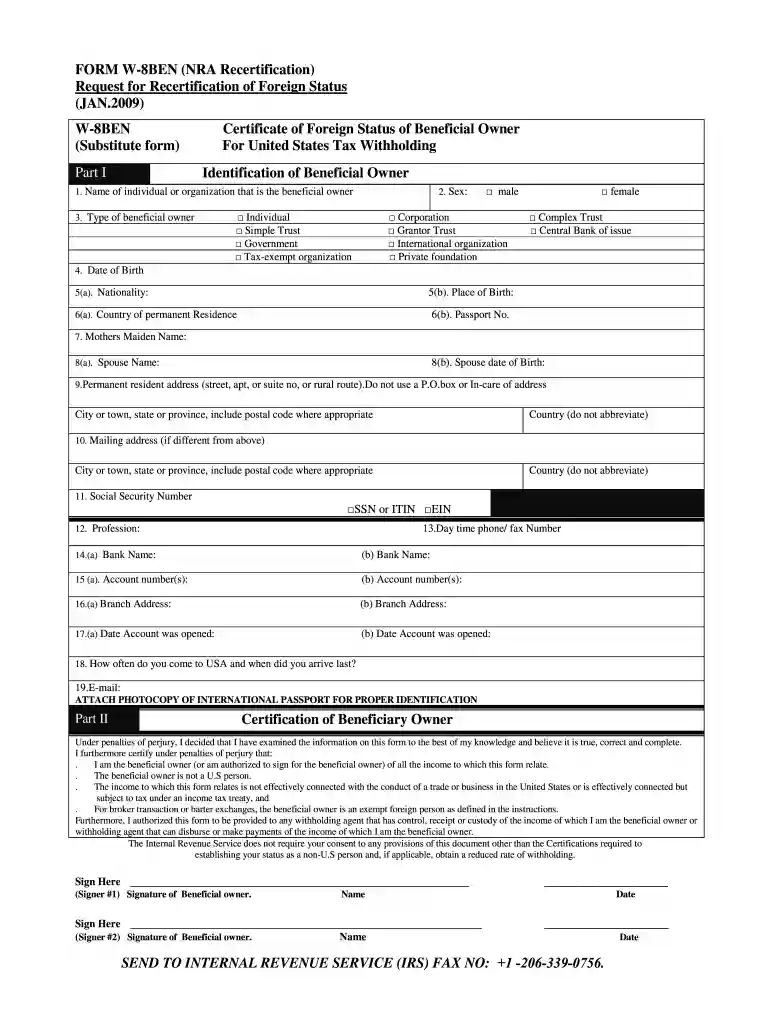
Type text, add images, blackout confidential details, add comments, highlights and more.

Draw your signature, type it, upload its image, or use your mobile device as a signature pad.

Send nra range safety officer renewal via email, link, or fax. You can also download it, export it or print it out.
The W-8BEN form, also known as the Certificate of Foreign Status of Beneficial Owner for United States Tax Withholding and Reporting, is an essential document used for tax purposes within the U.S. It requires foreign individuals and entities to confirm their status and apply for beneficial tax treaty rates. This form allows them to claim exemption from specific tax withholdings, reducing their tax liability in accordance with applicable tax treaties. The information provided on this form helps the IRS identify the taxpayer's entitlement to reduced withholding rates.
The primary purpose of the W-8BEN form is to provide your U.S. withholding agent with the information required to calculate the correct amount of tax to withhold on income. To utilize the W-8BEN, the foreign beneficial owner must complete the form and submit it to the withholding agent or payer (not the IRS), ensuring that income you receive is subject to the correct withholding rate. Additionally, keep a copy of this document for your records and update it when necessary, especially if there are changes in your residency status or tax treaty provisions.
The W-8BEN form can be downloaded directly from the IRS website. Once obtained, it should be printed and filled out meticulously. The form can also be requested from the withholding agent if direct download poses challenges. Verify the latest version is being used to ensure compliance with current requirements, as older forms may not cover recent tax treaty changes.
Completing this form accurately is crucial as errors can lead to improper taxation and potential legal complications.
Attention to these elements ensures the form's validity and compliance with IRS regulations.
The W-8BEN form is legally used to confirm an individual's foreign status and eligibility for treaty benefits under U.S. tax law. Moreover, it helps withholding agents determine the correct tax withholding percentage. Misuse or willful misrepresentation on this form can result in penalties, including potential fines and legal action under U.S. tax laws.
The IRS provides guidelines that stipulate the form’s collection and usage procedures. These guidelines mandate that the form be completed in full and held by the withholding agent for as long as necessary to satisfy the statute of limitations for the taxpayer’s return. The IRS also requires the form to be resubmitted every three years or when a change in circumstance that affects the form's validity occurs.
Failure to submit a completed W-8BEN form can lead to a default withholding rate of 30% on payments to the foreign entity or individual, regardless of treaty benefits. Penalties may also be applied if it is found that the form was incorrectly filled or withheld from submitting relevant information. Consequently, complying with the form’s requirements is critical to avoid unnecessary tax withholding and potential legal repercussions.
In summary, the W-8BEN form is a critical document for foreign individuals and entities receiving income from U.S. sources. Careful completion and timely submission of this form to the appropriate withholding agent are necessary to ensure eligibility for reduced withholding rates and conformity with U.S. tax law.
We've got more versions of the nra instructor renewal form. Select the right nra instructor renewal version from the list and start editing it straight away!
| Versions | Form popularity | Fillable & printable |
|---|---|---|
| 2009 | 4.9 Satisfied (281 Votes) |
At DocHub, your data security is our priority. We follow HIPAA, SOC2, GDPR, and other standards, so you can work on your documents with confidence.
The W-8BEN is an IRS mandated form to collect correct Nonresident Alien (NRA) taxpayer information for individuals for reporting purposes and to document
Purpose of Form: Establishing status for chapter 3 purposes. Foreign persons are subject to US tax at a 30% rate on income they receive from US sources.Read more
Dec 29, 2017 If you arent certain whether you are an employee or a self-employed per- son, you can get a determination from the IRS by filing Form SS-8.Read more


