







Definition and Significance of the Crummey Letter
The Crummey letter is a critical document used to notify beneficiaries of an Irrevocable Life Insurance Trust (ILIT) regarding their right to withdraw contributions made to the trust. This notification is essential to maintain the tax benefits associated with these contributions. Under Internal Revenue Service (IRS) guidelines, if beneficiaries are not informed of their right to withdraw, the contributions may not qualify for the annual gift tax exclusion.
- Purpose: The primary goal of a Crummey letter is to allow beneficiaries the ability to withdraw a specified amount from the trust. This aligns with IRS criteria, ensuring that contributions do not exceed the annual gift tax limit.
- Timeframe: Typically, beneficiaries have a set period, usually thirty days, to exercise their right for withdrawal. If they choose not to withdraw within this timeframe, they forfeit this right for that specific contribution.
Key Elements of a Crummey Letter
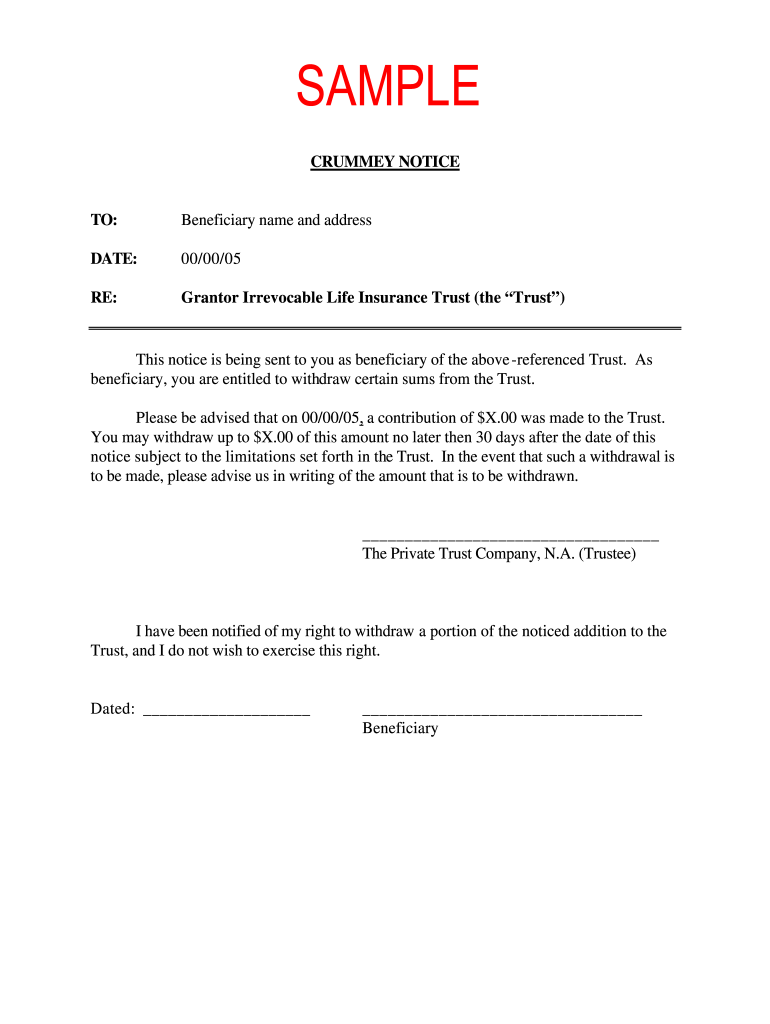
A well-crafted Crummey letter incorporates several key components that fulfill IRS requirements and ensure clear communication to beneficiaries:
- Identification of the Trust: Clearly state the name of the ILIT and its specific purpose.
- Contribution Details: Include information about the contribution amount, the date it was made, and how it impacts the beneficiaries' withdrawal rights.
- Withdrawal Rights: Explicitly state that beneficiaries have the right to withdraw the specified amount within thirty days of receipt of the Crummey letter.
- Signature Section: Offer a space for beneficiaries to confirm receipt of the letter, which can serve as documentation for compliance purposes.
These elements help prevent misunderstandings and serve as a valuable record for both trustees and beneficiaries.
How to Use a Crummey Letter Sample
Utilizing a Crummey letter sample can streamline the process of drafting your own notification. Here’s how to effectively use such a template:
- Review the Sample: Begin by carefully reviewing the sample Crummey letter, noting its structure and required elements.
- Customize the Content: Replace placeholders with specific details regarding your trust, such as its name, the contribution amount, and the date.
- Ensure Compliance: Make sure the letter adheres to IRS guidelines, particularly regarding the wording related to the beneficiaries' withdrawal rights.
- Confirm Clarity: Revisit the document to ensure clarity and simplicity in language. Avoid overly technical jargon that may confuse beneficiaries.
- Distribute the Letter: Once finalized, send the letter to each beneficiary promptly, maintaining accurate records of when and how the letters were delivered.
Steps to Complete a Crummey Letter Sample
Completing a Crummey letter involves specific steps to ensure it meets legal requirements and effectively communicates the necessary information:
- Gather Information: Collect all relevant details about the trust and contributions. This includes beneficiary names, contribution amounts, and dates.
- Use a Template: Begin with a Crummey letter template, ensuring it includes a clear header and subject line.
- Fill in the Details: Input the gathered information, paying close attention to accuracy. For example:
- Insert the date of the letter.
- Include the exact contribution amount and date.
- Format the withdrawal rights clearly.
- Include Signature Lines: Allow space for beneficiaries to acknowledge receipt. This acknowledgment can be crucial for future reference during tax assessments.
- Review for Compliance: Before sending, ensure the letter complies with IRS requirements and reflects the specific needs of your trust.
Examples of Using the Crummey Letter Sample
Consider the following sample scenarios where a Crummey letter might be utilized:
- Scenario One: An ILIT made a contribution of $15,000 on April 1, 2023. Each beneficiary receives a Crummey letter detailing the contribution and their right to withdraw the amount within thirty days.
- Scenario Two: A trust instrument specifies that if the beneficiaries do not withdraw their portion of the contributions, the funds will automatically revest to the trust. A Crummey letter could clarify this condition, emphasizing timely action by each beneficiary.
- Scenario Three: In anticipation of a significant family event, a trustee issues Crummey letters to inform beneficiaries that recent contributions were made to the ILIT to maximize tax benefits while providing a pathway for potential withdrawals.
Such examples illustrate how a Crummey letter serves not only as a notification tool but also as an essential instrument for estate planning and tax compliance.
Legal Use of the Crummey Letter
Understanding the legal context of the Crummey letter is essential for its proper implementation:
- IRS Compliance: The primary legal requirement for a Crummey letter is to comply with IRS regulations concerning gift tax exclusions. This letter must detail beneficiaries' rights for the contributions to qualify as present interest gifts.
- Trustee Responsibilities: A trustee's obligation includes sending Crummey letters to all beneficiaries timely and maintaining copies for audit purposes. Failure to comply can result in tax implications for the trust and potentially revoke the benefits of the contributions.
- State-Specific Regulations: Some states may impose additional requirements, so it is crucial to consult local estate planning measures to ensure comprehensive compliance.
Utilizing a Crummey letter correctly preserves the tax benefits associated with trust contributions while ensuring beneficiaries remain informed about their rights and responsibilities.




