







Definition & Meaning of Sitrep
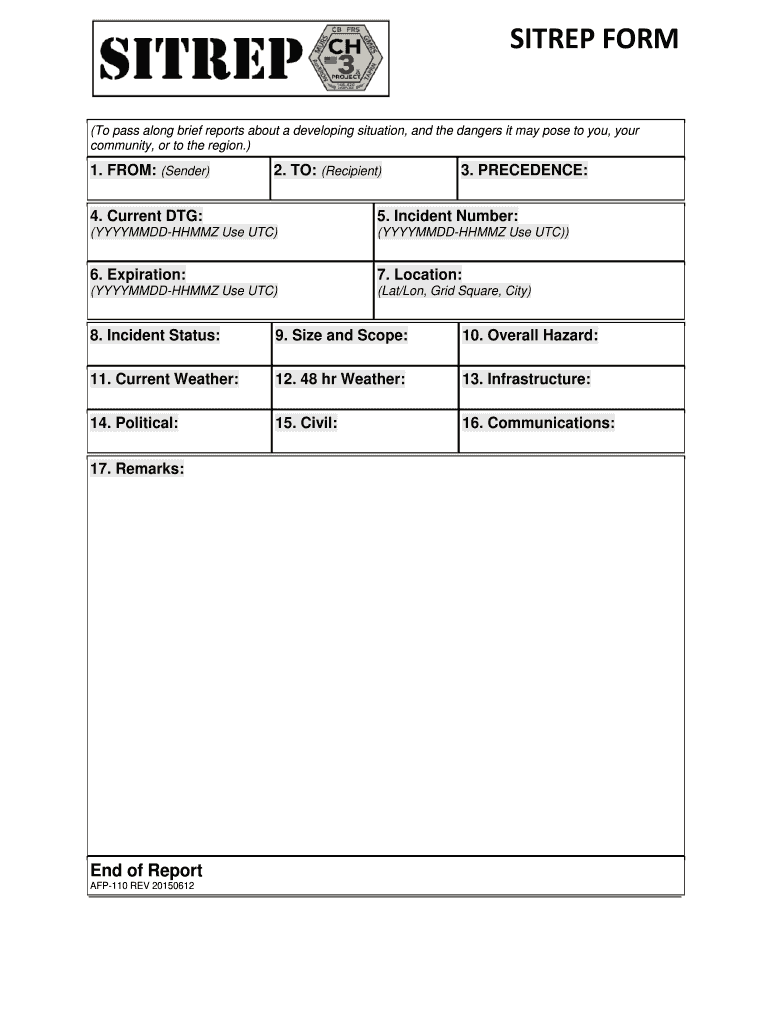
A situation report, commonly referred to as a sitrep, serves as a concise summary that provides critical updates regarding ongoing situations or incidents. This structured document delivers essential information related to the status, risks, and potential impact of an event, allowing recipients to understand the current state of affairs quickly. Originally utilized in military contexts, the sitrep has found applications in various fields, including emergency management, healthcare, and business operations, to facilitate timely decision-making and enhance situational awareness.
The core components of a sitrep typically include:
- Incident Identification: Details about the event or situation being reported.
- Status Update: Current progress or developments related to the incident.
- Resource Assessment: Identification of available resources and any needs for additional support.
- Threat Evaluation: Analysis of potential hazards or challenges related to the incident.
- Recommendations: Suggested actions or decisions based on the situation.
By standardizing the reporting process, the sitrep helps ensure that important information is communicated clearly among all stakeholders involved.
Key Elements of a Sitrep
A well-structured sitrep includes several key elements that serve to organize information and prioritize essential updates. Understanding these parts can improve the efficacy of communication during critical situations.
- Sender Information: Identification of the person or organization providing the report, often including their contact details.
- Recipient Information: Identification of the individuals or organizations meant to receive the report.
- Incident Details: Concise descriptions of the situation, including date, time, location, and nature of the incident.
- Current Status: Updates regarding the response efforts, challenges faced, and progress made.
- Size and Impact: Information on how many people or assets are affected, and the broader implications of the incident.
- Hazard Assessment: Identification of any immediate dangers that need to be addressed, including environmental or logistical threats.
- Infrastructure Status: Assessment of the condition of critical infrastructure affected by the incident, including transportation, utilities, or communication systems.
- Weather Conditions: Relevant details about the current weather that could impact the situation or response efforts.
- Political and Civil Status: Evaluation of the existing political climate that could influence the response or require attention.
Each of these elements plays a vital role in providing a comprehensive overview of the situation, ensuring all necessary information is conveyed effectively.
How to Use the Sitrep
Effectively utilizing a sitrep involves understanding its structure and purpose. Here are key steps to consider when developing a sitrep:
-
Gather Information: Collect essential details about the incident, including facts, observations, and statistics. Ensure that the data is accurate and relevant.
-
Organize Your Report: Follow a consistent format that incorporates the key elements of a sitrep. This may mean using headings and bullet points to make the document easy to navigate.
-
Be Concise and Clear: Aim for brevity while ensuring the message is easily understandable. Use simple language and avoid jargon unless necessary.
-
Timeliness: Share the sitrep promptly to ensure that the recipients can act on the information provided. A timely report can significantly affect response strategies.
-
Review and Revise: Before finalizing, review the sitrep for accuracy and clarity. Adjust any sections that may require further detail or simplification.
-
Distribute to Stakeholders: Ensure that all relevant parties receive the sitrep, whether through email, secure platforms, or printed materials.
By following these steps, you can create a sitrep that effectively informs key stakeholders and facilitates prompt decision-making.
Who Typically Uses the Sitrep
Various professionals and organizations utilize sitreps to manage information and keep all stakeholders informed. The following groups commonly employ the sitrep format:
- Military and Defense Agencies: Often used in operational contexts to report on the status of missions, incidents, or strategic developments.
- Emergency Response Teams: Utilized during disasters or emergencies to convey real-time information about incidents and resource needs.
- Healthcare Providers: Employed in medical settings to report on incident responses, particularly during outbreaks or crises.
- Corporate Management: Used in business environments to assess project developments, operational setbacks, or market changes.
- Government Agencies: Adopted by local, state, and federal agencies to keep officials informed about public safety threats or policy impacts.
Understanding the typical users of sitreps can enhance the effectiveness of the communication strategies tailored for different contexts.


Examples of Using the Sitrep
Practical examples of sitreps illustrate their application across diverse scenarios, highlighting their versatility in different settings. Here are some illustrative cases:
-
Military Scenario: A unit in a conflict zone may issue a sitrep to provide updates on troop movements, intelligence assessments, and changes to the operational environment. The report includes assessments of land and air conditions, potential threats from enemy forces, and strategic recommendations for upcoming missions.
-
Emergency Management Context: An emergency response team may generate a sitrep following a natural disaster, detailing the scale of damage, status of search and rescue operations, and impacts on critical infrastructure such as roads and hospitals.
-
Healthcare Response: During a health crisis, such as an outbreak of disease, healthcare administrators use sitreps to communicate infection rates, resource availability, and ongoing treatment strategies while addressing community health needs.
-
Corporate Reporting: A business might create a sitrep to summarize project progress, highlight completion milestones, and identify potential delays or challenges that could impact delivery timelines.
These examples showcase how versatile and practical sitreps can be in various operational contexts, improving communication and situational awareness.
Legal Use of the Sitrep
When using a sitrep, it is essential to adhere to legal considerations to maintain compliance and accountability. Various laws and regulations may govern the content and distribution of sitreps, depending on the context. Key legal aspects include:
-
Confidentiality: Protect sensitive information contained in the sitrep, especially when it involves personal data or proprietary information. Complying with data protection laws, such as HIPAA for healthcare-related sitreps, is vital.
-
Documentation: Properly documenting and archiving sitreps can serve as an essential legal record that may protect organizations against liability or provide transparency during reviews or audits.
-
Liability: Ensure the content of the sitrep is factual and avoid making unfounded claims that could lead to disputes or legal challenges. Any misrepresentation can have serious legal repercussions.
-
Compliance: Be aware of regulations or guidelines specific to your field that dictate how information should be reported and communicated. Compliance with these standards is crucial for maintaining credibility and legal standing.
By acknowledging these legal considerations, organizations can effectively leverage sitreps while ensuring they operate within the framework of relevant laws and regulations.




