
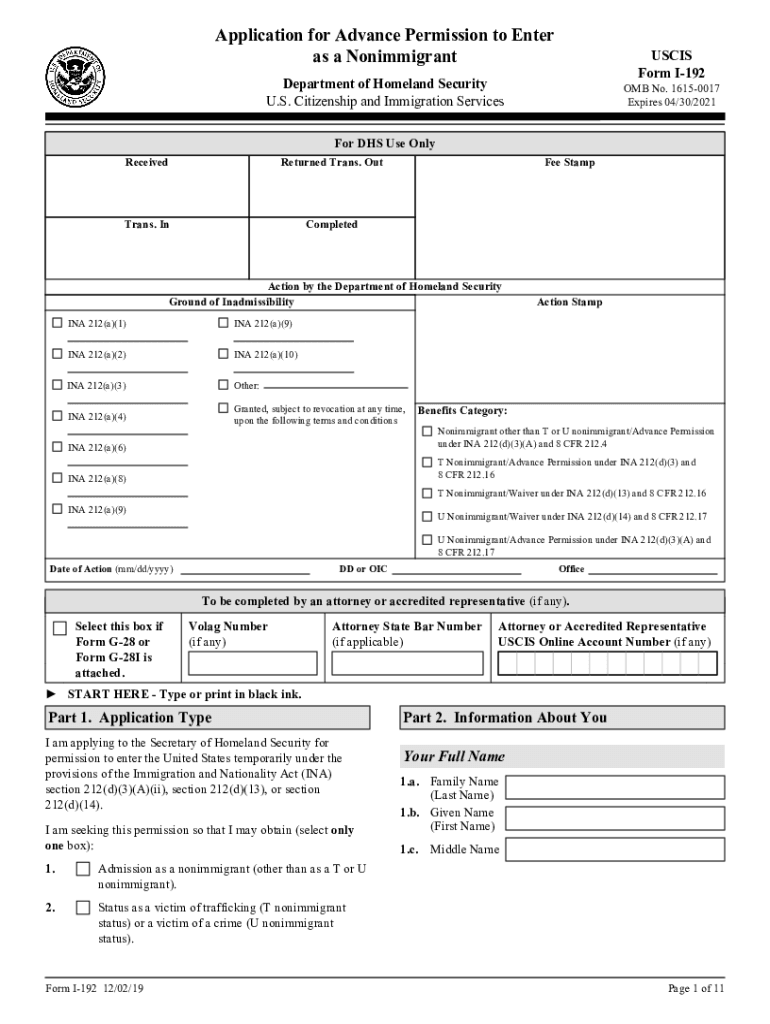







Definition and Meaning of the United States Application Form
The term "united states application form" encompasses a variety of official forms utilized for different purposes within the United States. These forms are essential for processes such as immigration, tax, and legal documentation. Each form is designed to collect specific information from individuals or entities, facilitating compliance with U.S. laws and regulations.
Types of United States Application Forms
- Immigration Forms: Examples include the USCIS Form I-130 for petitioning relatives and the DS-160 form for nonimmigrant visa applications.
- Tax Forms: Such as the IRS Form W-9, which requests taxpayer identification information.
- Legal Forms: These may pertain to business registration, property deeds, or court applications.
Understanding the precise type of application form required is critical to ensuring the correct information is submitted to the appropriate authorities.
Steps to Complete the United States Application Form
Completing a united states application form typically involves several methodical steps to ensure accuracy and compliance.
- Identify the Appropriate Form: Determine which specific form is needed based on your circumstances—for instance, a DS-160 for visa applications or a W-9 for tax purposes.
- Gather Necessary Information: Collect all required personal, financial, and supporting information, such as identification numbers or employment details.
- Fill Out the Form: Input the gathered information into the required fields meticulously. Ensure all sections are completed as mandated by the form instructions.
- Review and Double-Check: Carefully review your entries for any errors or omissions. Missing details can result in delays or denials.
- Submit the Form: Choose a submission method—online, by mail, or in person—based on what is acceptable for the specific form. Make copies of the completed form for your records.
By following these steps, individuals can enhance their chances of successful application submission.
How to Obtain the United States Application Form
Acquiring the correct united states application form is a crucial initial step in the application process. Here are several methods to obtain these forms:
- Official Government Websites: Forms can be downloaded from relevant government agency websites, such as USCIS for immigration-related forms or the IRS for tax forms.
- Local Government Offices: Physical copies may be available at local government offices, where individuals can also receive assistance with form completion.
- Legal and Financial Advisors: Consulting with professionals can provide personalized guidance and access to the necessary forms tailored to specific needs.
Proper retrieval of the correct application form ensures that individuals can initiate their desired processes effectively.
Important Terms Related to the United States Application Form
Understanding relevant terminology is essential when working with united states application forms. Key terms include:
- Applicant: The individual or entity submitting the form.
- Filing Deadline: The specified date by which the application must be submitted to be considered valid.
- Supporting Documents: Additional paperwork that must accompany the form, such as identification or proof of eligibility.
- Compliance: Adhering to all applicable laws and regulations associated with the form's purpose.
Becoming familiar with these terms will enhance comprehension and facilitate a smoother application process.
Required Documents for the United States Application Form
Many united states application forms necessitate specific documentation to support the information provided. Required documents may include the following:
- Identification: Such as a passport, driver’s license, or social security card.
- Proof of Residency: Utility bills, lease agreements, or bank statements can verify current address.
- Financial Records: Tax returns or bank statements may be necessary for forms related to financial disclosures or benefits.
- Eligibility Evidence: Documentation proving eligibility for certain programs or statuses.
The specific documents required will depend on the type of application being completed, so it is important to consult the form's instructions carefully.
Application Process and Approval Time
The application process for united states application forms can vary significantly based on form type and submitting agency. Generally, the following steps are involved:
- Submission: Complete the application as detailed in prior sections and submit it via the designated method.
- Processing Time: Each agency has different processing times; for example, immigration forms may take several months, while tax forms often have quicker processing.
- Response: Applicants will receive confirmation or a request for additional information. Be prepared to respond promptly to avoid delays.
- Approval or Denial: Upon reviewing the application, the relevant authority will either approve or deny the request, often providing a detailed explanation for any rejections.
Understanding these steps can help applicants navigate the complexities associated with their respective forms.
Examples of Using the United States Application Form
Practical scenarios demonstrate the application of various united states application forms in real-life situations:
- DS-160 Form for Visa Applications: An applicant submits the DS-160 to apply for a tourist visa, providing personal information and travel plans to the U.S. Consulate. This form is essential for obtaining permission for temporary stays.
- W-9 Form for Freelancers: A freelance graphic designer fills out and provides a W-9 form to a new client for tax reporting purposes. This ensures the client can accurately report the payments made to the designer.
- USCIS Form I-130 for Family Sponsorship: A U.S. citizen files the I-130 form to sponsor a family member for permanent residency. This process establishes the relationship and initiates the immigration pathway.
These examples illustrate the practical implications of the united states application form across different contexts.




