




01. Edit your tenancy property inspection form online
Type text, add images, blackout confidential details, add comments, highlights and more.

Type text, add images, blackout confidential details, add comments, highlights and more.

Draw your signature, type it, upload its image, or use your mobile device as a signature pad.

Send tenancy services property inspection report via email, link, or fax. You can also download it, export it or print it out.
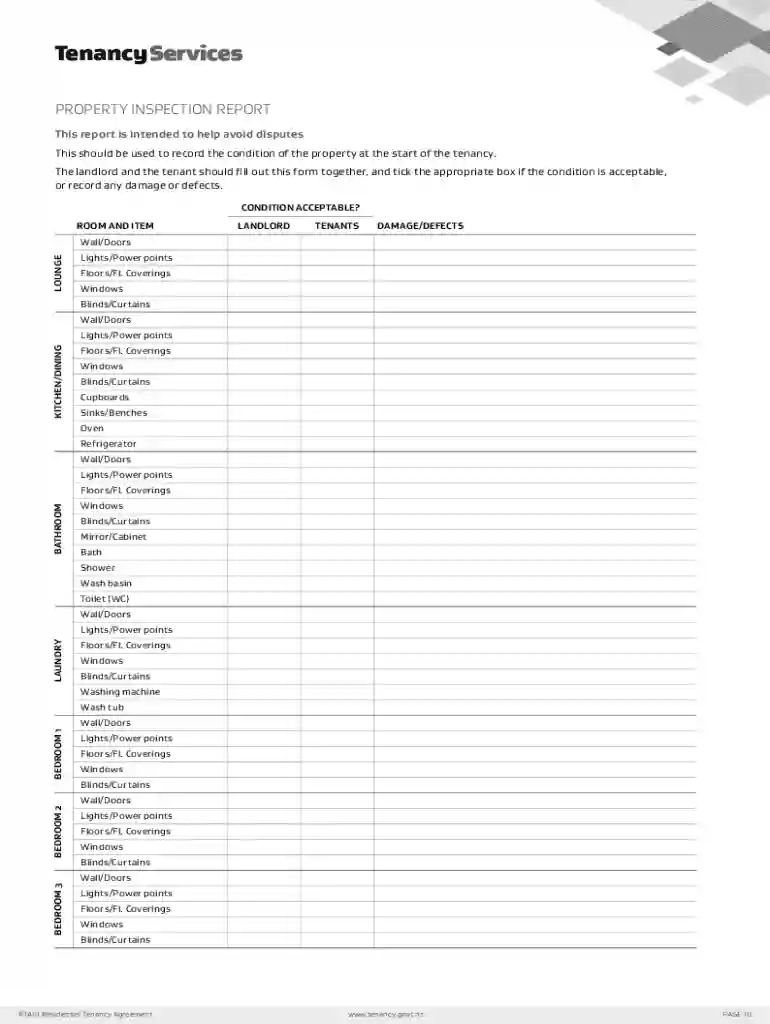
This report is designed to help landlords and tenants document the condition of a rental property at the start of a tenancy. It serves to ensure that both parties have a mutual understanding of the property's state, which can prevent disputes over damages or repairs when the lease ends. By clearly outlining the condition of each room and item, the report creates a baseline against which future property conditions can be assessed.
Act as a guide for conducting a detailed property inspection. Before the tenant moves in, both landlord and tenant should jointly complete the report. Highlight any existing damages or maintenance needs and make sure both parties sign off on the report to acknowledge its accuracy.
Utilizing this report can significantly minimize misunderstandings between landlords and tenants. By having a documented reference, both parties can feel confident that their interests are represented fairly.
In the U.S., rental agreements often mandate clear condition records for resolving property disputes. This report can serve as legal evidence in disputes, providing clarity on the condition during the inspection.
Each state may have variations in what needs to be documented:
Primarily used by property managers, landlords, real estate agents, and tenants. Both private homeowners renting out their property and professional property management companies utilize it to ensure consistent property management standards.
Understanding key terms in the report helps in accurate completion:
Typically, the report can be acquired from property management companies or legal document providers. Submit completed forms to the relevant party (landlord, tenant) and safely store a shared copy.
By effectively employing this report, landlords and tenants can maintain a transparent and harmonious rental relationship, reducing the risk of disputes and enhancing mutual trust.
We've got more versions of the tenancy property inspection form form. Select the right tenancy property inspection form version from the list and start editing it straight away!
At DocHub, your data security is our priority. We follow HIPAA, SOC2, GDPR, and other standards, so you can work on your documents with confidence.
Congress intended that federal agencies avoid these problems by offering prompt and inexpensive administrative processes for resolving disputes; yet, over
This report highlights ethical, practical ways AI enhances preparation, improves outcomes, manages complex disputes, and bridges dividesall
May 24, 2026 In this category, youll see vendors that help businesses manage and prevent chargebacks, including dispute resolution and fraud prevention.Read more


