Wallowa-Whitman National Forest - Home 2026

Get Form
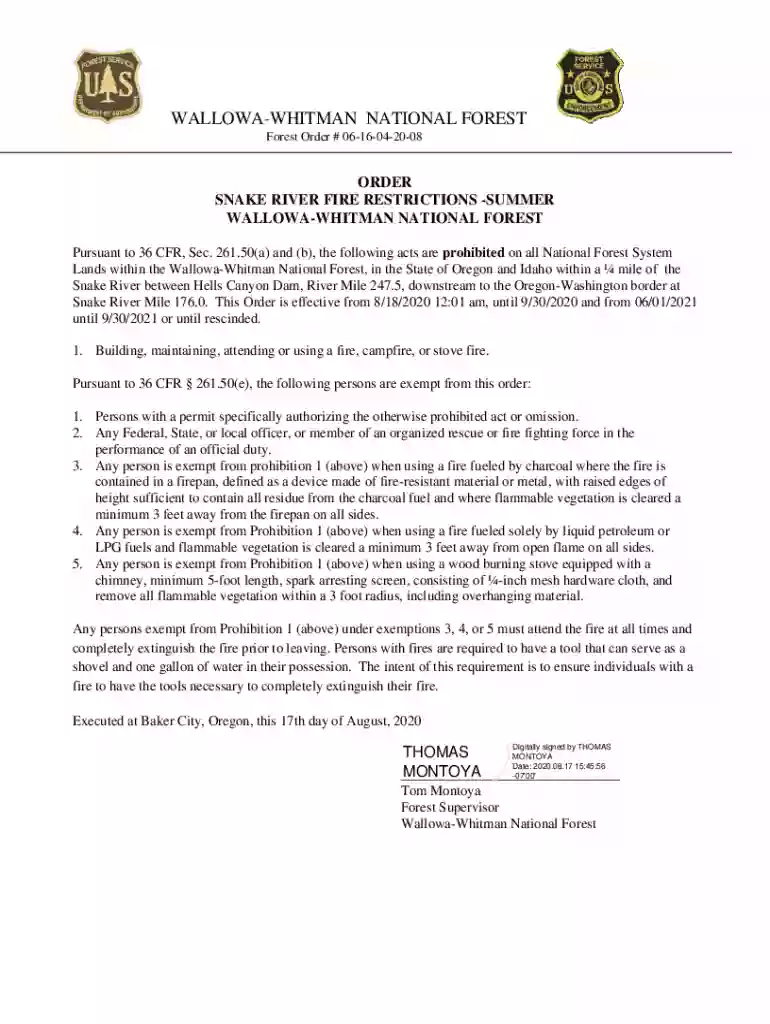
Wallowa-Whitman National Forest - Home Preview on Page 1

Here's how it works

01. Edit your form online
Type text, add images, blackout confidential details, add comments, highlights and more.

02. Sign it in a few clicks
Draw your signature, type it, upload its image, or use your mobile device as a signature pad.

03. Share your form with others
Send it via email, link, or fax. You can also download it, export it or print it out.

Definition and Meaning

The Wallowa-Whitman National Forest is a vast national forest located in northeastern Oregon. It spans over two million acres and encompasses a rich diversity of landscapes, including the stunning Eagle Cap Wilderness and the majestic Hells Canyon. It is a place where nature enthusiasts, researchers, and outdoor adventurers can explore pristine wilderness areas, view spectacular wildlife, and engage in various recreational activities such as hiking, fishing, camping, and more. The term "Wallowa-Whitman National Forest - Home" might refer to a hub for information and resources related to activities, conservation efforts, and regulations in this extensive forest area.

How to Use the Wallowa-Whitman National Forest - Home

To effectively use the term Wallowa-Whitman National Forest - Home, visitors should become acquainted with various tools and resources available for planning their trips. This home site can provide vital information regarding trail maps, area access points, seasonal weather conditions, and camping facilities. It can guide prospective visitors on responsible recreation, such as Leave No Trace principles, and offer insights into wildlife conservation efforts, fire safety protocols, and the cultural history of the area. The platform serves as a central location to access permits necessary for camping or large group events, ensuring compliance with forest guidelines.

Steps to Complete the Wallowa-Whitman National Forest - Home Form

The form associated with Wallowa-Whitman National Forest - Home typically involves gathering and completing a set of details needed for activities within the forest. The steps might include:

  1. Download the Form: Access the official website or a related portal to download the necessary forms.
  2. Complete Personal Information: Fill in your details, including name, contact information, and any group affiliations if applicable.
  3. Specify Activity Details: Clearly outline the purpose of your activities, such as research, camping, or events.
  4. Compliance and Checklist: Ensure understanding of forest rules, fire safety measures, and any other relevant guidelines.
  5. Sign and Submit: Electronically sign, if applicable, or physically sign and submit the form via specified methods.

Required Documents for Wallowa-Whitman National Forest - Home

When completing forms related to Wallowa-Whitman National Forest activities, certain documents are often required to ensure compliance with environmental and safety regulations:

  • Personal Identification: Government-issued ID to verify identity.
  • Permits: Specific activity permits if engaging in organized events or activities.
  • Insurance Certificates: May be necessary for events involving large groups or special use.
  • Detailed Activity Plans: For research or educational trips, a plan or itinerary is likely needed.

Legal Use of the Wallowa-Whitman National Forest - Home

Legal use of the Wallowa-Whitman National Forest - Home means complying with all federal and state laws governing forest activities. These typically address conservation, wildlife protection, and responsible recreation:

  • Avoiding Prohibited Areas: Certain zones may be off-limits due to wildlife conservation efforts or safety concerns.
  • Observing Fire Regulations: Understand and adhere to fire safety rules to prevent wildfires.
  • Permits and Approvals: Obtain necessary permissions, observing any stipulated conditions to maintain lawful usability.

Key Elements of the Wallowa-Whitman National Forest - Home

Understanding the Wallowa-Whitman National Forest - Home necessitates familiarity with its key elements:

  • Recreational Infrastructure: Trails, camping areas, visitor centers, and amenities.
  • Biodiversity: Unique flora and fauna that require visitors' respect and protection.
  • Cultural and Historical Sites: Presence of culturally significant locations that warrant preservation.

Important Terms Related to Wallowa-Whitman National Forest - Home

Educational familiarity with specific terminology enhances the experience:

  • Leave No Trace: Environmental conservation practice encouraging minimal impact.
  • Wilderness Area: Regions within the forest officially designated for limited human activity to preserve natural conditions.
  • Pack In, Pack Out: Policy requiring visitors to remove all their waste to maintain site cleanliness and ecological integrity.

Examples of Using the Wallowa-Whitman National Forest - Home

Practical examples include planning a family camping trip:

  • Research: Use online resources to pick a campsite and prepare adequately for the rustic conditions.
  • Permits: Obtain a camping permit and plan adherence to fire safety instructions.
  • Conservation: Engage with ranger-led programs to learn about the forest's biodiversity.

State-by-State Differences

States like Oregon manage forests like Wallowa-Whitman with unique provisions:

  • Oregon Forest Protection Laws: Regulations specific to Oregon that guide logging, conservation, and recreational activities within its national forests.
  • Fire Season Guidelines: Risk assessments that may vary state-to-state, affecting permissible summer and fall activities.

See more Wallowa-Whitman National Forest - Home versions

We've got more versions of the Wallowa-Whitman National Forest - Home form. Select the right Wallowa-Whitman National Forest - Home version from the list and start editing it straight away!
Versions Form popularity Fillable & printable
2020 4.8 Satisfied (167 Votes)
be ready to get more

Complete this form in 5 minutes or less

Get form

Got questions?

We have answers to the most popular questions from our customers. If you can't find an answer to your question, please contact us.
Contact us
Wallowa National Forest was first established as the Wallowa Forest Reserve in Oregon on May 6, 1905, with 747,200 acres (3,024 km2). On March 1, 1907, it was combined with the Chenismus Forest Reserve to create Imnaha National Forest, which was then renamed Wallowa on July 1, 1908.
Large mammal species include Shiras moose, Rocky Mountain elk, Rocky Mountain bighorn sheep, mountain goat, white-tailed deer, mule deer, black bear, timber wolf, cougar, and bobcat. Several sightings of wolverines, rare within the United States, have been recorded since the 1990s.
Know Before You Go: Free, self-issued river permits are required for all boating on the Wallowa Grande Ronde rivers in Oregon, and when using BLM lands above the high-water mark in Washington.
The Wallowa NF was created in 1908 from the combination of seven Forest Reserves, and the Whitman NF was created in 1908 by combining three Forest Reserves. The Wallowa and Whitman National Forests have been managed together since 1954.
Wallowa County is known for its natural beauty, pristine landscapes, outdoor recreation, farm and agriculture, artist community, the Nez Perce tribe, and small-town living. Our rural and frontier remoteness makes Wallowa County unique.

Security and compliance

At DocHub, your data security is our priority. We follow HIPAA, SOC2, GDPR, and other standards, so you can work on your documents with confidence.

Learn more
ccpa2
pci-dss
gdpr-compliance
hipaa
soc-compliance
be ready to get more

Complete this form in 5 minutes or less

Get form

People also ask

The first national forest was established as the Yellowstone Park Timber and Land Reserve on March 30, 1891, then in the Department of the Interior.
Buck Creek Forest Camp and Trailhead. Buckhorn Campground. Canyon Forest Campground. Coverdale Campground. Coyote Campground. Dougherty Campground. Eagle Forks Campground. Fish Lake Campground.

Related links