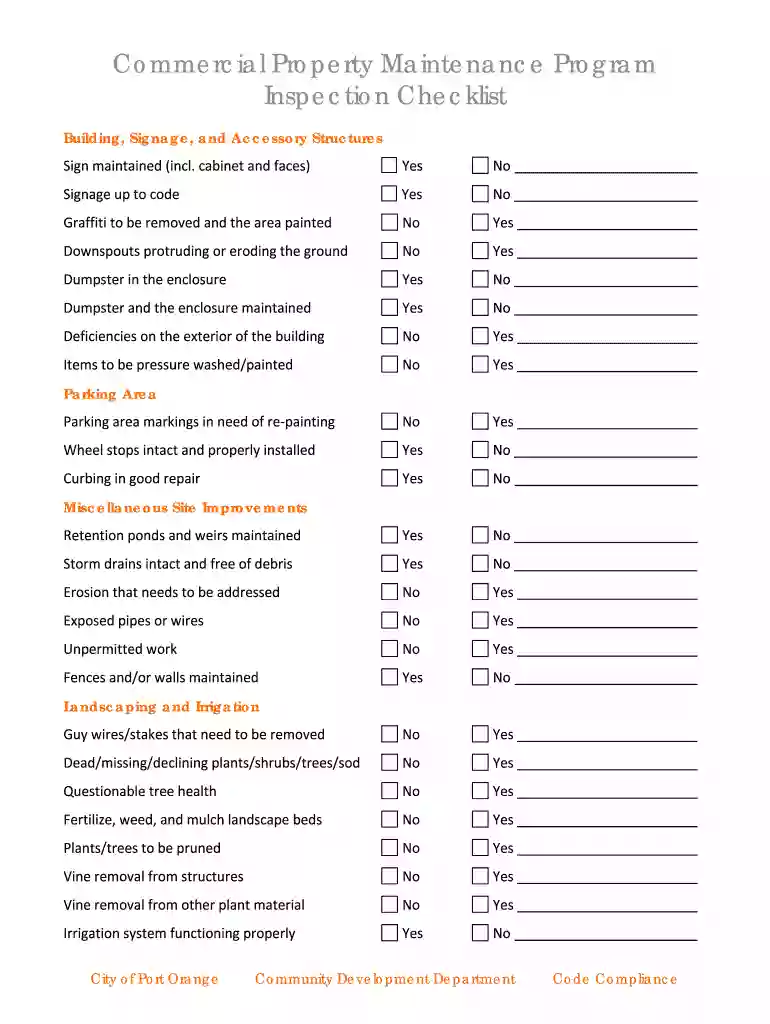
Definition and Meaning of Commercial Property Maintenance Program
A Commercial Property Maintenance Program refers to a systematic approach applied by property owners and management companies to ensure the upkeep and functionality of commercial real estate. These programs encompass various activities, including regular inspections, maintenance schedules, and compliance with local regulations. The primary objective is to preserve the value of the property, enhance the tenant experience, and ensure safety for occupants and visitors.
The key components of a Commercial Property Maintenance Program typically include:
- Preventive Maintenance: Regularly scheduled inspections and upkeep tasks aimed at preventing major repairs in the future. This can include HVAC system checks, plumbing inspections, and routine cleaning of common areas.
- Compliance Checks: Evaluating the property for adherence to local building codes and safety regulations. This may involve inspecting fire extinguishers, alarm systems, and accessibility features.
- Emergency Preparedness: Establishing protocols to address emergencies such as floods, fires, or power outages, ensuring that the property can respond effectively to unforeseen events.
With a well-structured maintenance program, property managers can identify issues early, thereby reducing overall costs and enhancing tenant satisfaction.
Key Elements of a Commercial Property Maintenance Program
A comprehensive Commercial Property Maintenance Program includes several critical elements that ensure effective management and upkeep of commercial properties. These elements encompass the physical, legal, and operational requirements necessary for successful maintenance.
- Maintenance Schedule: Developing and adhering to a timeline for regular maintenance tasks. This schedule should include frequency and type of service, such as monthly inspections or quarterly deep cleaning.
- Record Keeping: Maintaining detailed records of all maintenance activities, inspections, and compliance checks. This documentation is crucial for tracking performance, budget planning, and providing evidence during audits.
- Vendor Management: Building relationships with reliable maintenance service providers. Ensuring that vendors are properly vetted and can deliver quality service at competitive rates is essential for the program’s success.
- Budgeting: Allocating financial resources effectively for both routine maintenance and unexpected repairs. A well-planned budget helps the property owner mitigate high costs while ensuring that essential services are maintained.
- Tenant Communication: Establishing clear channels of communication with tenants regarding maintenance issues. Regular updates and responsiveness to tenant requests can enhance tenant satisfaction and retention.
When these key elements are effectively integrated, a Commercial Property Maintenance Program can result in improved property performance and reduced operational costs.
Steps to Implement a Commercial Property Maintenance Program
Establishing a successful Commercial Property Maintenance Program involves several key steps that ensure proper implementation and sustainability.
- Conduct a Property Assessment: Start with a thorough inspection of the property to identify existing issues and prioritize maintenance needs. This assessment should cover structural elements, systems (HVAC, plumbing, electrical), and surrounding areas.
- Develop a Maintenance Plan: Create a detailed plan that outlines specific maintenance tasks, who will carry them out, and the timeline for implementation. This plan should reflect the property’s unique requirements.
- Allocate Resources: Determine the budget for the program, including labor costs, materials, and service contracts. This budget should accommodate both planned maintenance and contingency funding for unforeseen repairs.
- Implement Routine Inspections: Schedule ongoing inspections to evaluate the condition of the property components regularly. The frequency of inspections may vary based on the property type and usage.
- Monitor and Adjust: Continuously track the effectiveness of the maintenance program through performance metrics, tenant feedback, and cost analysis. Make adjustments as necessary to improve efficiency and address emerging needs.
By systematically following these steps, property managers can effectively implement a responsive and sustainable Commercial Property Maintenance Program.
Why Establish a Commercial Property Maintenance Program
Implementing a Commercial Property Maintenance Program can provide numerous benefits for property owners and tenants alike. These advantages include both financial and operational efficiencies, contributing to the overall success of the property.
- Cost Savings: By addressing maintenance issues proactively, property owners can prevent more significant, costly repairs. Routine maintenance reduces long-term expenses associated with property deterioration and emergency fixes.
- Enhanced Property Value: Regular upkeep contributes to the property’s market value. Well-maintained properties are more attractive to tenants and prospective buyers, ensuring that the property retains its desirability over time.
- Tenant Satisfaction: A responsive maintenance program creates a positive experience for tenants, leading to higher retention rates and more extended lease agreements. Satisfied tenants are likely to recommend the property to others, bolstering occupancy rates.
- Risk Mitigation: By following safety regulations and conducting regular compliance checks, properties reduce liability risks associated with accidents. A well-managed maintenance program protects both property owners and tenants alike.
- Brand Reputation: For businesses that operate from commercial properties, a well-maintained building enhances the company’s image. Customers and clients are more likely to feel confident in engaging with businesses located in professional, well-cared-for environments.
The implementation of a Commercial Property Maintenance Program ultimately creates a stable, efficient, and profitable property management strategy.
Important Terms Related to Commercial Property Maintenance Program
Understanding key terminology is essential for anyone involved in the maintenance of commercial properties. Familiarity with these terms aids communication and streamlines the maintenance process.
- Preventive Maintenance: Maintenance activities performed to prevent failure or deterioration of equipment or property.
- Work Order: A formal document requesting maintenance or repair work to be completed, often including details about the task and any necessary approvals.
- Service Level Agreement (SLA): A contract between the property management and service providers that outlines the expected service promises, ensuring accountability and performance standards.
- Property Management System: A software platform used to manage property operations, including maintenance tracking and tenant communications.
- Compliance Audit: A thorough review of a property’s adherence to applicable laws, regulations, and standards, ensuring safety and legal compliance.
Knowing these terms equips property owners and managers with the language necessary to navigate the complexities of Commercial Property Maintenance Programs effectively.