




01. Edit your form online
Type text, add images, blackout confidential details, add comments, highlights and more.

Type text, add images, blackout confidential details, add comments, highlights and more.

Draw your signature, type it, upload its image, or use your mobile device as a signature pad.

Send it via email, link, or fax. You can also download it, export it or print it out.
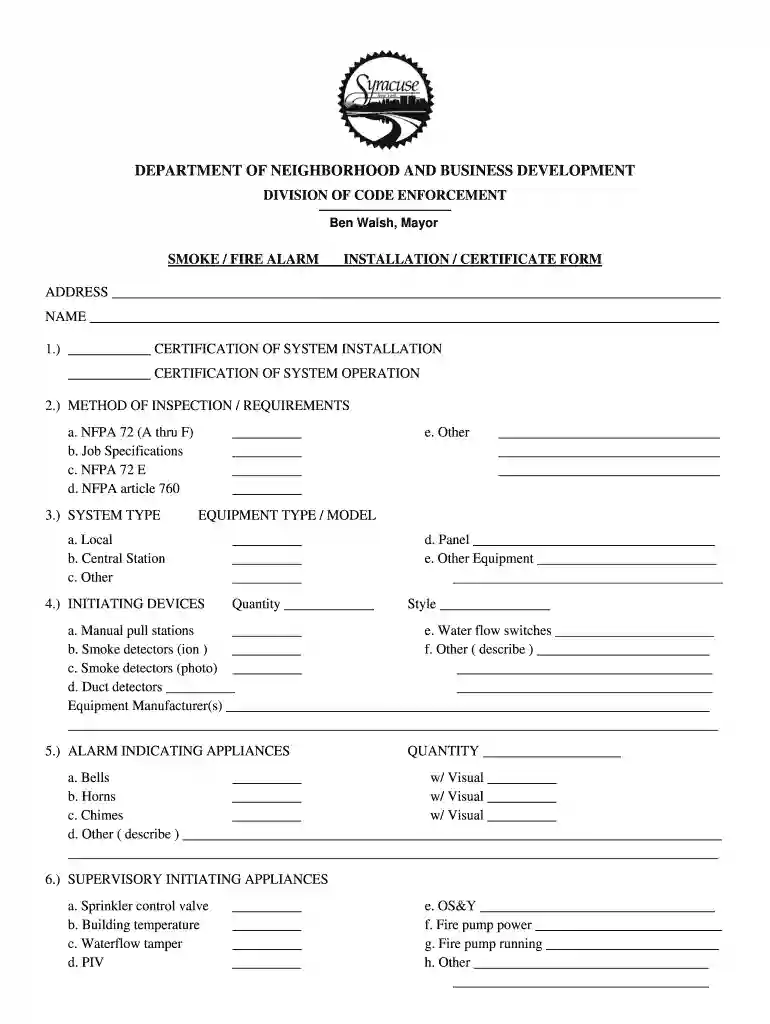
The Smoke Detection Certificate Form is a crucial document used to certify the installation and functionality of smoke and fire alarm systems in a property. It serves as proof that a property's fire safety systems comply with established safety standards and regulations. This document is typically issued by the Department of Neighborhood and Business Development, Division of Code Enforcement, and includes detailed sections for system certification, inspection methods, and equipment specifications.
To effectively utilize the Smoke Detection Certificate Form, property owners or authorized agents must ensure all required fields are accurately completed. Key steps include:
The Smoke Detection Certificate Form can typically be obtained through multiple channels, such as:
Proper completion of the Smoke Detection Certificate Form involves several steps, including:
This form incorporates several crucial elements to ensure comprehensive coverage of the smoke detection system's status:
The legal use of the Smoke Detection Certificate Form ensures compliance with safety regulations. Property owners must retain a certified form to:
This form is typically used by:


While the foundational aspects of the Smoke Detection Certificate Form are consistent, specific state regulations may affect its application. Variations can include:
Failing to properly complete and maintain a Smoke Detection Certificate Form can result in significant consequences:
We've got more versions of the Smoke Detection Certificate Form form. Select the right Smoke Detection Certificate Form version from the list and start editing it straight away!
At DocHub, your data security is our priority. We follow HIPAA, SOC2, GDPR, and other standards, so you can work on your documents with confidence.
After completing an installation, modification, or addition of a system or single-station detector the licensee must complete and present this certificate.
The owner shall obtain a certificate of smoke alarm, carbon monoxide alarm, and portable fire extinguisher compliance CSACMAPFEC, evidencing compliance withRead more
Copies of the City of Houston. Gas Test Permit and final approval form shall be obtained from the plumber or Service. Company and maintained on the premises.Read more


