Definition & Meaning
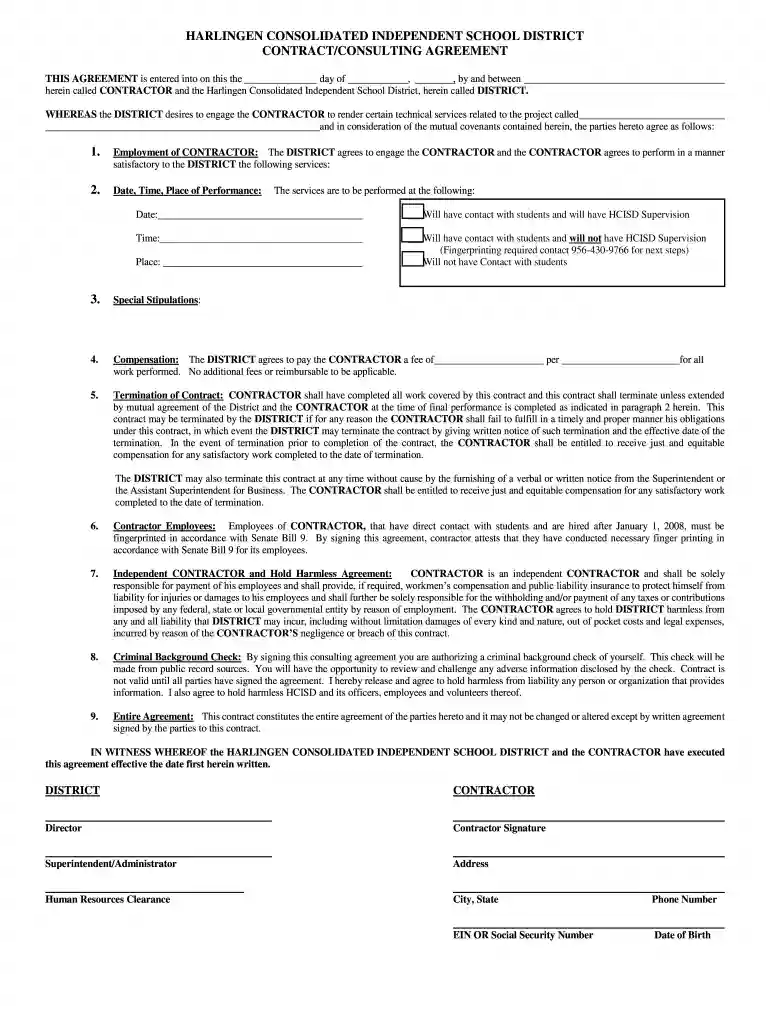
A CONTRACT/CONSULTING AGREEMENT refers to a formal document that outlines the terms and conditions under which an independent contractor provides services to a client organization. Its primary purpose is to establish clear mutual understandings about expectations, deliverables, compensation, and other contractual obligations between the contracting parties. This agreement is crucial in defining the professional relationship and ensuring both parties adhere to agreed terms, reducing potential conflicts.
Key Elements of the CONTRACT/CONSULTING AGREEMENT
- Parties Involved: Clearly states the names and roles of both the client and the contractor.
- Scope of Services: Describes the services to be provided, ensuring both parties have a shared understanding of the project's objectives.
- Compensation Terms: Details payment structure, including rates, payment schedule, and terms of reimbursement for expenses.
- Duration and Termination: Specifies the contract duration and conditions under which the agreement can be terminated prematurely by either party.
- Confidentiality Clauses: Protects sensitive information through non-disclosure requirements.
- Indemnification: Outlines liability responsibilities to protect both parties against claims arising from the contractor's services or actions.
Steps to Complete the CONTRACT/CONSULTING AGREEMENT
- Initial Meeting: Conduct a discussion to detail project expectations, responsibilities, and overall goals.
- Draft the Agreement: Use a standard consulting agreement template, tailor the language to specific project requirements, and add particular details as discussed.
- Review and Revise: Both parties should carefully review the document, recommend modifications if necessary, and ensure clarity in all clauses.
- Final Approval: Obtain agreement from both parties on the terms, with alterations documented and signed.
- Execute the Agreement: Both parties sign the document to finalize the agreement, making it legally binding.
Practical Examples
- Example 1: A tech firm engaging an IT consultant to oversee a system overhaul would detail project milestones and specific duties the consultant must fulfill.
- Example 2: An education district contracting an instructor for a specialized curriculum development project would specify deliverables such as lesson plans and training sessions.
Legal Use of the CONTRACT/CONSULTING AGREEMENT
This agreement is legally crucial because it establishes the independent status of the contractor and differentiates the relationship from that of an employee-employer. In the United States, adhering to the regulations set forth in the IRS guidelines and state laws is essential to avoid misclassification risks. A well-structured agreement assists in defending the contract's validity and the nature of the working relationship in legal or tax disputes.
Important Legal Considerations
- IRS Guidelines Compliance: Ensures the contractor remains classified correctly, avoiding penalties for misclassification.
- State-Specific Provisions: Adapts to variances in agreement enforceability and contractor regulations across different U.S. states.
Business Entity Types
- LLCs and Corporations: Often use these agreements for external expertise without the long-term commitment of hiring full-time staff.
- Partnerships: May engage consultants to manage specific projects or elements of their business infrastructure.
How to Obtain the CONTRACT/CONSULTING AGREEMENT
The agreement can be procured through various online legal services or by contacting a legal advisor who can draft a customized contract specific to your needs. Additionally, downloadable templates are available on several document management platforms like DocHub, which simplify the creation, editing, and completion of such agreements.
Form Submission Methods
- Online Platforms: Store and manage contracts electronically, ensuring ease of access and modification.
- Legal Service Providers: Offer physical or downloadable options upon request, with potential legal counsel for compatibility customization.
Examples of Using the CONTRACT/CONSULTING AGREEMENT
- Example in IT: A startup uses a consulting agreement to hire a cybersecurity expert for securing its database systems, detailing the timelines and cybersecurity protocols to be implemented.
- Example in Education: A school district employs a third-party consultant for curriculum enhancement, with terms covering the full scope of educational resources to be developed and timelines for implementation.
Use Cases
- Short-Term Projects: Contracting professionals for a set period to perform specific tasks.
- Specialized Functions: Engaging experts in areas like law, accounting, or marketing for strategic advisory.
State-Specific Rules for the CONTRACT/CONSULTING AGREEMENT
Different states may impose unique requirements or interpretations regarding consulting agreements. It's critical to align the contract with state laws concerning employment and independent contractor classifications, with granular attention paid to states known for stringent enforcement like California and New York.
State-by-State Differences
- California: Enforces detailed criteria under the ABC test affecting independent contractor status.
- New York: Requires specific disclosure of compensation and work expectations for freelance contracts.
Penalties for Non-Compliance
Failure to correctly draft and adhere to a CONTRACT/CONSULTING AGREEMENT can lead to financial penalties, legal disputes, and back-taxes. Misclassification of a contractor versus an employee can result in hefty fines imposed by tax authorities, with additional liabilities for failing to uphold labor laws.
Compliance Strategies
- Regular Audits: Conduct reviews on contractual agreements to ensure continued compliance with current regulations.
- Legal Consultation: Engage legal experts for ongoing advice regarding evolving state and federal guidelines.