




01. Edit your form online
Type text, add images, blackout confidential details, add comments, highlights and more.

Type text, add images, blackout confidential details, add comments, highlights and more.

Draw your signature, type it, upload its image, or use your mobile device as a signature pad.

Send it via email, link, or fax. You can also download it, export it or print it out.
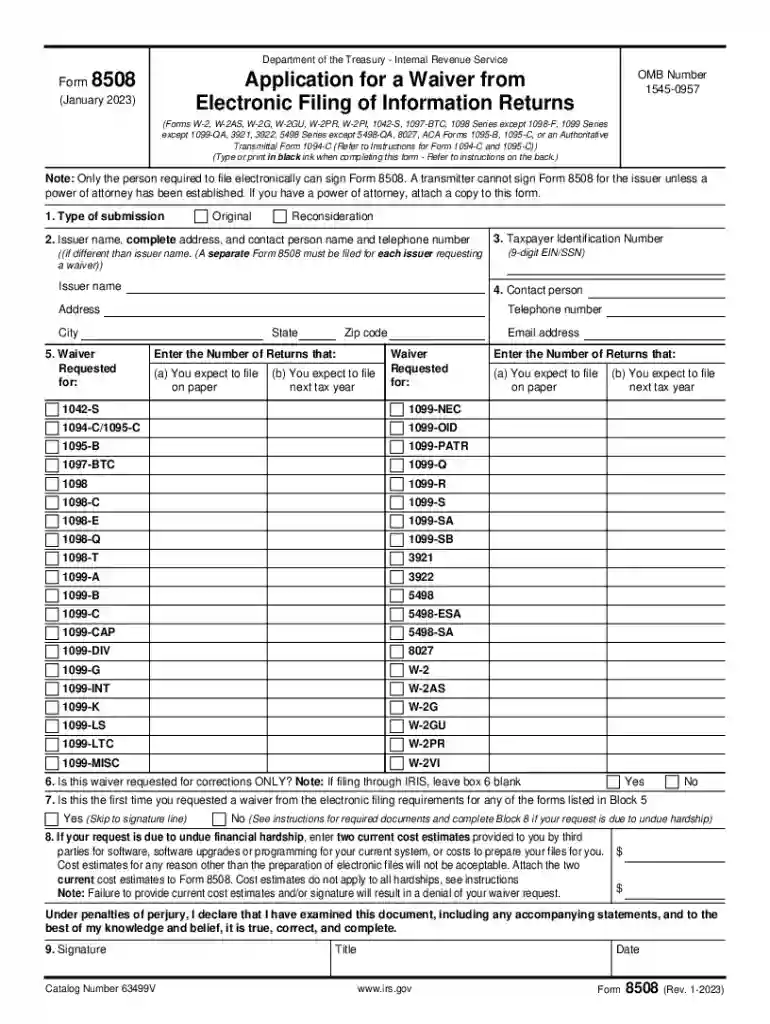
Form 8508 (Rev. 1-2023) is a request form used to apply for a waiver from the mandatory electronic filing of specific information returns. This form is vital for individuals or entities that face difficulties in complying with the electronic filing requirement for various reasons, such as financial hardship or religious beliefs. The form helps ensure that these parties can fulfill their obligations without undergoing undue burden.
This form involves several specific steps, from initial preparation to submission. Here’s a guide for using the form effectively.
Completing the form requires careful attention to detail and adherence to specified guidelines.
Entities impacted by electronic filing requirements often use Form 8508. This includes:


The form can be obtained through several methods:
The IRS has specific rules governing the waiver application:
Applicants have multiple options for submitting the form:
Failing to comply with electronic filing mandates or filing incorrect waiver applications can result in penalties:
Various real-world situations illustrate the form's utility:
While Form 8508 is a federal form, there could be state-specific differences:
We've got more versions of the Form 8508 (Rev. 1-2023) form. Select the right Form 8508 (Rev. 1-2023) version from the list and start editing it straight away!
At DocHub, your data security is our priority. We follow HIPAA, SOC2, GDPR, and other standards, so you can work on your documents with confidence.
Filers may submit a Form 8508 if obtaining the necessary assistance to file electronically would cause an undue financial hardship. Please provide two costRead more
Did the organization invest in, contribute assets to, or participate in a joint venture or similar arrangement with a taxable entity during the year? ~~~~~~~~~~Read more


