







Definition and Meaning
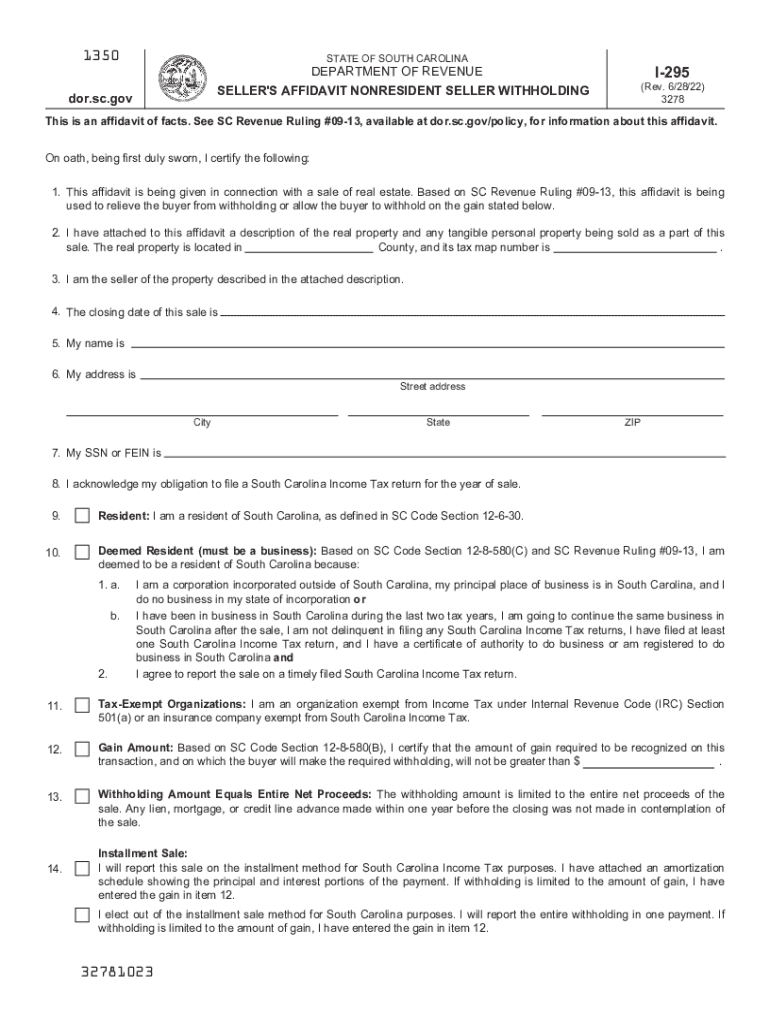
The SC Form I-295, commonly known in South Carolina, plays a critical role in tax-related processes. This form is specifically used by nonresident sellers engaging in real estate transactions within the state. It allows for the certification of certain facts concerning the sale. These facts include details about the property, the seller's residency status, and the tax obligations that arise from the transaction. Through the completion of SC Form I-295, individuals ensure compliance with South Carolina's tax withholding requirements by providing a legal statement of their income tax situation relative to the property sale.
How to Use the SC Form I-295
Utilizing the SC Form I-295 involves several steps, essential for ensuring that the necessary information is accurately captured. The form is used primarily to confirm withholding or exemption from withholding South Carolina income taxes for nonresident sellers. To use the form effectively:
-
Identify if Withholding is Necessary: Establish whether the transaction requires withholding taxes. This depends on the seller's residency status and applicable exemptions.
-
Complete the Form: Fill out all sections of the form, including details about the property, transaction date, and the seller's tax exemption claim if applicable.
-
Provide Supporting Documentation: Attach any required documentation that supports your claims, such as proof of primary residence or other tax exemption documentation.
-
Submit the Form: Deliver the completed form to the appropriate department or include it with other tax filings as required.
Utilizing this form correctly ensures that both buyers and sellers remain compliant with South Carolina's tax laws during property transactions.
Steps to Complete the SC Form I-295
Submitting the SC Form I-295 involves careful attention to detail and the provision of accurate information. Below are the detailed steps for completing the form:
-
Gather Required Information:
- Seller’s personal details: Full name, address, and social security number or tax identification number.
- Property details: Description, address, and sales price of the property being sold.
-
Complete Seller Information Section: Input all pertinent seller information, ensuring accuracy to avoid processing delays.
-
Describe the Property: Provide comprehensive details about the property, including its location and sales price.
-
Declare Residency Status: State the seller’s residency status and provide any applicable tax exemption codes or documentation.
-
Sign and Date the Form: Ensure the form is signed by the seller or their authorized representative. Also, include the date of completion to validate the form’s timeliness.
Following these steps guarantees that the form is completed correctly, reducing the risk of errors and ensuring timely processing by the relevant authorities.
Why You Should Use the SC Form I-295
There are several compelling reasons why the SC Form I-295 is essential for certain real estate transactions:
-
Legal Compliance: Using this form helps sellers adhere to South Carolina's tax withholding regulations, mitigating risks of non-compliance.
-
Accurate Tax Reporting: Accurately reports the transaction to the South Carolina Department of Revenue, ensuring transparency in tax obligations and payments.
-
Tax Benefits: Allows sellers to claim legitimate tax exemptions and deductions related to the sale of property.
-
Reduction of Processing Delays: Proper use of the form reduces the likelihood of processing delays associated with tax reporting errors.
By leveraging this form, sellers can ensure they're in compliance with state regulations and potentially benefit from tax incentives.
Important Terms Related to SC Form I-295
Understanding the terminology associated with SC Form I-295 is vital for the accurate completion of the form:
-
Nonresident Seller: A property owner who is not a resident of South Carolina but is selling property within the state.
-
Withholding Tax: A portion of the sale proceeds held back for tax purposes, which nonresident sellers may be subject to.
-
Exemption Certification: Documentation or codes provided by a seller to claim an exemption from withholding taxes, based on specific criteria.
-
Tax Identification Number (TIN): A unique identifier assigned to individuals or businesses for tax reporting purposes.
Familiarity with these terms will improve comprehension during the form completion process and ensure the accuracy of the submitted information.
Key Elements of the SC Form I-295
The SC Form I-295 comprises several key sections that must be completed with precision:
-
Seller Information: Includes personal details such as name, address, and social security number or TIN.
-
Property Details: Requires a thorough description of the property, including its address and sales price.
-
Transaction Information: Details the date of sale, purchase price, and any serial numbers associated with the transaction.
-
Certification Section: Where the seller attests to the accuracy of the information and claims any applicable exemptions.
Each element is crucial for the form's integrity and subsequent tax filing accuracy, ensuring that both the buyer's and seller's responsibilities are clearly outlined.
Legal Use of the SC Form I-295
The legal application of SC Form I-295 primarily involves ensuring proper tax compliance:
-
Certifying Nonresident Status: Sellers who are nonresidents use the form to certify their status and outline respective responsibilities for tax withholding.
-
Ensuring Accurate Withholding: Helps in calculating and withholding the correct amount of South Carolina taxes from the sale.
-
Tax Exemption Documentation: Serves as a formal declaration of exemption status, where applicable, backed by the appropriate legal codes.
The form is legally binding, and incorrect or fraudulent information can have serious legal consequences, making it vital that all submissions are truthful and well-documented.
State-Specific Rules for the SC Form I-295
There are various rules specific to South Carolina that govern the use of SC Form I-295:
-
Residency Requirements: Defines who qualifies as a nonresident for tax purposes, impacting how the form should be used.
-
Exemption Criteria: Lists conditions under which a seller might qualify for exemptions from withholding taxes.
-
Submission Guidelines: Details when and how the form should be submitted, along with any deadlines related to real estate transactions.
Understanding these state-specific rules helps sellers navigate the complexities of real estate transactions involving out-of-state residency.


