







Definition and Meaning of the Katrina Emergency Tax Relief Act
The Katrina Emergency Tax Relief Act was enacted in response to Hurricane Katrina's catastrophic impact in 2005. This legislation aimed to provide tax relief and financial support to individuals and businesses affected by the disaster. It encompassed various provisions, including tax credits and deductions, to alleviate the financial burden faced by victims of the hurricane. The Act also allowed for more lenient rules regarding withdrawals from retirement accounts and fostered community rebuilding efforts through tax incentives. Understanding its scope is crucial for those seeking to utilize the benefits offered under this legislation.
Key Elements of the Katrina Emergency Tax Relief Act
The Katrina Emergency Tax Relief Act includes several critical components designed to aid those impacted by the hurricane:
- Tax Credits and Deductions: Offered to both individuals and businesses to reduce their taxable income.
- Retirement Account Withdrawals: Penalty-free withdrawals for victims to access needed funds.
- Charitable Contributions: Enhanced tax benefits for donations made to relief efforts.
- Employee Retention Credit: Provided to businesses that continued paying employees despite suspension of operations.
Each element was specifically tailored to address the unique challenges faced by survivors and businesses in the affected regions.
Eligibility Criteria for Utilizing the Tax Relief
Eligibility for the Katrina Emergency Tax Relief Act is determined by several factors, including:
- Residency: Individuals and businesses must have been located in designated disaster areas affected by Hurricane Katrina.
- Impact Assessment: The extent of damage or displacement due to the hurricane plays a role in qualifying for certain benefits.
- Financial Need: Certain provisions, such as penalty-free retirement withdrawals, require proof of financial necessity.
Understanding these criteria ensures that potential beneficiaries can accurately assess their qualifications before applying.


How to Use the Katrina Emergency Tax Relief Act
To benefit from the provisions of the Katrina Emergency Tax Relief Act, eligible individuals and businesses should:
- Review Eligibility: Confirm residency within the defined disaster areas.
- Gather Documentation: Collect necessary paperwork like proof of property damage or financial records.
- Claim Tax Credits: Use appropriate forms to claim credits, such as the employee retention credit.
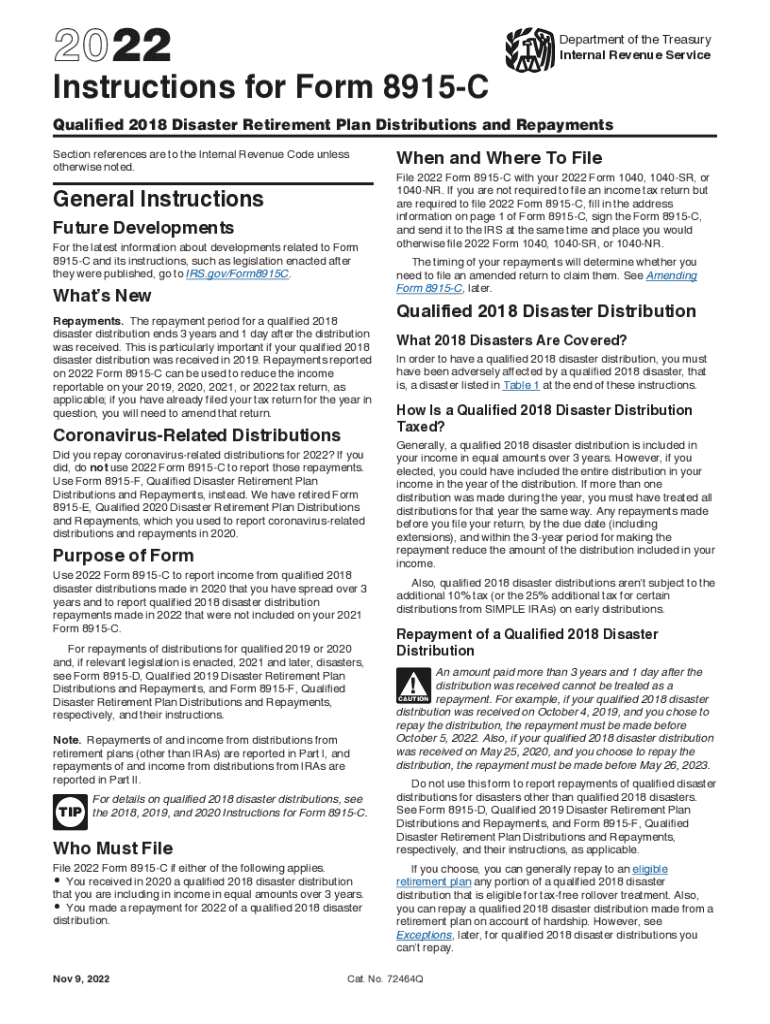
- File a Form 8915-C: This form is essential for reporting disaster-related retirement distributions and repayments.
Being methodical in this process helps users access available benefits efficiently.
Required Documents for Claiming Benefits
When seeking to claim benefits under the Katrina Emergency Tax Relief Act, individuals and enterprises should prepare:
- Proof of Residency: Documents like a driver’s license or utility bills confirming residency in the affected areas.
- Damage Assessment Reports: Verified reports detailing losses or damage incurred.
- Tax Identification Numbers: Necessary for both individual and business applicants.
- Financial Statements: To substantiate claims of financial hardship or necessity for withdrawals.
Ensuring these documents are complete and accurately reflect circumstances simplifies the application process for relief benefits.
IRS Guidelines on the Katrina Emergency Tax Relief Act
The IRS has outlined specific guidelines for those utilizing the Katrina Emergency Tax Relief Act. Key points include:
- Submission Deadlines: Adherence to filing deadlines for disaster-related tax benefits.
- Form Usage: Requirements for using specific forms like Form 8915-C for reporting tax implications of disaster distributions.
- Compliance: Mandatory adherence to IRS regulations to avoid penalties or rejection of benefits.
Staying informed about these guidelines is imperative for ensuring compliance and successful claims under the Act.
Steps to Complete the Katrina Emergency Tax Relief Act Form
Filing correctly under the Katrina Emergency Tax Relief Act involves the following steps:
- Download the Appropriate Form: Start with obtaining Form 8915-C for disaster-related distributions.
- Accurate Completion: Fill out each section carefully, ensuring that every detail matches supporting documents.
- Attach Supporting Documents: Include all necessary proof of eligibility and financial need.
- File with the IRS: Submit the completed form and documents according to IRS instructions, either online or by mail.
Following these steps diligently maximizes the potential for swift approval and receipt of benefits.
Penalties for Non-Compliance
Non-compliance with the Katrina Emergency Tax Relief Act can lead to several penalties:
- Disqualification from Benefits: Failing to meet eligibility or filing requirements may result in denial of tax credits or refunds.
- Repayment Obligations: Ineligible claims could necessitate repayment of any benefits received.
- Fines and Interest: Late submissions or non-disclosure of required information might incur additional charges from the IRS.
Being aware of these consequences is essential for maintaining compliance and avoiding future financial liabilities.
Practical Examples of Using the Tax Relief
Consider these scenarios illustrating the Act's application:
- Individual Example: A homeowner who withdrew funds from their retirement account penalty-free and used the funds to repair hurricane damage.
- Business Example: A restaurant that claimed the employee retention credit to offset wages paid while closed post-disaster.
These examples highlight how the Act offered vital support during recovery efforts, simplifying financial burdens for households and businesses alike.




