
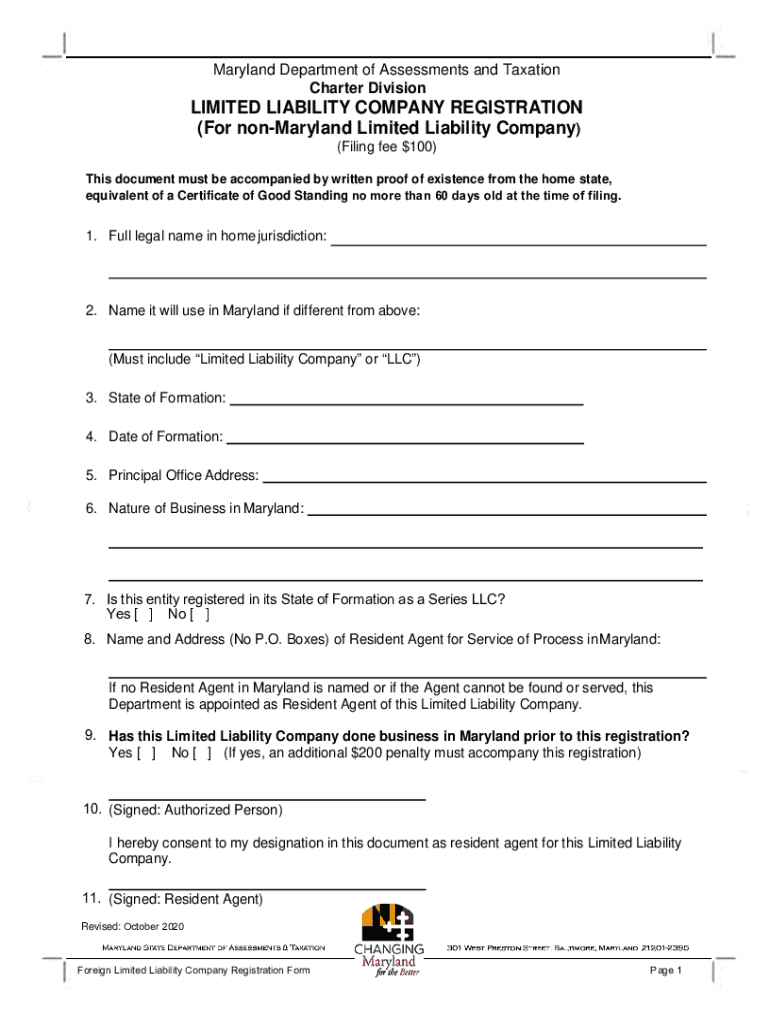







Definition and Meaning of the State Department of Assessments and Taxation
The State Department of Assessments and Taxation (SDAT) is a regulatory body responsible for assessing property values and ensuring the accurate collection of taxes within a specific state. This department manages the registration of business entities, including corporations and limited liability companies (LLCs), ensuring that they comply with state regulations. In addition to property assessments, SDAT plays a crucial role in overseeing the taxation process, ensuring that each member of the business and property owners meets their fiscal obligations. The department serves as a central repository for business filings and related documents, functioning as a safeguard for consumers and a resource for entities seeking to verify compliance.
Steps to Complete the State Department of Assessments and Taxation Form
-
Identify Your Business Type: Determine whether your entity is a corporation, LLC, partnership, or other business form. The requirements can vary based on this classification.
-
Gather Necessary Information: Ensure you have key details ready, such as the legal name of the entity, its principal address, and the information of the resident agent responsible for service of process.
-
Obtain the Certificate of Good Standing: If your business is formed outside of Maryland, secure this certificate from your home state as proof of compliance with existing obligations.
-
Complete the Application: Fill out the necessary sections, ensuring that all information is accurate and up to date.
-
Submit Required Documentation: Alongside the form, include any additional required documents, such as proof of address and identity of officers or members.
-
Review and Submit: Double-check all entries for accuracy. Submission can usually be completed online or via mail, depending on the state's specific protocols.
Important Terms Related to the State Department of Assessments and Taxation
- Resident Agent: An individual or business entity designated to receive legal documents on behalf of the company.
- Certificate of Good Standing: A document indicating compliance with all requisite regulations in the state of formation.
- Property Assessment: The process of determining the value of property for taxation purposes.
- LLC: Limited Liability Company, a business structure that provides limited liability protections to its owners.
Legal Use of the State Department of Assessments and Taxation
Using the SDAT ensures legal compliance with state requirements for business operations and tax obligations. Businesses must adhere to state laws regulated by SDAT, which include filing taxes, registering entities, and maintaining accurate records of business activities. Legal use also involves proper documentation submission to avoid penalties and maintain good standing within the business community. Compliance ensures that businesses avoid unnecessary legal issues and function effectively within the juvenile its jurisdiction.
Required Documents for Filing with the State Department of Assessments and Taxation
- Business Registration Application: Specific to the type of legal entity being formed or registered.
- Certificate of Good Standing: For businesses formed outside the state but looking to comply within the state.
- Proof of Address: Evidence of the principal place of business or headquarters.
- Identity Documentation: For the officers or principal members of the business.
Examples of Using the State Department of Assessments and Taxation
- Forming a New Business: Entrepreneurs setting up a new LLC in Maryland must register with SDAT to legally operate.
- Property Value Disputes: Property owners can use SDAT for reassessment requests if they believe their property has been overvalued.
- Changing Business Structure: Businesses looking to transition from a partnership to a corporation would file the necessary documents with SDAT.
- Updating Business Information: Entities need to submit changes in business operations or management through the department to ensure records reflect current data.
Penalties for Non-Compliance
Failure to comply with SDAT requirements can result in significant penalties, including fines and revocation of business licenses. Non-compliance can also lead to legal disputes and potential closure of business operations. Additionally, businesses may face adverse tax consequences, including additional taxation or interest on unpaid taxes. Maintaining compliance with SDAT requirements is essential to avoid these issues and ensure continued business operations.
Business Types that Benefit Most from the State Department of Assessments and Taxation
- Corporations: Require registration and compliance to operate as legally recognized entities.
- LLCs: Benefit from limited liability protections and structured tax requirements.
- Real Estate Ventures: Use assessments for valuation and taxation purposes.
- Non-Profits: Must comply with specific filing requirements to maintain tax-exempt status.
Filing Deadlines and Important Dates
- Annual Reports: Typically due once a year, depending on state-specific timelines.
- Tax Filings: Must align with the federal and state tax calendar; missed deadlines can incur penalties.
- Registration Updates: Changes to business structure or information should be reported promptly to avoid compliance issues.
- Renewal Dates: Some licenses or registrations require regular renewal to maintain good standing.
Following these comprehensive guidelines ensures that individuals and businesses effectively comply with the State Department of Assessments and Taxation's requirements, promoting smooth operations and legal compliance within the state.




