




01. Edit your nj form 2440 online
Type text, add images, blackout confidential details, add comments, highlights and more.

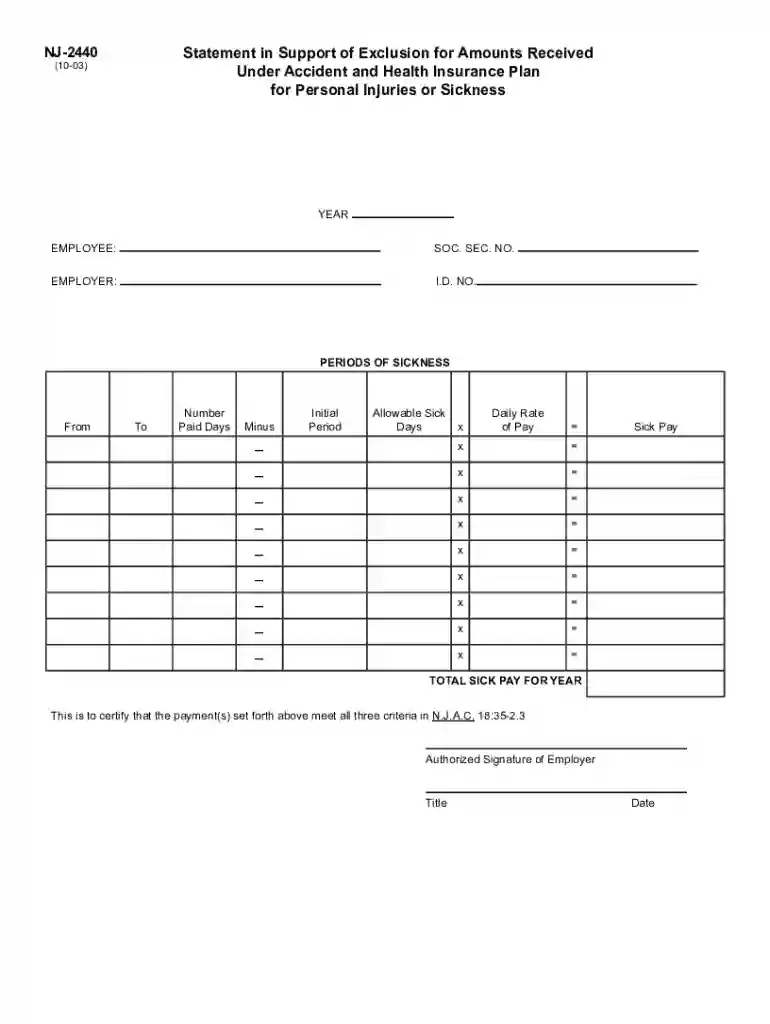
Type text, add images, blackout confidential details, add comments, highlights and more.

Draw your signature, type it, upload its image, or use your mobile device as a signature pad.

Send it via email, link, or fax. You can also download it, export it or print it out.
Form NJ-2440 is a document used within New Jersey's tax framework to outline exclusions from taxable gross income for certain payments received by employees. These payments typically come from accident and health insurance plans related to personal injuries or sickness. This form specifies the criteria under which these exclusions apply, ensuring compliance with New Jersey law. It's essential for individuals and businesses to understand this form's scope to accurately complete their state tax filings.
Understanding key terms associated with Form NJ-2440 is crucial for accurately completing the document. Important terms include:
Completing Form NJ-2440 involves a systematic approach to ensure all necessary information is provided:
The form has several critical components that must be accurately completed:
Accessing the Form NJ-2440 can be accomplished through a few different methods:
The legal use of Form NJ-2440 involves its role in excluding certain insurance payments from taxable income. This form should only be used when the conditions for exclusions are met, ensuring compliance with New Jersey state tax laws. Misuse or incorrect filing can lead to penalties or fines, emphasizing the importance of understanding the form's specific legal context.
While Form NJ-2440 pertains to New Jersey state law, it is important to consider parallel IRS guidelines for federal tax purposes. Differences between state and federal definitions of taxable income might exist, requiring taxpayers to correctly allocate exclusions on both state and federal documents to avoid discrepancies.
Compliance with filing deadlines is crucial to avoid penalties. The Form NJ-2440 should be submitted in alignment with New Jersey’s tax filing deadlines, typically coinciding with the federal tax period in April. Additional filings may be subject to specific timelines for amendments or corrections.
Practical scenarios where Form NJ-2440 is applicable include:
We've got more versions of the nj form 2440 form. Select the right nj form 2440 version from the list and start editing it straight away!
Approving documents on a mobile device is fast, easy, and doesn’t require software installation if you have an account with DocHub. Log in from any browser, fill in your empty fields with your data, and click on Sign → Create your signature. You can draw your electronic signature the same way you usually do on paper, add its image to your Form NJ-2440 Download Fillable PDF or Fill Online Statement ..., or type in your name and stylize its look. No matter what option you select, your documentation will be valid.
You need only an internet connection and a web browser to complete your Form NJ-2440 Download Fillable PDF or Fill Online Statement ... on an iOS phone. Open the DocHub website and authenticate. Then, add your file or select it from the list in your dashboard. Then use our editing instruments to complete your form and save all your adjustments. You may also send it to a dedicated recipient immediately.
At DocHub, your data security is our priority. We follow HIPAA, SOC2, GDPR, and other standards, so you can work on your documents with confidence.


