
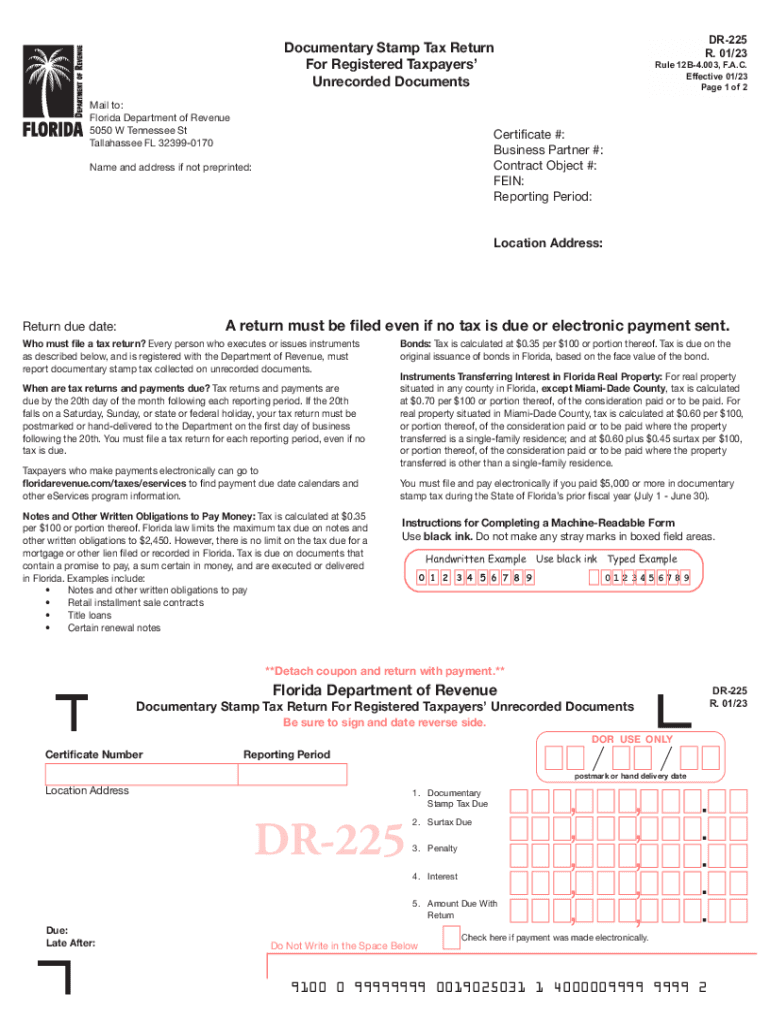







Definition and Meaning of DR-225
The DR-225 is a form used by the Florida Department of Revenue for reporting the Documentary Stamp Tax applicable on certain unrecorded documents. This tax is levied on specific written instruments tied to transactions, such as deeds, bonds, or notes that indicate debt that require documentation under Florida law. DR-225 serves as an essential tax return form, ensuring transparency and compliance with the state's taxation requirements for documented financial transactions.
How to Use the DR-225
Using the DR-225 requires clear understanding of its purpose and the kind of documentation it pertains to. Users must identify transactions that incur a documentary stamp tax, such as property deeds or promissory notes. The completion of the form involves outlining each transaction's details and associated tax obligations. It is important to ensure all relevant sections are accurately filled out before submission, as errors can lead to penalties or delays in processing. Consider employing professional financial assistance if unsure about complexities involved in calculating the tax.
Steps to Complete the DR-225
-
Gather Necessary Information: Begin by collecting all transaction details, such as the document type and total amount involved.
-
Calculate the Tax Due: Use the current tax rate applicable to the type of transaction to determine the total tax owed.
-
Fill Out Taxpayer Information: Complete sections relating to your personal or business information, ensuring accuracy to avoid processing issues.
-
Input Transaction Details: Provide a comprehensive breakdown of each document, its nature, and financial details.
-
Review and Submit: Double-check all entries for errors. After verification, submit the form along with payment, if any, to the designated department.
Key Elements of the DR-225
- Taxpayer Information: Includes identification details of the entity filing the form.
- Transaction Information: Specifies the nature, date, and involved parties of the documents.
- Tax Calculation Section: Entries for detailed calculation of owed taxes based on transaction type and value.
- Payment Details: Instructions and sections for documenting and submitting owed taxes.
- Certification: A declaration by the filer confirming the accuracy and completeness of provided information.
Penalties for Non-Compliance
Failing to file the DR-225 or providing inaccurate details may result in significant penalties. These can include:
- Late Fees: Additional charges for failing to submit the form within the designated timeframe.
- Interest on Unpaid Taxes: Accrued interest for any unpaid tax amounts effectively increasing the total liability.
- Legal Actions: Potential involvement of legal measures for consistent non-compliance.
To avoid these penalties, it's crucial to timely file accurate forms and make prompt tax payments.
Filing Deadlines and Important Dates
The DR-225 form must be filed by the due date, typically tied to the date of the transaction completion. In general, timely filing ensures you remain compliant with state regulations. It's important to:
- Be Aware of Specific Deadlines: Related to different transaction types and document recordings.
- Set Reminders for Payment Dates: Avoiding late fees by scheduling payments ahead of deadlines.
- Consult with Professionals: Occasional changes in deadlines or requirements might necessitate external help in staying updated.
Who Typically Uses the DR-225
Primarily, DR-225 is utilized by:
- Businesses: Obliged to report transactions like deeds or financial agreements.
- Individuals: Engaged in relevant transactions that create documentary stamp tax liabilities.
- Legal Professionals: Assisting clients with property or financial documents requiring state filing.
The form serves as a critical compliance document for any party involved in transactions subject to Florida's documentary stamp tax.


State-Specific Rules for the DR-225
While DR-225 is specific to Florida, understanding state-specific guidelines is important:
- Tax Rates: Knowledge of the current rate applied per type of document or transaction.
- Document Types: Recognizing which specific document types incur the tax.
- Filing Locations: Designated offices or departments in Florida collecting these forms.
Compliance with state-specific regulations ensures smooth processing and reduces potential legal conflicts.




