




01. Edit your form online
Type text, add images, blackout confidential details, add comments, highlights and more.

Type text, add images, blackout confidential details, add comments, highlights and more.

Draw your signature, type it, upload its image, or use your mobile device as a signature pad.

Send it via email, link, or fax. You can also download it, export it or print it out.
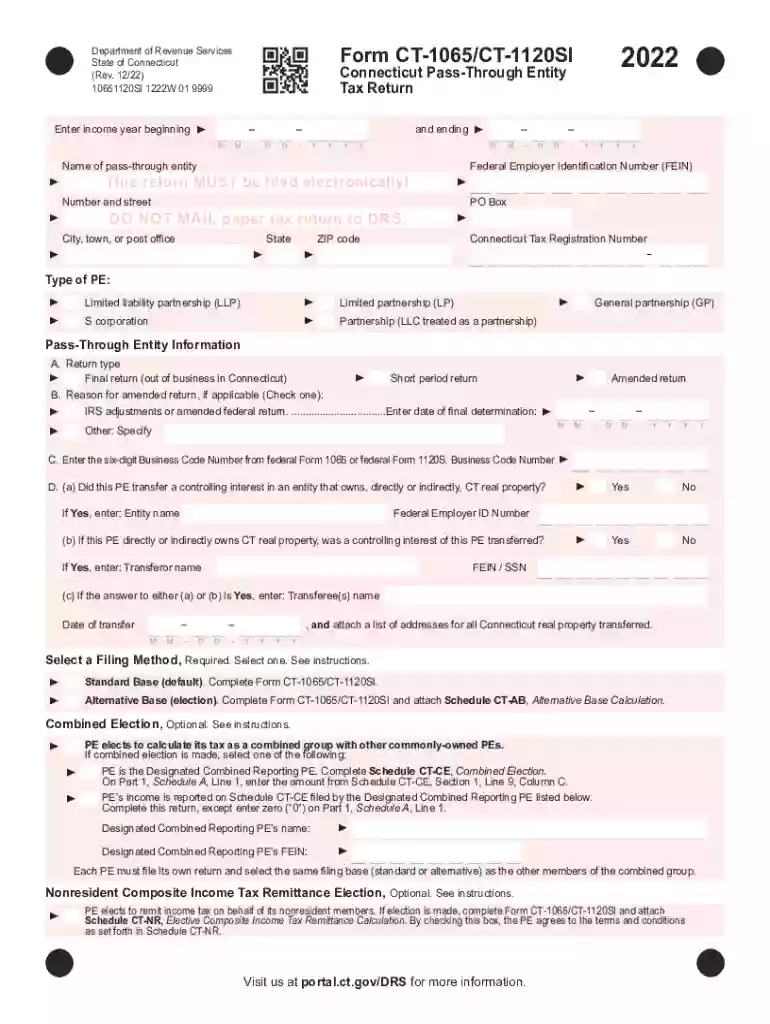
"Enter income year beginning" typically refers to the specific section of a tax or financial form where you are required to indicate the start date of the income year for which you are reporting. This information is crucial because it aligns your document with the correct fiscal period, ensuring accurate and compliant reporting to taxing authorities or financial institutions. Understanding this section is essential for accurate and legal financial documentation.
In the context of tax forms like the Connecticut Pass-Through Entity Tax Return (Form CT-1065/CT-1120SI), it sets the fiscal parameters for reporting income, deductions, and credits for the specified year. It establishes the timeline over which financial activities, such as earnings and expenses, are assessed, which is pivotal for both compliance and financial analysis.
Identify Relevant Dates: Determine the fiscal year dates you need to report. This is typically the 12-month period for which you are filing the tax return or financial document.
Locate the Section: On the form, find the designated area where you are required to "Enter income year beginning." This is often at the start of the form, as it sets the context for all subsequent entries.
Input Date Format: Enter the beginning date in the format specified by the form — usually MM/DD/YYYY. Double-check the instructions on the form for specific formatting requirements.
Verification: Ensure that the entered date correctly reflects the beginning of the fiscal year. This helps in avoiding potential errors during the submission process.
Documentation: Save copies of supporting documentation that verify the start date, such as financial records or previous year's tax return. This can be essential for audits or discrepancies.
Each of these elements ensures that financial records comply with both state and federal laws, providing a basis for accurate financial reporting and audit readiness.
Entering the income year beginning accurately is vital for several reasons:
This practice not only safeguards against potential penalties but also enhances the integrity of financial statements, fostering trust with stakeholders and authorities.
Small Business: When submitting Form CT-1065, a Connecticut-based LLC's income year beginning would align with its fiscal year start to accurately report all pass-through income.
Freelancer: A self-employed individual would enter the start of their fiscal year on IRS Schedule C to reflect their business income accurately.
Corporation: For larger entities submitting IRS Form 1120, designating the correct start date is critical in correlating income statements with corporate tax obligations.
These examples illustrate various contexts where accurately entering the income year beginning ensures compliance and accuracy in financial reporting.
Entities and individuals who often encounter and utilize this section include:
Partnerships and S Corporations: Particularly those required to file state-specific forms like Form CT-1065/CT-1120SI.
Self-employed Individuals: Required to account for earnings over the fiscal year.
Corporations and LLCs: Scaled businesses that need to comply with federal and state tax reporting.
These users rely on entering the income year beginning to accurately represent their financial activities across designated fiscal periods.


The IRS provides comprehensive guidelines on how to determine and report the fiscal period start date:
Consistent Use: Once declared, the fiscal year start should remain consistent unless officially changed with IRS approval using Form 1128.
Notification: The IRS requires clear notification if there is a change in the reporting period, which may impact how the income year beginning is entered.
By following IRS guidelines, taxpayers ensure that their submissions remain compliant and are less susceptible to audits or penalties.
Federal Deadlines: Typically April 15 for calendar year taxpayers, but can vary for fiscal year returns.
State Deadlines: Connecticut forms such as CT-1065/CT-1120SI might have specific state deadlines that coincide with federal requirements or provide specific extensions.
Extension Applications: If unable to meet the deadline, filing for an extension can allow more time to submit the completed document without incurring penalties.
Understanding these deadlines is critical to ensure timely and accurate tax filing, helping avoid late fees and ensuring compliance with both federal and state regulations.
We've got more versions of the Enter income year beginning form. Select the right Enter income year beginning version from the list and start editing it straight away!
| Versions | Form popularity | Fillable & printable |
|---|---|---|
| 2025 | 4.5 Satisfied (31 Votes) | |
| 2024 | 4.6 Satisfied (20 Votes) | |
| 2022 | 4.1 Satisfied (31 Votes) | |
| 2021 | 4.3 Satisfied (46 Votes) | |
| 2020 | 4.9 Satisfied (58 Votes) | |
| 2019 | 4.2 Satisfied (50 Votes) | |
| 2018 | 4.3 Satisfied (132 Votes) | |
| 2016 | 4.4 Satisfied (406 Votes) | |
| 2015 | 4 Satisfied (57 Votes) | |
| 2014 | 4.4 Satisfied (66 Votes) | |
| 2013 | 4.3 Satisfied (46 Votes) | |
| 2012 | 4.3 Satisfied (60 Votes) | |
| 2011 | 4 Satisfied (21 Votes) |
At DocHub, your data security is our priority. We follow HIPAA, SOC2, GDPR, and other standards, so you can work on your documents with confidence.


