







Definition & Meaning
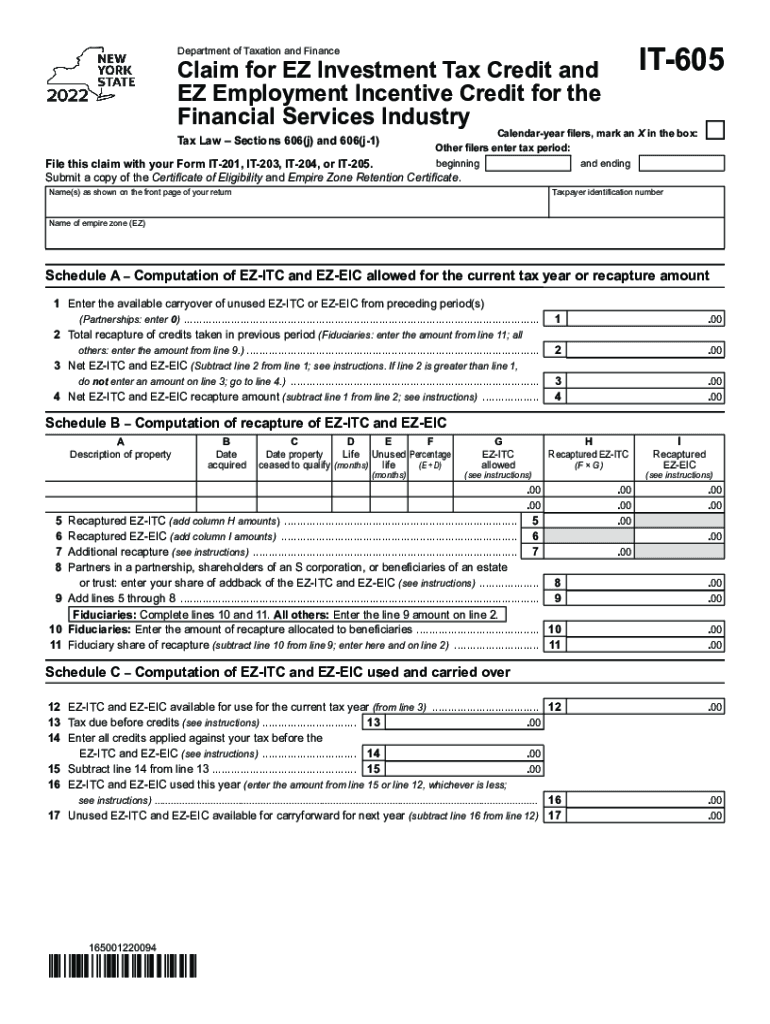
The Form CT-605 is utilized to claim the EZ Investment Tax Credit and EZ Employment Incentive Credit primarily within the financial services industry. This form stems from the provisions outlined in New York Tax Law Sections 606(j) and 606(j-1). It aids taxpayers in computing and reporting these specific credits on their tax filings. In essence, this form assists businesses in reducing their state tax liabilities through credits, reflecting investments and employment within designated economic zones.
How to Use the Form CT-605
Using Form CT-605 effectively involves understanding its primary sections and how they pertain to your business activities. Begin by reviewing your investments and employment initiatives within the economic zones. Document these activities accurately within the respective schedules provided on the form. Ensure you understand how to calculate your eligible investment tax credits, and continuously maintain records of prior credits and any recapture amounts. This approach ensures a comprehensive and compliant completion of the form.
Steps to Complete the Form CT-605
- Gather Required Information: Compile detailed records of all investments and employment activities within the economic zones for the tax year in question.
- Fill Out Appropriate Sections: Enter your financial details into the relevant sections — this includes both direct investments and incentive credits.
- Calculate Credits: Carefully compute the amount of tax credits based on the provided guidelines.
- Review for Accuracy: Double-check all inputted information for accuracy to avoid submission errors.
- Submit the Form: Attach the completed Form CT-605 to your tax filings and submit using your chosen method (online, mail, or in-person).
Key Details:
- Document all eligible investments and employment figures meticulously.
- Utilize checklists or templates to ensure all information is accurately reported.
Important Terms Related to Form CT-605
- EZ Investment Tax Credit: A credit for investments in qualifying property in established economic zones.
- Employment Incentive Credit: Credit for increasing employment in targeted areas.
- Recapture: Obligation to return a credit part if assets fail to qualify for a specified duration.
Consider these points:
- Understand the distinction between investment and employment credits.
- Familiarize yourself with eligibility requirements for each term.
Eligibility Criteria
Eligibility for the Form CT-605 focuses on companies engaged in qualified economic activities within New York's economic zones. Businesses must demonstrate definitive investments in property and employment expansions that align with the regulatory guidelines. Criteria outline necessary qualifications, and adhering strictly to these ensures eligibility for the credits.


For Eligibility:
- Verify qualifying financial activities.
- Confirm compliance with statutory employment criteria.
Who Typically Uses the Form CT-605
Form CT-605 is predominantly used by businesses in the financial services sector that have operations within designated economic zones in New York. These businesses are those looking to leverage state tax credits to offset some of their tax burdens due to qualified investments and employment enhancements.

Typical Users Include:
- Financial institutions operating in economic zones.
- Companies expanding job opportunities within target areas.
State-Specific Rules for the Form CT-605
New York State has particular guidelines governing the use of Form CT-605, issued through the state tax department. Companies need to understand these rules comprehensively, as they can impact how credits are calculated and claimed. The state's regulations aim to incentivize businesses that contribute to local economic development.
Key Considerations:
- Stay updated with annual policy changes.
- Keep abreast of specific rules that may affect credit eligibility.
Filing Deadlines / Important Dates
Timing is critical when dealing with Form CT-605. Align its submission with the tax filing deadline applicable to your business. Adhering to these timelines ensures the processing of your credit claims without penalties or interest due to late filing.
Important Dates:
- Align submission with your annual tax return filing deadline.
- Monitor official announcements for changes to filing deadlines.
Penalties for Non-Compliance
Failing to accurately complete or submit Form CT-605 by the deadline may result in penalties. These can include the disallowance of claimed credits or financial penalties, impacting your business's overall tax liabilities. Compliance is critical for securing entitled credits and avoiding unnecessary costs.
Potential Consequences:
- Forfeiture of credits.
- Financial penalties accruing to unpaid taxes.
By comprehensively understanding each of these elements and maintaining rigorous compliance, businesses can utilize Form CT-605 effectively to take full advantage of investment and employment tax credits within New York’s economic zones.




