







Definition & Meaning
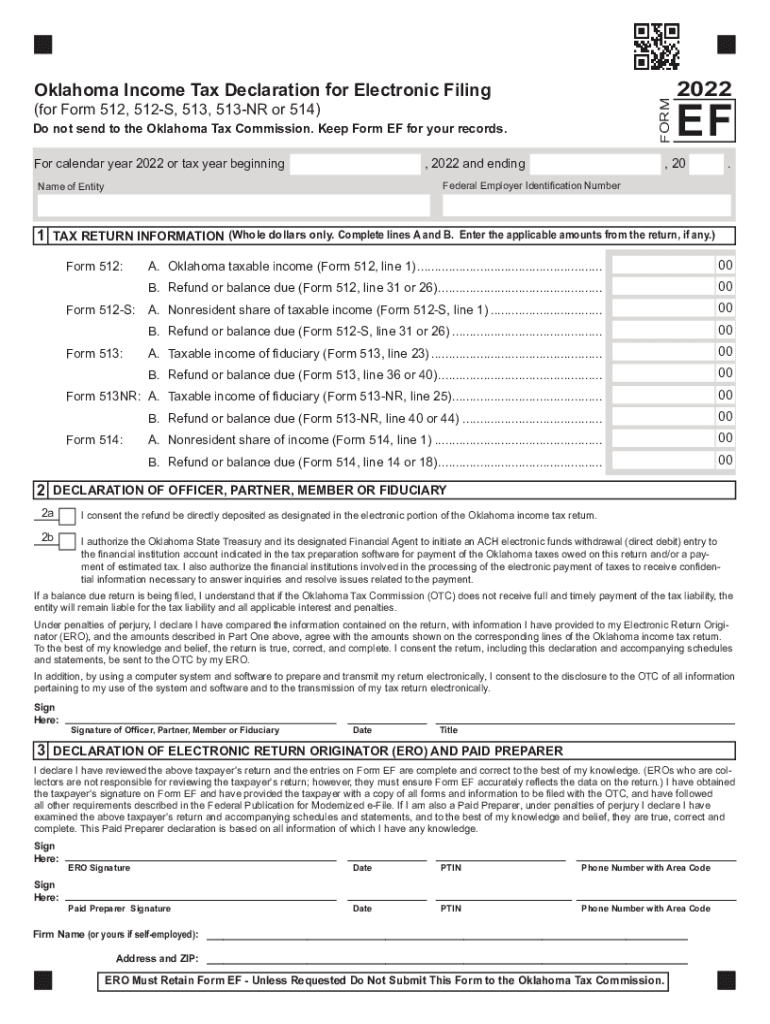
The OK Form EF 2, known as the Oklahoma Income Tax Declaration for Electronic Filing, is a document used when filing state income taxes electronically in Oklahoma. It facilitates the submission of various tax forms, such as 512, 512-S, 513, 513-NR, or 514, for individual or business taxpayers. This form serves as a formal declaration of taxable income and refunds due and includes necessary attestations from taxpayers, officers, fiduciaries, or Electronic Return Originators (EROs).
Steps to Complete the OK Form EF 2
- Gather Necessary Information: Before starting, collect all relevant information such as taxpayer identification numbers, income statements, deductions, and credits applicable for the tax year 2.
- Access the Form Online: You can complete the form through DocHub's online platform, which enables easy entry and tracking of information across multiple sessions.
- Enter Personal and Tax Information: Fill in your personal details, including name, address, and social security number. Specify relevant tax data as per your income and deductions.
- Declaration Sections: Complete the required declarations, including the signatures of the taxpayer or authorized representative and the ERO.
- Review and Verify: Ensure that all entries are accurate and verified against your records to prevent errors during submission.
- Submit the Form: Finalize the document digitally and retain a copy for your records. Remember, this form should not be sent to the Oklahoma Tax Commission but kept with your files.
Key Elements of the OK Form EF 2
- Taxpayer Information: Includes details such as names, addresses, and tax identification numbers.
- Declaration of Taxable Income: Outlines total income, deductions, and credits applicable to determine taxable income.
- Signatures for Verification: Required from taxpayers, officers, or fiduciaries to authenticate the information provided.
- ERO Information: Involves the details and signature of the Electronic Return Originator responsible for filing the return.
Who Typically Uses the OK Form EF 2
The primary users of the OK Form EF 2 include:
- Individual Taxpayers: Residents or part-year residents of Oklahoma who file state income tax returns electronically.
- Business Entities: Corporations, partnerships, and other entities that need to file state taxes via electronic means.
- Tax Professionals: Accountants and tax preparers acting as EROs for their clients to facilitate secure and efficient tax filing.
- Fiduciaries: Individuals or entities managing estates or trusts that require compliance with Oklahoma tax regulations.


Legal Use of the OK Form EF 2
The document must conform to state and federal laws that govern electronic filing. It provides a lawful means of declaring income and taxes, and adhering to these regulations ensures compliance and avoids potential legal penalties.
- Complies with ESIGN Act: Ensures signatures collected digitally are legally binding.
- Mandatory Retention: Must be kept in records for future reference and verification, although it is not submitted to tax authorities.
Important Terms Related to OK Form EF 2
- EROs (Electronic Return Originators): Professionals authorized to file tax returns electronically.
- Taxable Income: The income upon which tax is calculated after deductions.
- Fiduciary: A person or organization that manages assets for an estate or trust.
- Retention Requirement: The need to keep the filled form for record-keeping as per state requirements.
Filing Deadlines / Important Dates
- Annual Submission: Typically due by April 15 of the following year unless extensions are granted.
- Extensions: Must be filed timely to avoid penalties and interest on taxes due.
Penalties for Non-Compliance
- Failure to File: May incur penalties including interest on unpaid taxes.
- Incorrect Information: Submission with errors could lead to fines or a requirement to resubmit with correct data.
- Data Retention Violations: Not maintaining a copy for your records as required can lead to legal issues.
Form Submission Methods (Online / Mail / In-Person)
The form is primarily used for electronic filing:
- Online Submission: Utilize platforms like DocHub for a straightforward, secure process.
- Mail/In-Person: While this form is for electronic filing, retaining a printed copy for your records is advisable if questions arise later.




