






Definition and Meaning of VA Form 21 526EZ
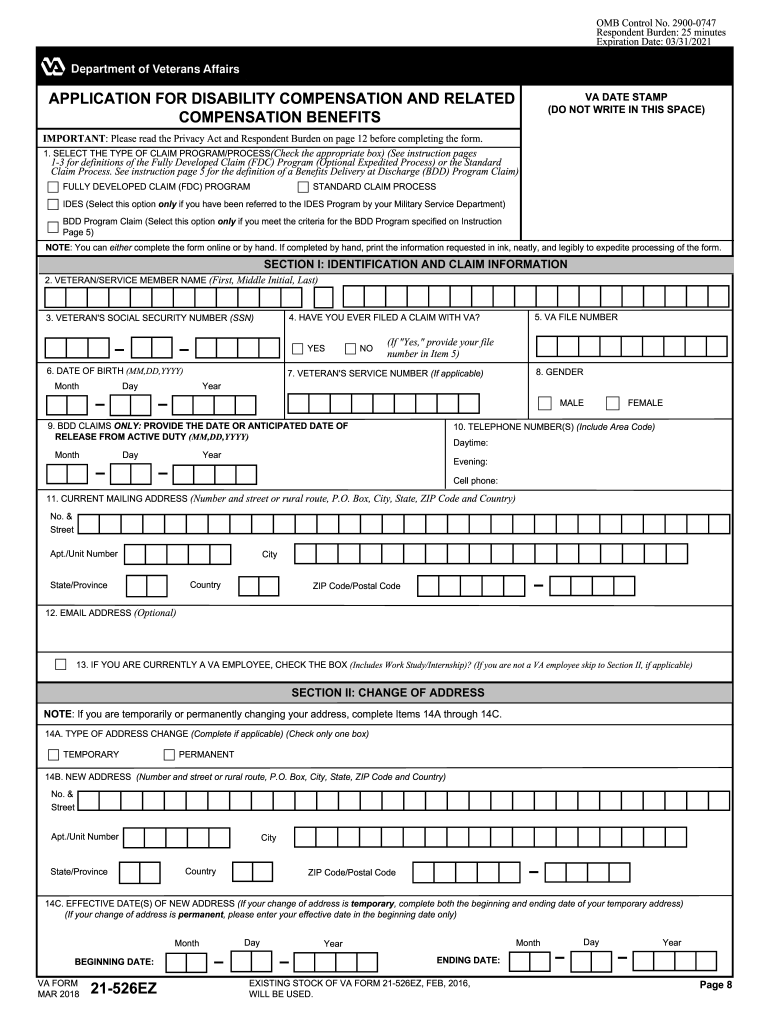
VA Form 21 526EZ, known as the "Application for Disability Compensation and Related Compensation Benefits," is a standardized form used by veterans to apply for disability compensation from the Department of Veterans Affairs (VA). This form is crucial for veterans seeking financial support due to disabilities related to their military service. It simplifies the application process for veterans and streamlines the submission of necessary information to ensure that claims are processed efficiently.
Veterans use this form to provide a comprehensive account of their medical conditions, the military events that led to these conditions, and any relevant documentation that supports their claims. The streamlined nature of Form 21 526EZ allows applicants to file their claims in a fully developed manner, often resulting in quicker decisions and disbursements from the VA.
An important aspect of this form is its focus on completeness and accuracy. The VA emphasizes that incomplete or inaccurate submissions can delay processing times or even result in claims being denied. Thus, understanding its components and how to accurately fill it out is vital for applicants seeking benefits.
Steps to Complete the VA Form 21 526EZ
Completing the VA Form 21 526EZ involves a series of steps aimed at gathering and presenting relevant information clearly and concisely. Here are the main steps to follow:
-
Gather Necessary Information: Before filling out the form, collect all required information, including:
- Veterans' personal details (full name, Social Security number, service details).
- A detailed account of medical conditions and how they relate to military service.
- Supporting documentation, such as medical records, diagnoses, and treatment histories.
-
Read Instructions Thoroughly: Familiarize yourself with the instructions provided on the form. This includes understanding which sections apply to your specific circumstances and the type of information required.
-
Fill Out the Form Sections:
- Identifying Information: Complete the first section with personal details.
- Disability Information: Provide detailed accounts of each condition, when it started, and how it affects your daily life.
- Service Information: Indicate relevant military service records that relate to your claims.
-
Review the Completed Form: Once you have filled out the form, review each section carefully to ensure accuracy and completeness. Ensure that your medical documents are attached as required.
-
Submit the Form: Choose your method of submission. You can submit your VA Form 21 526EZ online through the VA’s website, by mail to the appropriate regional office, or in person at a local VA office.
By following these steps, veterans can enhance their chances of a successful claim, while ensuring that all required information is submitted correctly.
How to Obtain the VA Form 21 526EZ
Veterans can obtain the VA Form 21 526EZ through several easy methods. Here are the primary options:
-
Download from the VA Website: The most common way to obtain the form is to download it directly from the VA's official website in PDF format. This allows for immediate access to the form without any waiting.
-
Request a Hard Copy: Veterans can also request a physical copy of the form to be mailed to their address. This can be done by contacting their local VA office or through the VA's customer service hotline.
-
Visit Local VA Offices: Many local VA offices and Veterans Service Organizations (VSOs) have copies of the form available. Visiting these offices can also provide additional resources for filling out the form.
Each of these methods ensures that veterans have access to the form needed to apply for disability benefits efficiently.
Important Terms Related to VA Form 21 526EZ
Understanding the terminology associated with VA Form 21 526EZ is crucial for accurately completing the form and navigating the application process. Here are some important terms:
-
Disability Compensation: A tax-free financial benefit paid to veterans with disabilities that were incurred or aggravated during military service.
-
Service Connection: The establishment of a direct link between a veteran's current disability and their military service, which is necessary for eligibility for compensation.
-
Fully Developed Claim (FDC): A program that allows veterans to submit claims that include all necessary information and evidence upfront, potentially leading to quicker decisions by the VA.
-
Nexus: The medical or factual connection linking a veteran's disability to their service. Providing evidence of this connection is crucial for a successful claim.
-
Rating Decision: A decision from the VA that assigns a disability rating based on the severity of the condition, which in turn determines the amount of compensation payable to the veteran.
Having a clear understanding of these terms can facilitate a smoother experience when submitting a claim, helping veterans to effectively communicate their circumstances and needs.
Examples of Using VA Form 21 526EZ
There are numerous scenarios in which veterans may utilize VA Form 21 526EZ to apply for disability compensation. Here are a few illustrative examples:
-
Veteran with PTSD: A veteran who has been diagnosed with Post-Traumatic Stress Disorder (PTSD) due to experiences during combat may fill out VA Form 21 526EZ to formally claim benefits. They would detail the specific events triggering their PTSD, submit medical records from a mental health professional, and disclose how the condition impacts their daily life.
-
Veteran with Physical Injuries: A service member who sustained injuries to their back during active duty may use the form to request disability compensation. They would provide medical documentation affirming the diagnosis of a back injury, along with a narrative explaining how the injury has affected their capabilities.
-
Veteran Seeking Benefits for Hearing Loss: A veteran who has experienced hearing loss linked to noise exposure during military operations can apply using the VA Form 21 526EZ. They would cite their service history and any tests or assessments from an audiologist that confirm the severity and connection of the hearing loss to their time in service.
Through these examples, it is evident that the form serves a vital function in ensuring veterans receive the support they need for service-related disabilities.