
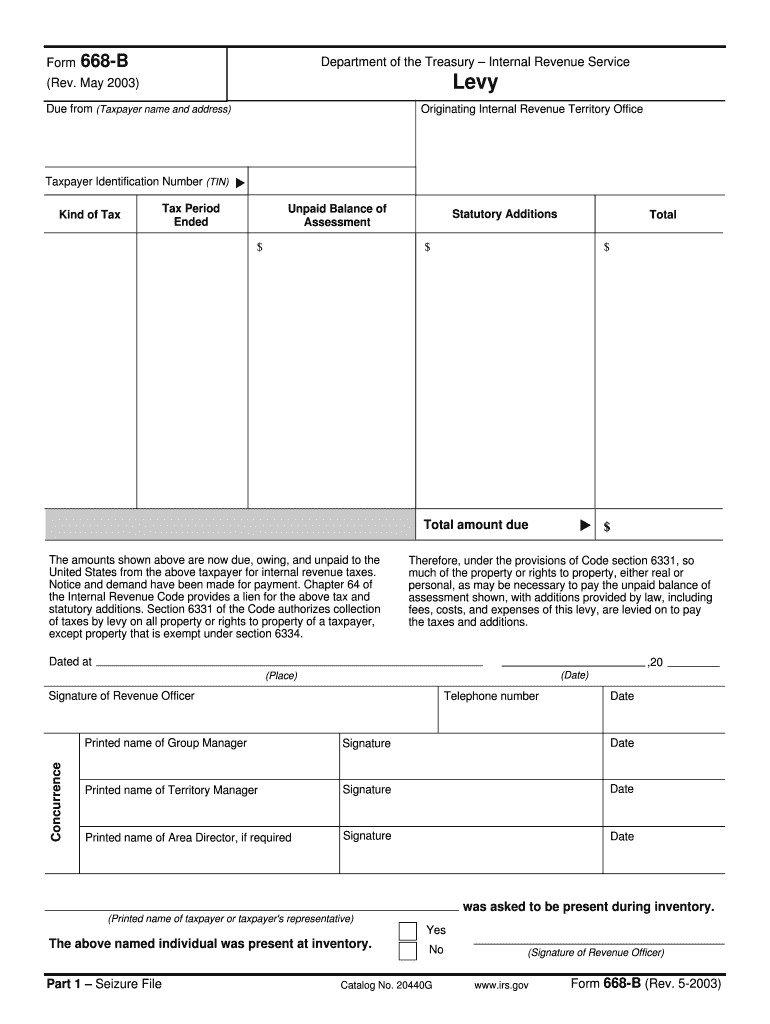







Understanding Form 668-B
Form 668-B is issued by the Department of the Treasury’s Internal Revenue Service (IRS) as a notice of levy to collect unpaid internal revenue taxes. It legally authorizes the IRS to seize a taxpayer's property or rights to those properties to fulfill tax obligations, leveraging Chapter 64 of the Internal Revenue Code.
How to Use Form 668-B
To use Form 668-B effectively, taxpayers or debt collectors should:
- Verify the Details: Ensure the taxpayer's information and the amount due are correctly listed.
- Understand Legal Authority: Recognize the IRS's legal right to levy as described under the Internal Revenue Code.
- Identify Exemptions: Check if any properties or rights are exempt from seizure due to federal policies.
- Release Conditions: Familiarize with conditions that could trigger levy release, reducing unnecessary compliance burdens.
Obtaining Form 668-B
Form 668-B is typically sent directly by the IRS to individuals or businesses with outstanding tax liabilities. This is not a form that can be obtained like a routine annual tax form but is issued after the IRS has determined the necessity to levy.
Steps to Complete Form 668-B
As a form issued by the IRS, Form 668-B does not require completion by the taxpayer. However, if received:
- Immediate Review: Check all details for accuracy, including taxpayer identification and amount.
- Contact IRS: If discrepancies are noted, immediately reach out to the IRS using the contact information provided.
- Seek Professional Advice: Consider involving a tax professional or legal advisor to explore the implications and next actions.
Importance of Form 668-B
Form 668-B serves several critical functions:
- Collection Tool: The primary tool for the IRS to enforce tax collections when voluntary compliance fails.
- Legal Notification: Serves as a formal, legal notification to taxpayers regarding their obligations and the government’s authority.
- Negotiation Catalyst: Often prompts taxpayers to negotiate payment plans or resolve debts to avoid further enforcement actions.
Typical Users of Form 668-B
Form 668-B is relevant to:
- Individual Taxpayers: With significant unpaid taxes.
- Business Owners: Whose entities owe substantial back taxes.
- Tax Professionals: Assisting clients in resolving tax levies or preparing for possible enforcement actions.
Legal Use of Form 668-B
Form 668-B is strictly regulated:
- Compliance: Must adhere to strict legal standards and IRS guidelines before issue.
- Notification Requirement: Taxpayers must be informed and provided chances to appeal or comply before a levy is placed.
- Protection of Rights: Ensures taxpayer rights under the law through official monitoring and legal procedures.
Key Elements of Form 668-B
Key components include:
- Taxpayer Information: Ensures correct identification.
- Amount Due: Details the specific tax liability.
- Legal Reference: Cites the legal basis for the levy.
- Instructions for Third Parties: Guidance for banks or employers if property or income is to be seized.
State-Specific Rules
Though Form 668-B follows federal law:
- State Laws: Can influence how a levy is applied, especially regarding exemptions.
- Property Seizures: Subject to state regulations which may protect certain property types from seizure.
Examples of Using Form 668-B
Consider the following scenarios:
- Self-Employed Individuals: Facing levies for under-reported income.
- Businesses: That owe payroll taxes and have received a levy on their bank accounts.
IRS Guidelines on Form 668-B
The IRS provides extensive guidelines:
- Appeals and Relief: Instructions on how to contest a levy.
- Payment Plans: Options for settling debts over time to potentially halt a levy.
- Release Procedures: Criteria under which a levy is lifted upon resolution of tax dues.
Filing Deadlines and Important Dates
For levies:
- Onset Notification: IRS informs taxpayers before actions begin, allowing for appeal and resolution efforts.
- Payment Arrangements: Deadlines for initiating payment discussions after receiving Form 668-B.
Required Documents for Addressing Form 668-B
Necessary paperwork includes:
- Tax Records: Past filings and notices.
- Financial Statements: To negotiate or justify payment plans.
- Proof of Correspondence: Document any communication with the IRS regarding levies.
Form Submission Methods
Although Form 668-B itself isn't submitted by taxpayers:
- Responses to Levies: Can often be managed by mail, phone, or potentially through IRS online portals for communication and submission of related documents.




