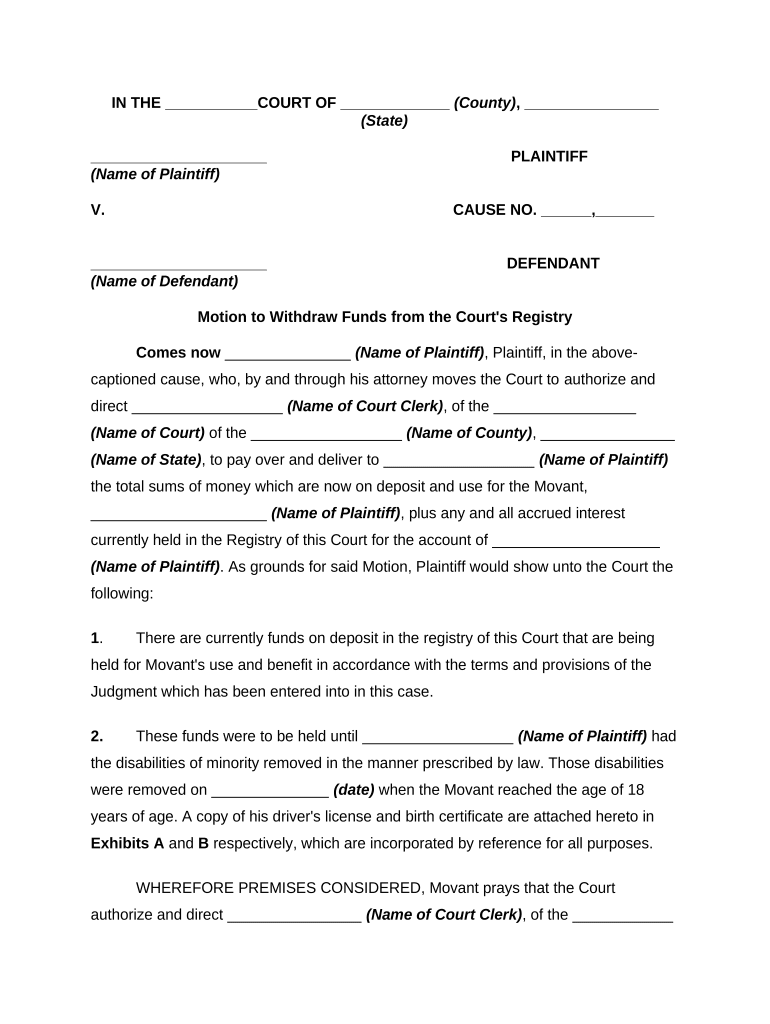







Definition & Meaning
A motion to withdraw form is a legal document filed with the court by a party requesting permission to withdraw a specific motion it previously submitted. This form typically specifies the reason for the withdrawal and may outline any implications related to the case. It is crucial in various legal contexts, allowing parties to retract their requests formally without impacting the integrity and procedure of the court. The motion can arise in civil, criminal, or family law cases and is often used when a party or their attorney determines that proceeding with the original motion is no longer appropriate or beneficial.
How to Use the Motion to Withdraw Form
Using the motion to withdraw form generally involves the following steps:
- Completion of the Form: Fill out the form accurately, providing all required information such as case number, parties involved, and specific details of the motion being withdrawn.
- Attach Supporting Documents: If applicable, include any documents that support the reasons for withdrawal, such as evidence of changed circumstances or new agreements between parties.
- File the Form with the Court: Submit the completed form to the court where the original motion was filed. It may be done in person or electronically, depending on the court's rules.
- Notify All Parties: Serve a copy of the motion to withdraw to all other parties involved in the case, ensuring they are informed of the withdrawal and can respond if necessary.
This process allows for an orderly retraction of legal requests without disrupting ongoing court proceedings.
Important Terms Related to Motion to Withdraw Form
Understanding specific terminology associated with the motion to withdraw form is essential for clarity and legal accuracy:
- Withdrawal: The act of retracting or taking back a previously filed motion.
- Plaintiff/Defendant: The parties involved in a legal case, with the plaintiff initiating the suit and the defendant responding to it.
- Court Order: A directive issued by a judge that enforces or prohibits certain actions related to a case.
- Notice of Withdrawal: A formal communication to the court and other parties indicating the intent to withdraw a motion.
Familiarity with these terms enhances comprehension and ensures effective communication within the legal process.
Steps to Complete the Motion to Withdraw Form
Completing the motion to withdraw form requires careful attention to detail. Here are the fundamental steps:
- Obtain the Proper Form: Ensure you have the correct version of the motion to withdraw form, as required by the relevant state or federal court.
- Enter Case Information: Include the case number, names of all parties, and other pertinent case details at the top of the form.
- State the Motion Being Withdrawn: Clearly indicate which motion is being withdrawn, including its title and date filed.
- Provide Reasons for Withdrawal: Elaborate on why the withdrawal is necessary. This may include reasons such as changes in legal strategy, negotiations reaching a resolution, or new evidence that alters the original request.
- Sign and Date the Form: The party requesting the withdrawal must sign and date the form to indicate the authenticity of the request.
Following these steps ensures a well-prepared motion, reducing the risk of delays or issues in court processing.
Who Typically Uses the Motion to Withdraw Form
The motion to withdraw form can be utilized by a variety of parties in legal proceedings, including:
- Attorneys: Legal representatives may file a motion to withdraw to remove an earlier filed motion on behalf of their clients, often due to new developments in a case.
- Plaintiffs: Individuals initiating a lawsuit may withdraw their motions if they achieve a settlement or desire to reassess their legal strategy.
- Defendants: Those responding to a lawsuit may file a motion to withdraw against previous motions made by the plaintiff if new circumstances come to light.
- Parties in Family Law Cases: In custody, divorce, or support cases, individuals may withdraw motions as situations evolve or settlements are reached.
This form is a vital tool for maintaining effective legal communication throughout the progression of cases.


Important Legal Use of the Motion to Withdraw Form
Legally, the motion to withdraw form plays a critical role in maintaining the integrity of the judicial process. Here are essential considerations:
- Official Record: Filing the withdrawal creates a formal record that the motion is no longer active, preventing confusion around ongoing proceedings.
- Protection of Rights: It helps ensure that all parties are clearly informed about changes in motions that may impact their rights and obligations.
- Judicial Efficiency: By officially withdrawing non-operative motions, parties help the court prioritize active matters and streamline its workload.
Maintaining clear legal documentation aids the judicial system in functioning efficiently while safeguarding the interests of all parties involved.