




01. Edit your mrt form online
Type text, add images, blackout confidential details, add comments, highlights and more.

Type text, add images, blackout confidential details, add comments, highlights and more.

Draw your signature, type it, upload its image, or use your mobile device as a signature pad.

Send vermont mrt via email, link, or fax. You can also download it, export it or print it out.
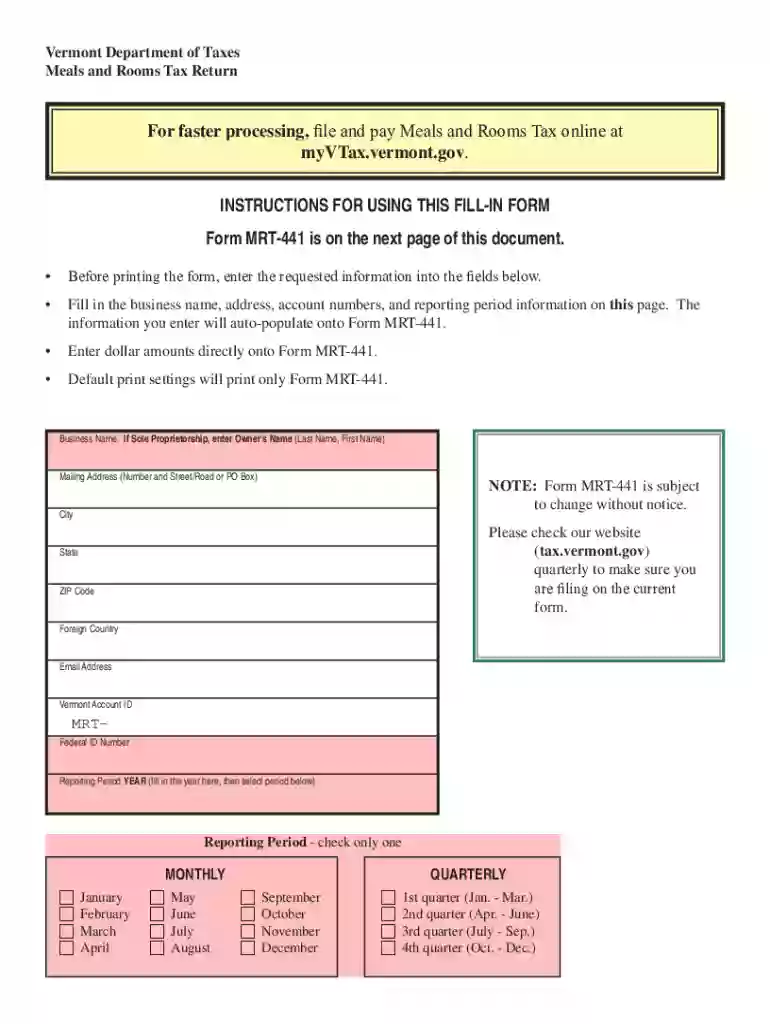
The Vermont Meals and Rooms Tax refers to a specific tax imposed by the state of Vermont on meals and lodging services. This tax is designed to generate revenue for the state from businesses involved in providing food services and lodging. Understanding the intricacies of this tax is crucial for compliance and effective business management.
Utilizing the Vermont Meals and Rooms Tax forms involves several steps that ensure accurate filing and compliance:
Filing the Vermont Meals and Rooms Tax form requires precision and attention to detail. Here’s how to navigate this process:
Several business types are required to file the Vermont Meals and Rooms Tax:
Compliance with the Vermont Meals and Rooms Tax requirements is mandatory, and non-compliance can lead to significant penalties:
Understanding key terms associated with Vermont’s tax can aid in proper filing:
Practical examples illustrate when this tax is applied:
Meeting deadlines is critical for compliance:
Gather these documents before filing:
This comprehensive understanding of the Vermont Meals and Rooms Tax, along with diligent preparation and accurate filing, helps ensure compliance and smooth operation for businesses subject to this tax.
We've got more versions of the mrt form form. Select the right mrt form version from the list and start editing it straight away!
If you regularly work with documents stored in your Google Drive, DocHub is an excellent option for you to easily and quickly complete, edit, and sign them. This editor integrates well with Google services, so you can export your Meals And Rooms TaxDepartment of Taxes - VermontmyVTaxFAQ'smyVTaxFAQ'sGetting Started with Meals and Rooms Tax - Vermont from your Google Drive to the editor without the need of downloading and re-uploading it. Right-click on your document, select Open With → DocHub PDF Sign and Edit. In our editor, add and assign Signature Fields for all people involved, then click on the Menu button above → Send → choose how you want to share your form.
If you are searching for a state-specific Meals And Rooms TaxDepartment of Taxes - VermontmyVTaxFAQ'smyVTaxFAQ'sGetting Started with Meals and Rooms Tax - Vermont sample, you will find it in our DocHub Forms & Templates catalog. Use the search field, key in your form’s name, and search through the results for your state. You can also filter out irrelevant results while browsing our catalog by categories.
At DocHub, your data security is our priority. We follow HIPAA, SOC2, GDPR, and other standards, so you can work on your documents with confidence.


