




01. Edit your fsafeds online
Type text, add images, blackout confidential details, add comments, highlights and more.

Type text, add images, blackout confidential details, add comments, highlights and more.

Draw your signature, type it, upload its image, or use your mobile device as a signature pad.

Send what is fsafeds via email, link, or fax. You can also download it, export it or print it out.
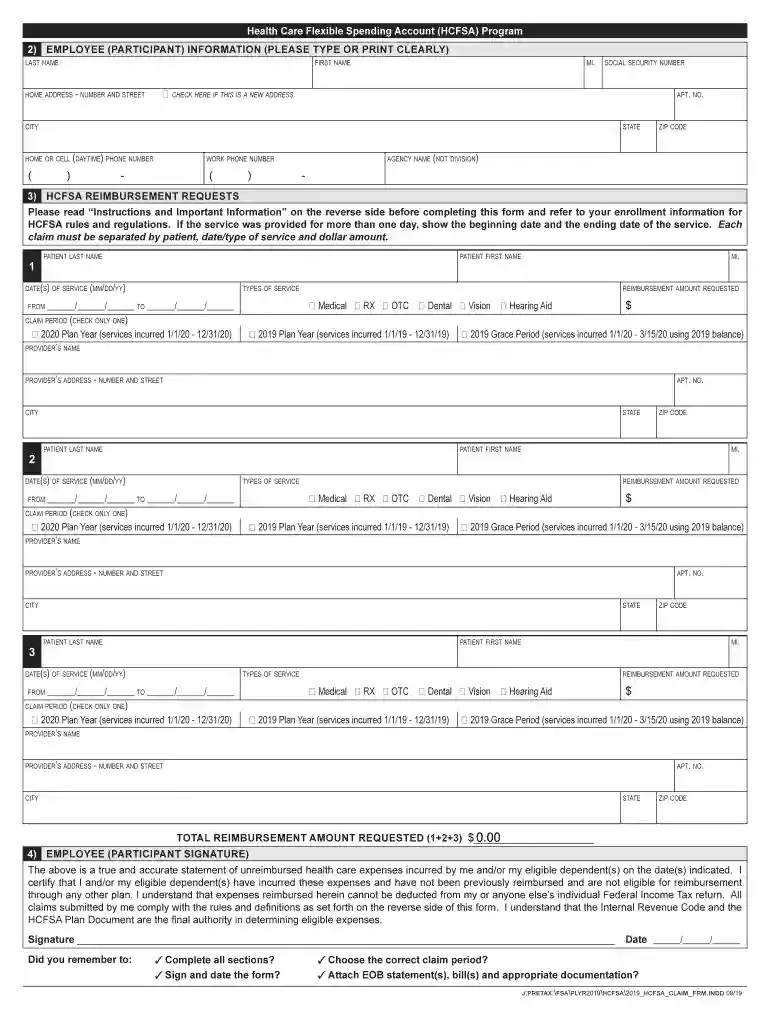
A Health Care Flexible Spending Account (HCFSA) under FSAFEDS is a financial arrangement that allows employees to set aside pre-tax dollars to cover eligible medical expenses. This account serves as a flexible component of employee benefits, designed to reduce income taxes and increase spending efficiency. Participants use the funds to pay for out-of-pocket health expenses, encompassing co-pays, prescription medications, and other medically necessary services. The primary goal of an HCFSA is to provide tax relief and financial convenience for managing various healthcare-related costs.
To effectively use an HCFSA, participants must follow a structured approach to ensure compliance and maximize benefits. First, employees decide on the amount to allocate annually, which is deducted from their salary before taxes. It is crucial to accurately estimate anticipated expenses since unused funds may be forfeited, depending on plan specifics. During the year, participants can submit claims for reimbursement. This typically involves providing documentation, such as receipts or explanation of benefits (EOB) statements, which substantiate the incurred expenses. The process is streamlined through platforms like DocHub, where users can upload necessary documentation efficiently, making the reimbursement process straightforward and accessible.
Several key elements define the effective operation of an HCFSA. One major component is the predetermined contribution limit set by the IRS annually, which participants must adhere to when electing their yearly allocation. It is also important to understand the eligible expenses covered under the plan, such as copayments, deductibles, vision and dental care, and prescribed therapies. Additionally, the 'use-it-or-lose-it' rule necessitates careful planning to avoid losing unused funds at the end of the plan year. However, some plans offer grace periods or a carryover option, accommodating a more flexible approach to fund utilization.
Eligibility to participate in an HCFSA through FSAFEDS generally requires employment with a federal entity that offers this benefit as part of their comprehensive health benefits packages. Employees must enroll during the open season or within a specified enrollment period when eligible under qualifying life events. Participants must also not be enrolled in a high-deductible health plan with a Health Savings Account (HSA) that covers overlapping expenses.


Completing the HCFSA form involves multiple steps that require meticulous attention. Here’s how to complete it efficiently:
Real-world scenarios elucidate the practical use of an HCFSA. For instance, a family managing several prescription medications monthly can submit receipts for reimbursement from their account, reducing out-of-pocket expense burdens significantly. Another example is an employee utilizing the account for orthodontic treatments. The initial payment and subsequent adjustments can be reimbursed, offering substantial financial ease. Moreover, individuals needing specialized therapies, such as physical therapy following an injury, can efficiently manage unpredictable expenses through pre-planned fund allocation.
Adhering to specific filing deadlines is critical in managing an HCFSA. Most plans stipulate a claim submission deadline, typically set a few months after the plan year ends, allowing for reimbursement of expenses incurred during that year. Additionally, dates for the open enrollment period are crucial for making amendments or setting new contributions for the upcoming year. It is advisable to verify these dates with the plan administrator to ensure optimal use of the account and avoid forfeitures.
The legal framework surrounding HCFSA usage necessitates strict adherence to federal guidelines under the Internal Revenue Code. Non-compliance, such as incorrectly submitting claims for ineligible expenses, can result in penalties or reimbursements being denied. It is vital to maintain accurate records and only claim expenses that meet the IRS eligibility criteria. Moreover, respecting contribution limits and promptly rectifying any discrepancies in claims is necessary for maintaining viability and compliance of the account.
Supporting documentation is essential for submitting a claim through an HCFSA. Key documents include detailed receipts, invoices, and explanation of benefits (EOB) statements, which outline the service provided, cost, and proof of payment. Participants might use platforms such as DocHub to securely upload these documents, streamlining the submission process. Ensuring that all paperwork is thoroughly checked, and sensitive information is safeguarded with encryption or password protection is critical for maintaining data integrity and security.
We've got more versions of the fsafeds form. Select the right fsafeds version from the list and start editing it straight away!
At DocHub, your data security is our priority. We follow HIPAA, SOC2, GDPR, and other standards, so you can work on your documents with confidence.


